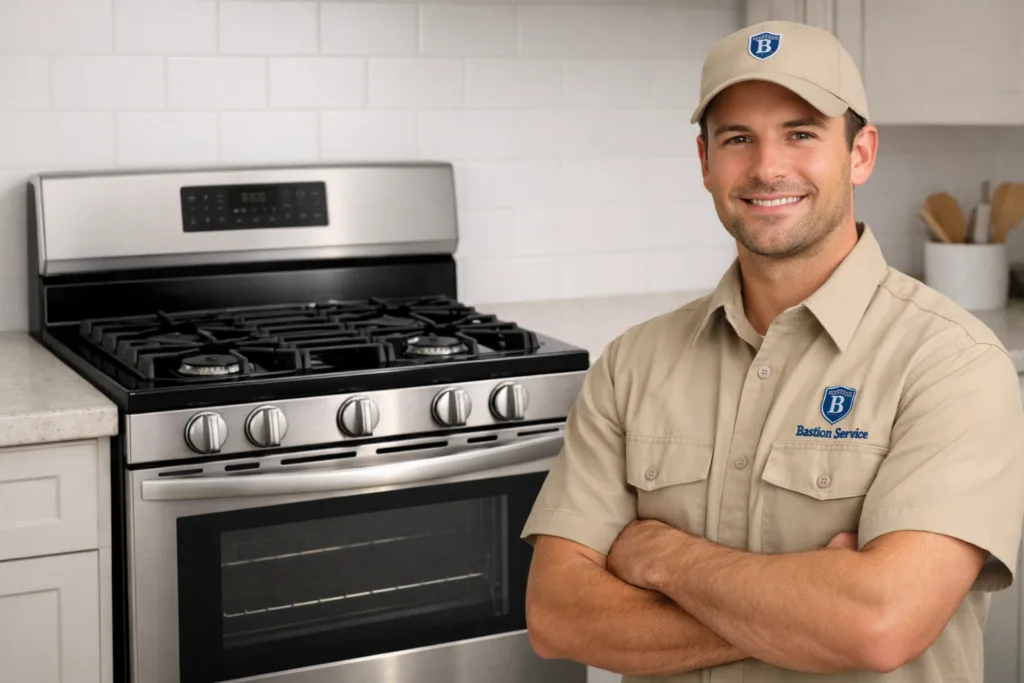
Range problems tend to show up first in everyday cooking: a burner that takes too long to heat, an oven that needs extra time to preheat, or temperature results that change from one meal to the next. With an Amana range, those symptoms can point to very different faults, so it helps to evaluate the exact pattern before assuming a part has failed.
For households in Playa Vista, that matters because a range can seem partly functional while still developing a larger issue in the background. Inconsistent heat, delayed ignition, and unresponsive controls are often early signs that the appliance needs attention before performance drops further.
What common Amana range symptoms usually mean
Surface burner will not heat
If an electric surface burner stays cold, heats only partway, or cuts in and out, the cause may involve the burner element, receptacle, switch, or internal wiring. If only one burner is affected, that often suggests a more isolated component failure. If several functions act strangely at once, power supply or control issues may also need to be considered.
On gas models, a burner that will not light or produces a weak flame may be dealing with an ignition problem, burner blockage, or another issue affecting normal flame performance. When the symptom is intermittent, scheduling service sooner is often better than waiting for a complete failure.
Oven not heating properly
An oven that will not reach temperature, overheats, or preheats very slowly can make even simple meals unpredictable. Depending on the model, the issue may involve the bake element, igniter, temperature sensor, thermostat-related function, or electronic control response.
Homeowners often notice this problem when recipes that used to work suddenly need longer cook times or come out unevenly cooked. That kind of change usually means the range is no longer regulating heat the way it should.
Uneven baking or roasting
If one side of a dish browns faster than the other, cookies bake unevenly from tray to tray, or food stays undercooked in the center, the range may have a temperature regulation issue rather than a complete heating failure. Weak heating components, sensor inaccuracies, airflow problems, and worn door seals can all contribute to uneven results.
This is one of the easier symptoms to overlook because the oven still appears to work. In practice, though, steady performance matters just as much as basic operation, especially for everyday family cooking.
Clicking ignition or burners that light inconsistently
Repeated clicking, delayed lighting, or burners that ignite only after several tries usually indicate an ignition-related problem that should be checked. Moisture, wear, debris, or component failure can all affect how reliably the burner lights.
If there is a strong or persistent gas smell, stop using the appliance and address the gas safety concern first before arranging range repair. If there is no gas odor but ignition is unreliable, it is still wise not to ignore it, since repeated failed starts can lead to more wear and less predictable operation.
Display, keypad, or control problems
When the display goes blank, buttons stop responding, settings change unexpectedly, or the oven starts inconsistently, the issue may involve the interface, control board, wiring, or incoming power. Electronic symptoms can overlap, which is why this is one area where guessing often leads to wasted time and unnecessary parts replacement.
Control issues also affect more than convenience. If the range cannot properly receive or execute temperature and cooking commands, overall performance and safe operation can suffer.
Signs the problem is getting worse
Some range issues stay stable for a short time, while others progress quickly. A symptom is more likely to worsen when you notice:
- Preheat times increasing week by week
- Burners working only on certain settings
- Ignition becoming slower or less consistent
- Temperature results changing from one use to the next
- Buttons or display functions responding intermittently
- The appliance tripping a breaker or showing signs of overheating
When a range behaves differently from one day to the next, that inconsistency is often the strongest clue that the failure is no longer minor.
When continued use may cause added damage
It is common to work around a failing range by avoiding one burner or adjusting cook times manually. Sometimes that is manageable for a short period, but many faults place extra strain on nearby components. A weak igniter may continue clicking and fail more often. An overheating element can stress wiring and controls. A loose electrical connection may arc and damage surrounding parts. A bad seal can force the oven to run longer than normal.
That is why early diagnosis can save both money and frustration. Fixing an isolated problem is often simpler than dealing with the additional wear caused by continued use under faulty conditions.
Repair or replace an Amana range?
Repair is often worthwhile when the problem is limited to a burner component, igniter, heating element, sensor, switch, or a specific control-related part, and the rest of the range is in good condition. Replacement becomes more likely when the appliance has multiple major failures, recurring electrical or control problems, or overall wear that makes the next repair a poor value.
The most useful decision usually comes from the symptom pattern, the range’s condition, and the likely repair path rather than from age alone. Some older units are still sensible to fix, while some newer ones may have overlapping problems that change the equation.
What Playa Vista homeowners should pay attention to before service
Before scheduling Amana range repair in Playa Vista, it helps to note a few details:
- Whether the problem affects the cooktop, the oven, or both
- Whether the symptom is constant or intermittent
- If the issue began suddenly or developed gradually
- Whether any error display, unusual smell, clicking, or breaker trip occurred
- If the oven is running too hot, too cool, or simply taking longer than normal
Those details can make diagnosis faster and help narrow the fault to heating, ignition, control, wiring, or temperature regulation.
What good range repair should accomplish
Most households want the same outcome: burners that respond normally, an oven that reaches and holds temperature, and controls that work without hesitation. A proper repair should restore predictable daily cooking, not just get the appliance to turn on again.
For homes in Playa Vista, the best results usually come from matching the repair to the exact symptom instead of treating every heating or ignition issue as if it were the same. When the cause is identified correctly, it becomes much easier to decide whether the fix is straightforward, urgent, or no longer cost-effective.