
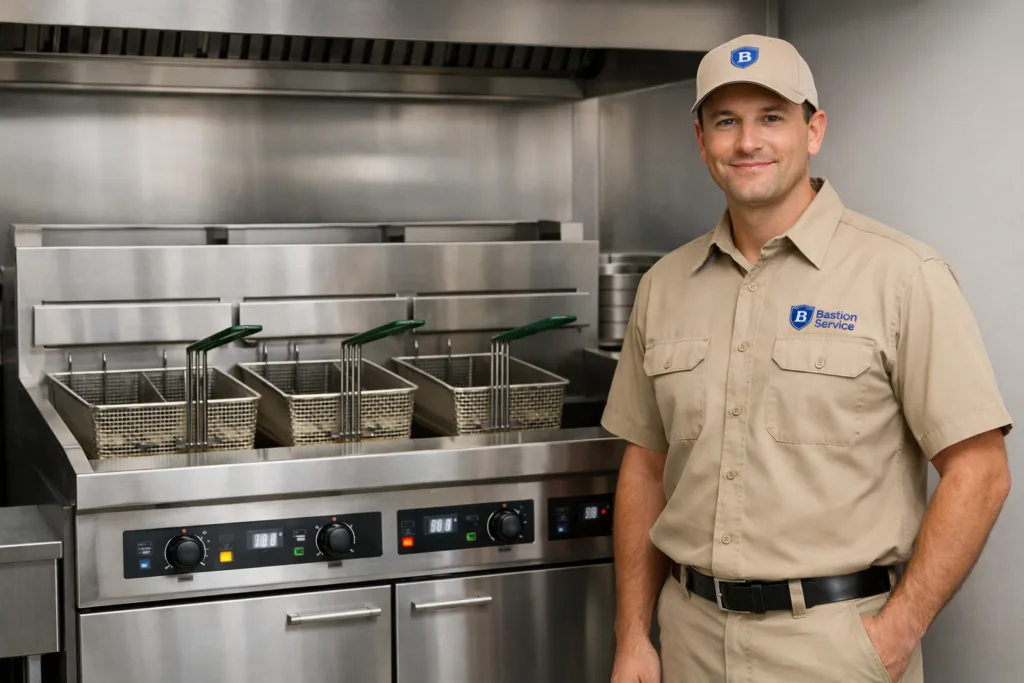




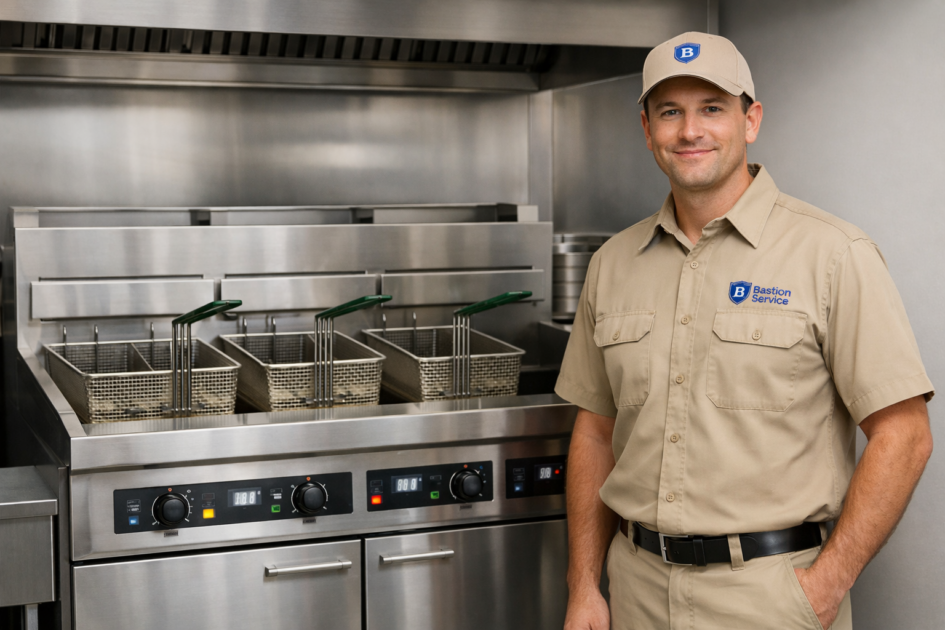
When Pitco cooking equipment starts missing temperature, recovering slowly, or dropping out during service, the priority is to identify the actual fault before a small performance issue turns into lost output. In Palos Verdes Estates, businesses relying on fryers for steady kitchen flow usually need service that answers three questions quickly: what is failing, can the unit stay in use safely for now, and how soon should repair be scheduled to avoid wider disruption. Bastion Service provides Pitco repair support with that service-focused approach so operators can make informed decisions instead of working around unstable equipment.
For specific equipment paths in Palos Verdes Estates, review Pitco Fryer Repair in Palos Verdes Estates and Commercial Appliance Repair in Palos Verdes Estates.
What Pitco cooking equipment problems usually require repair?
Most service calls begin with symptoms that affect production rather than a complete shutdown on day one. A fryer may heat too slowly, struggle to hold set temperature, fail to ignite consistently, or stop heating in the middle of a shift. In other cases, staff may notice control irregularities, delayed recovery between batches, or repeated resets needed to keep the unit running.
These issues matter because they affect more than convenience. Temperature instability can change food quality and cook times. Ignition faults can interrupt output without warning. Repeated shutdowns can slow the line, create waste, and make it difficult for kitchen staff to plan around the equipment. A repair visit helps determine whether the problem is tied to burners, ignition components, sensors, controls, safety devices, wiring, or wear that is reducing normal performance.
Heating and recovery problems
Slow heat-up at the start of the day
If the unit takes too long to reach operating temperature, the problem may involve gas performance, burner function, sensing issues, or control-related faults. This often shows up first as delayed prep or a slower opening routine, but it can also point to a larger heating issue that will continue throughout the shift.
Weak recovery during active use
When the fryer cannot recover quickly between loads, kitchen throughput suffers. Staff may need to wait longer between batches, and food results can become inconsistent as oil temperature falls below the expected range. Weak recovery is often associated with burner inefficiency, control problems, or heat transfer issues that need hands-on testing rather than guesswork.
Temperature drifting or overshooting
Oil that runs too hot or too cool can affect food quality, oil life, and day-to-day consistency. A drifting temperature pattern may point to thermostat issues, sensor faults, control failure, or related electrical problems. If the unit is no longer holding normal temperature under routine use, scheduling service early can help prevent more serious downtime later.
Ignition and burner-related faults
Pitco equipment that struggles to light, lights intermittently, or drops burner operation during service should be checked promptly. Ignition-related problems may involve pilot operation, flame sensing, ignition components, burner condition, controls, or wiring faults. Because these symptoms overlap, the useful next step is on-site troubleshooting to isolate the specific cause.
Burner issues can also appear as uneven heating, delayed startup, unusual cycling, or recovery that never seems normal even when the controls appear to be set correctly. If staff are repeatedly restarting the unit just to get through service, the equipment is already signaling that repair should be scheduled rather than postponed.
Shutdowns, safety trips, and control failures
Unexpected shutdowns are especially disruptive because they create uncertainty during busy periods. A unit may appear normal for part of the day and then stop heating, lock out, or lose response at the controls. These problems can be caused by high-limit trips, faulty controls, failing switches, loose electrical connections, or heat-related component failure.
Intermittent faults are rarely problems to ignore. They tend to become more frequent, harder to work around, and more disruptive to scheduling. If equipment is shutting down without a clear reason, losing control response, or forcing staff to monitor it constantly, service should be arranged before the issue turns into a full no-start condition.
Symptom patterns that help determine urgency
Not every problem carries the same level of urgency, but some patterns usually mean the equipment should be inspected soon:
- Repeated ignition failures or delayed startup
- Inability to maintain normal cooking temperature
- Slow recovery that affects output during rush periods
- Burners cycling abnormally or failing to stay on
- Unexpected shutdowns during regular operation
- Controls that stop responding or behave inconsistently
- Safety-limit interruptions that return after resets
For businesses in Palos Verdes Estates, these symptoms are not just maintenance concerns. They affect labor flow, order timing, food consistency, and the ability to rely on the equipment through a full service window.
When it makes sense to stop using the equipment
In some cases, limited operation may be possible until the scheduled appointment. In others, continued use creates too much risk of interruption or further damage. If the unit is overheating, failing to ignite reliably, shutting off mid-shift, or requiring frequent staff intervention to stay operational, reducing use or stopping use is often the smarter decision.
This is where provider guidance matters. A service diagnosis helps determine whether the symptom points to a manageable repair with short-term workarounds or whether the equipment should be removed from active use until the problem is corrected. That decision can protect both uptime planning and the rest of the kitchen workflow.
Repair or replace?
Many Pitco issues are repairable, especially when the fault is limited to ignition parts, sensors, controls, switches, burners, or related electrical components. Replacement becomes more likely when the equipment has a long pattern of breakdowns, multiple major faults at once, or wear severe enough that dependable operation is no longer realistic after repair.
The practical advantage of diagnosis is that it gives managers something real to compare: expected repair scope, probable reliability after service, and the cost of continued downtime. That helps avoid replacing a unit too early, but it also helps avoid sinking time into equipment that is no longer supporting daily production the way it should.
Repair scheduling for Palos Verdes Estates businesses
Good service planning is not only about fixing the failed part. It is also about fitting diagnosis and repair into an operating schedule that reduces disruption as much as possible. For restaurants and other food-service businesses in Palos Verdes Estates, that often means acting as soon as symptoms begin repeating instead of waiting for a complete shutdown during a critical shift.
If your Pitco equipment is heating poorly, showing ignition trouble, losing temperature control, recovering too slowly, or shutting down unexpectedly, the next step is to schedule service so the symptom can be confirmed, the repair scope can be defined, and downtime can be managed before it affects the rest of the kitchen.


