
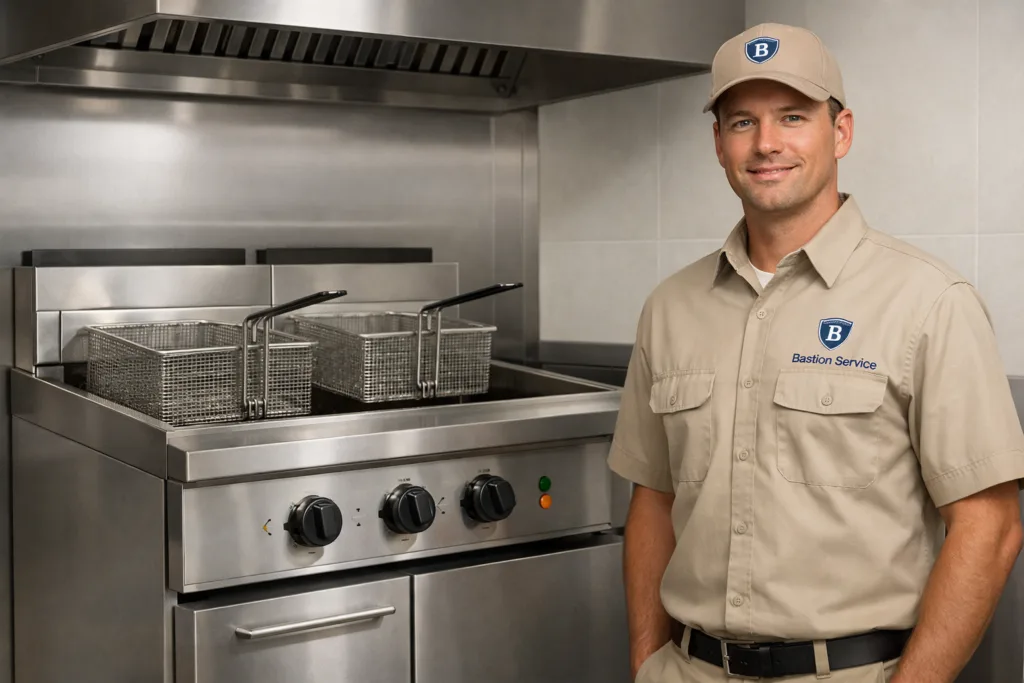




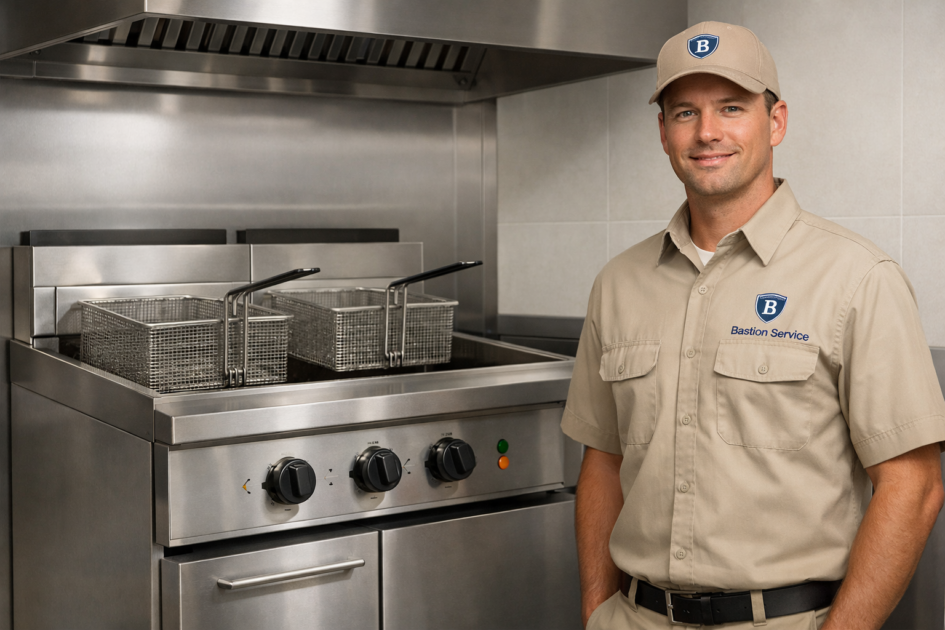
Heating problems, ignition failures, and erratic oil temperature can interrupt production fast in a busy kitchen. For businesses in Brentwood, the most effective response is to schedule service around the actual symptom pattern rather than guessing at parts. Bastion Service works on Pitco fryer issues with a repair-focused approach that helps identify whether the problem is tied to burner operation, controls, sensing, gas flow, safety devices, or wear that is affecting day-to-day output.
Related commercial service paths in Brentwood include Pitco Commercial Repair in Brentwood, Commercial Fryer Repair in Brentwood, and Frymaster Fryer Repair in Brentwood.
Early service is often the difference between a contained repair and a longer outage. If a fryer is slow to recover, cycling unpredictably, locking out, or showing signs of unsafe operation, it makes sense to have it evaluated before staff start changing cook times, reducing batch size, or pulling the unit out of the line entirely.
Common Pitco fryer symptoms that need attention
No heat or failure to reach cooking temperature
When a fryer will not heat, only heats partway, or takes too long to get up to temperature, several systems may be involved. Depending on the model and symptom sequence, the issue could be related to ignition components, the temperature probe, a thermostat or electronic control fault, burner problems, a hi-limit issue, or gas valve behavior. In service terms, this kind of problem needs testing under operating conditions so the real cause can be separated from symptoms that only look similar.
Slow recovery during active cooking
Recovery complaints usually show up during rush periods, when the fryer cannot return to target temperature quickly enough between loads. That can affect cook consistency, ticket timing, and oil performance. Slow recovery may point to weak burner output, restricted heat transfer, sensing problems, control issues, or conditions inside the fryer that are reducing normal efficiency.
Oil temperature swings
If the oil runs too hot, too cool, or drifts away from the set point, food quality often becomes inconsistent before the full failure is obvious. Operators may notice uneven browning, product that finishes too early or too late, or batches that vary from one cycle to the next. Temperature swings can be caused by control calibration problems, faulty probes, intermittent component behavior, or burner-related faults that prevent stable operation.
Ignition or pilot problems
A Pitco fryer that clicks without lighting, lights inconsistently, or drops flame after startup should not be treated as a minor nuisance. These symptoms can involve the ignition assembly, flame sensing, pilot components, gas delivery, or safety shutdown conditions. Repeated relighting may keep the unit limping along for a short time, but it does not solve the underlying fault and can make service interruptions more frequent.
Lockouts, fault codes, or repeated shutdowns
When a fryer goes into shutdown or repeatedly needs to be reset, the equipment is indicating that something is out of range or not operating as expected. A reset may restore operation temporarily, but recurring lockouts usually mean the root condition is still present. Service should confirm whether the issue is coming from the controls, limits, sensing, ignition sequence, or another component that is preventing normal operation.
Leaks, drainage trouble, or filtration complaints
Oil leaks and draining issues deserve prompt attention because they affect safety, sanitation, and workflow. A problem at the drain, fittings, seals, or related components can become more disruptive if the fryer stays in use. If staff are seeing leakage, incomplete draining, slow flow, or filtration problems, diagnosis should determine whether the issue is isolated wear or part of a larger repair need.
Why symptom-based diagnosis matters
Fryer failures often overlap. A unit that is not heating correctly may have a bad sensor, but the same kitchen complaint can also come from burner weakness, control failure, a safety interruption, or unstable gas-side performance. That is why symptom-based testing matters before repair decisions are made. It helps narrow the failure path, avoid unnecessary parts replacement, and identify what is actually needed to return the fryer to stable use.
For Brentwood businesses, that matters because fryer problems rarely stay isolated. Once output starts slipping, the impact spreads to prep timing, menu consistency, staffing pace, and the ability to maintain service volume. A proper diagnosis helps managers decide whether the unit should be repaired now, monitored after adjustment, or evaluated more broadly if repeated failures are already part of its history.
Signs your fryer should be serviced soon
- The fryer takes longer than normal to preheat.
- Oil temperature does not match the selected setting.
- Recovery slows noticeably during heavier production.
- The pilot or ignition sequence becomes unreliable.
- The unit shuts down during use or enters lockout.
- Staff are extending cook times to compensate for weak heat.
- One vat is being avoided because results are inconsistent.
- There is visible oil leakage or trouble draining the fryer.
These issues usually do not resolve on their own. If kitchen staff have started creating workarounds just to keep production moving, that is a strong sign the fryer needs service rather than continued adjustment by trial and error.
When continued use can make the problem worse
Running a fryer with unstable heating, repeated ignition failure, or active leakage can lead to more than inconsistent cooking. It can put extra stress on controls and safety components, increase oil waste, and create a larger repair scope than the original problem would have required. In some cases, what starts as an intermittent fault becomes a hard failure during service hours, when downtime is hardest to absorb.
If the fryer is overheating, tripping limits, failing to recover, or shutting down unpredictably, the safer and more cost-conscious move is often to pull the symptom into a service call before the unit causes a broader disruption in the kitchen.
Repair or replace?
Many Pitco fryer problems are repairable when the cabinet and major structure are still in good condition. Controls, probes, ignition parts, valves, limits, and other functional components can often be addressed without replacing the whole unit. In those cases, repair makes sense when it restores reliable operation and supports ongoing daily production.
Replacement becomes a more realistic conversation when failures are stacking up, downtime is recurring, parts support is limited, or the fryer no longer returns to stable performance even after recent work. The better decision depends on the age of the unit, repair history, overall condition, and how critical that fryer is to output in your Brentwood kitchen.
What to have ready before scheduling service
A few details can make a service visit more productive. If possible, note whether the fryer fails during startup, after reaching temperature, or only during heavier cooking volume. Record any fault messages, unusual sounds, delayed ignition behavior, shutdown timing, or visible leakage. It also helps to know whether the problem affects one vat consistently or appears across multiple operating cycles.
That information can help narrow the issue faster and support a more efficient repair plan once the unit is inspected.
Practical next steps for businesses in Brentwood
If your Pitco fryer is no longer heating properly, recovering as it should, or staying stable through service, scheduling repair sooner is usually the best way to limit downtime and avoid a bigger interruption later. A service visit should clarify what is failing, whether related components are also affected, and what steps are needed to return the fryer to dependable operation so your kitchen can get back to normal workflow.


