
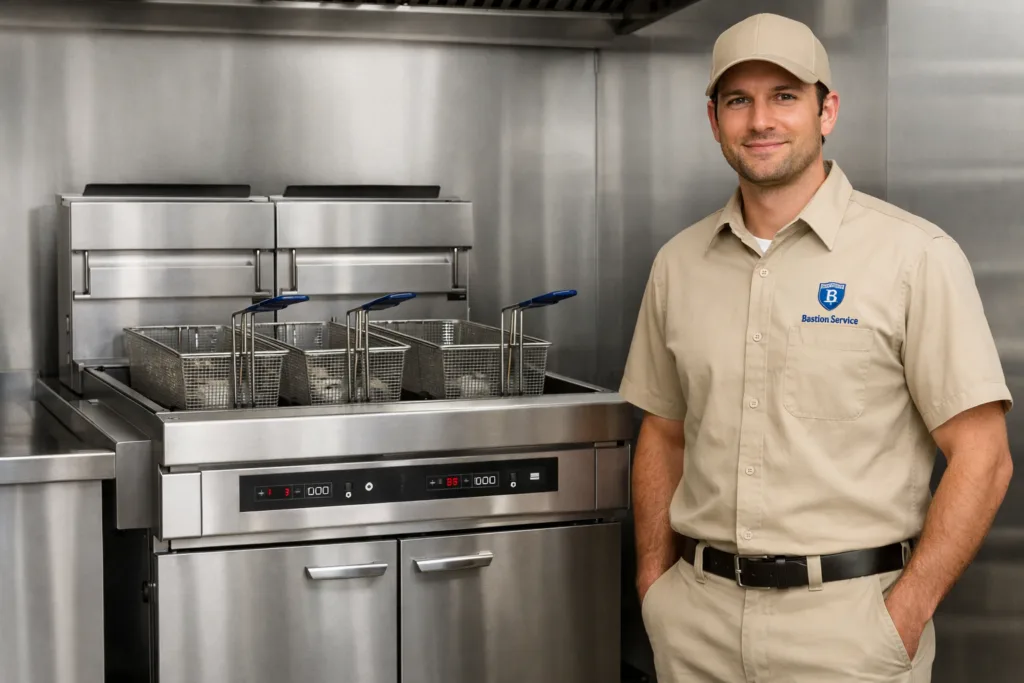




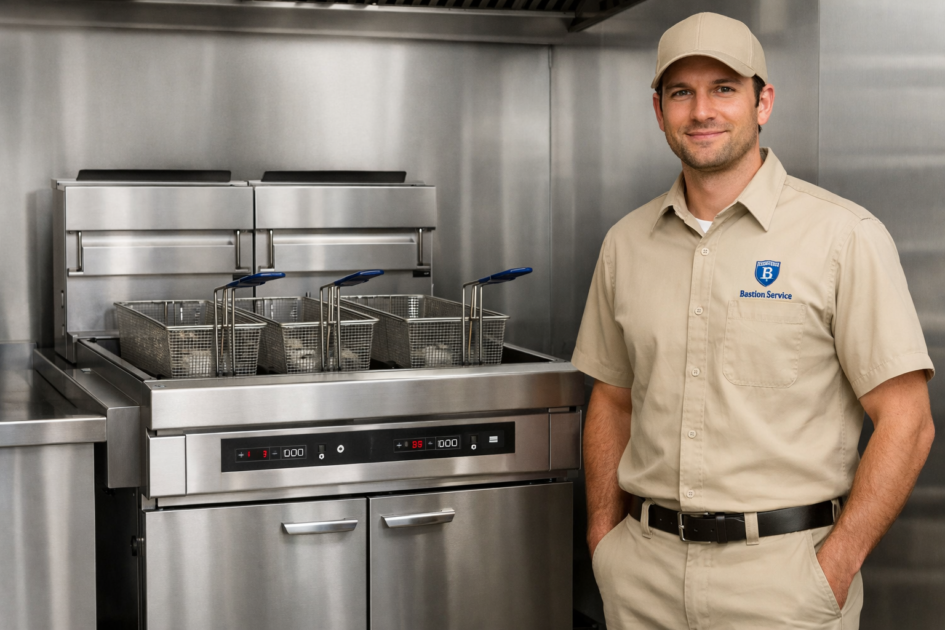
When Pitco cooking equipment starts missing temperature targets, recovering too slowly, or dropping out during active production, the problem usually affects more than one menu item. It can slow ticket times, create uneven food quality, and force staff to work around equipment they no longer trust. For businesses in Brentwood, repair service is most useful when it identifies the actual fault, explains the likely scope of work, and helps management decide whether the unit can stay in limited use or should be taken offline pending service.
For specific equipment paths in Brentwood, review Pitco Fryer Repair in Brentwood and Commercial Appliance Repair in Brentwood.
Bastion Service works with restaurants and other food-service operations that rely on Pitco cooking equipment to stay productive through lunch, dinner, prep, and high-volume periods. While Pitco is closely associated with fryers, the service decision still comes down to the same practical questions: what symptom is showing up, how often it happens, whether it affects safe operation, and how quickly it is likely to interrupt the kitchen if left unresolved.
What symptom patterns usually point to repair needs?
Many equipment failures begin with subtle signs before they become a full shutdown. A fryer may still heat, but not fast enough. A unit may ignite some of the time, then fail during a rush. Temperature may drift enough to affect cook quality even though staff can still finish orders. Those early patterns matter because they often indicate wear or failure in controls, ignition parts, burners, sensing components, or safety circuits.
- Slow heat-up at opening or between batches
- Recovery that lags after normal basket loads
- Repeated ignition attempts or delayed startup
- Temperature overshoot, low temperature, or unstable cycling
- Burner inconsistency, weak flame, or uneven heating response
- Unexpected shutdowns during production
- Error conditions, resets, or intermittent operation
- Performance changes that increase oil breakdown or product inconsistency
When these symptoms repeat, the issue is no longer just an inconvenience. It becomes an operations problem that can affect labor flow, food quality, and confidence on the line.
Pitco fryer problems that commonly affect kitchen output
Because Pitco fryer repair is the supported category on this page, most service calls in Brentwood center on fryer performance under real kitchen load. In many cases, the symptom seems straightforward, but the root cause is not. Similar complaints can come from very different failures, which is why symptom-based diagnosis matters before parts are ordered or replacement is considered.
Slow recovery and weak heating
If a fryer reaches temperature too slowly or struggles to recover after product is dropped, the kitchen may see longer cook times, darker oil, and inconsistent finished food. This can be related to burner performance, heat transfer issues, controls, sensing problems, or fuel and electrical delivery faults. Operators often notice this first when one fryer begins falling behind the rest of the line.
Repeated slow recovery usually means the equipment is no longer supporting normal volume. Scheduling service before peak periods become unmanageable can help prevent a more disruptive failure.
Ignition problems and startup failures
A Pitco fryer that clicks, attempts to start, then locks out or shuts back down may be dealing with an ignition sequence fault, flame sensing problem, control issue, or related safety interruption. These problems often appear intermittent at first, which leads some kitchens to keep resetting the unit until it stops responding altogether.
If startup reliability is declining, repair should be scheduled before the equipment becomes unavailable during service. A unit that only starts sometimes is already affecting production planning.
Temperature control faults
Temperature issues can show up as underheating, overheating, inconsistent cycling, or product that cooks differently from batch to batch. Staff may compensate by changing cook time, reducing load size, or moving product to another station, but that does not resolve the underlying fault. Common causes include sensor drift, control failure, calibration issues, and limit-related problems.
These complaints deserve prompt attention because temperature instability affects both output and food consistency. If oil condition is declining faster than expected or results vary between shifts, temperature control should be checked.
Burner trouble and unexplained shutdowns
Burner-related issues may present as weak flame, erratic heating, incomplete heating patterns, or a fryer that runs for a period and then drops out. In practice, this can point to combustion-related trouble, airflow issues, delivery interruptions, safety control faults, or a broader control problem. The exact sequence matters. A unit that never establishes normal heat is often a different repair path from one that heats, then fails mid-cycle.
Shutdowns during active production should not be treated as minor if they are happening more than once. Intermittent faults often become complete outages with very little warning.
How repair decisions are usually made in a busy kitchen
For most operators, the key question is not simply whether the equipment still turns on. The real issue is whether it can support service without slowing the line, disrupting prep, or creating uncertainty for staff. A fryer that technically operates but cannot hold temperature or stay running is still costing the business time and consistency.
Repair planning is usually based on:
- How often the symptom occurs
- Whether the problem affects one unit or multiple production steps
- Whether staff are resetting or working around the equipment daily
- Whether the fault appears during startup, normal operation, or peak demand
- Whether safe operation is in question
- Whether a targeted repair is likely to restore stable performance
This is why symptom notes from managers, chefs, and line staff are helpful. Details such as when the problem started, whether it appears after warm-up, and whether the issue is worse under heavier loads can shorten diagnosis and help set realistic scheduling expectations.
When to schedule service instead of waiting
Waiting may seem manageable when the equipment still runs part of the time, but repeated instability usually leads to a harder failure at the worst possible moment. In Brentwood kitchens, the most common reason to stop delaying service is that the equipment has become unpredictable. Once staff cannot rely on normal startup, normal recovery, or stable temperature, production planning starts breaking down.
It usually makes sense to schedule repair when:
- The fryer is missing temperature repeatedly
- Recovery time is affecting ticket flow
- Ignition failures are becoming more frequent
- The unit needs resets to get through service
- Shutdowns are interrupting active cooking
- Food quality is becoming inconsistent across batches
- Managers need a clearer decision on repair versus replacement
Early service can help control downtime, especially when the problem is still limited to a repairable component rather than a broader decline in equipment condition.
Repair or replacement?
Not every Pitco issue points to replacement. Many cooking equipment problems are still repairable when the cabinet, tank structure, and overall unit condition remain sound. If the fault is tied to ignition, controls, sensing, burner operation, or other serviceable components, repair is often the more practical choice.
Replacement becomes a stronger consideration when the equipment has repeated major failures, ongoing reliability issues across multiple systems, or a repair history that no longer supports stable daily use. For business owners and kitchen managers, the useful question is whether the proposed repair is likely to restore dependable production rather than simply get the unit running for a short time.
Practical next steps for Brentwood operators
If your Pitco cooking equipment is showing heating trouble, ignition problems, temperature instability, burner issues, or shutdowns, the next step is to schedule service based on the symptom pattern rather than wait for a full outage. A repair visit can help determine the source of the failure, the likely repair path, whether limited operation makes sense in the meantime, and how to reduce disruption to daily kitchen output in Brentwood.


