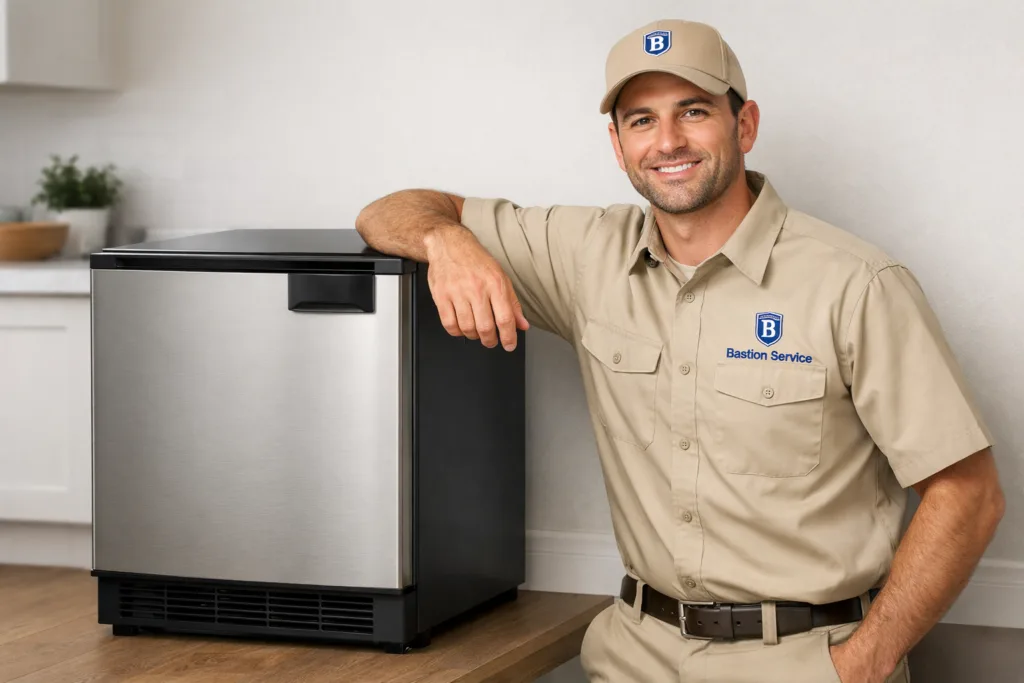
Ice maker problems usually show up in patterns, and those patterns tell you a lot about what may be failing inside the unit. If your EdgeStar machine runs but does not drop ice, makes only thin batches, leaks water, or leaves wet clumps in the bin, the most useful first step is to match the symptom to the part of the system that is likely affected.
Start with what the ice maker is actually doing
An EdgeStar ice maker depends on several systems working together: water supply, fill control, freezing performance, harvest function, drainage, and temperature monitoring. When one part of that sequence breaks down, the machine often gives clues before it stops completely.
Common symptoms include:
- No ice production: may point to a water supply problem, inlet valve failure, sensor issue, control fault, or cooling problem
- Slow ice production: often linked to low water flow, poor freezing performance, dirty condenser areas, or internal component wear
- Small or misshapen cubes: can indicate restricted fill, mineral buildup, or inconsistent water delivery
- Clumped or melting ice: may suggest temperature problems, bin issues, or incomplete freeze cycles
- Water leaking from the unit: can come from drain restrictions, loose fittings, cracked lines, or overflow during fill
- Clicking, humming, or repeated cycling noises: may involve a pump, fan, valve, motor, or control problem
No ice at all: what that usually means
If the machine has power but is producing no ice, the failure may be happening at the beginning of the cycle or in the freezing stage. In some homes, the issue is as simple as poor incoming water flow or a blocked inlet screen. In other cases, the water enters normally but never freezes because the unit cannot reach the correct temperature.
Possible causes include:
- shutoff or restriction in the water line
- failing inlet valve
- sensor or thermistor reading incorrectly
- control board not initiating the cycle
- fan or cooling performance problems
A unit that appears to run normally but never completes a full batch often needs more than basic cleaning. This is especially true when the same no-ice symptom returns after the reservoir, bin, or accessible surfaces have already been cleaned.
Slow production and weak batches
When an EdgeStar ice maker still works but cannot keep up, the problem is often developing rather than total. Slow production can mean the machine is receiving too little water, freezing too slowly, or taking too long to release the ice during harvest.
You might notice this as:
- long gaps between batches
- fewer cubes than usual
- thin or hollow ice
- ice that breaks easily or melts faster than normal
Restricted water fill is one common reason. Another is reduced heat exchange from dirty condenser areas or weak airflow. If the machine has to run longer and longer to produce the same amount of ice, there is usually an underlying performance issue worth checking before additional wear builds up.
Leaks, overflow, and drainage trouble
Water under or around the unit should not be ignored. Even a small leak can spread into cabinetry, flooring, or the area behind the appliance. In Manhattan Beach homes, leak complaints often come from one of three places: the supply line, the drain path, or internal overflow during the fill or melt cycle.
Supply line and connection problems
A loose fitting, aging connector, or damaged water line can create slow drips that are easy to miss at first. These leaks may only appear while the unit is filling, which can make them seem intermittent.
Drain restrictions
If meltwater or excess water cannot move out correctly, it may back up into the cabinet or onto the floor. Slow drainage can also affect normal ice production by disrupting the machine’s cycle timing.
Overflow during operation
When the inlet valve does not close properly or the fill volume is incorrect, the unit may overfill and send water where it should not go. That can lead to puddling, wet ice, or repeated freezing and thawing inside the machine.
Clumped ice, wet ice, or poor ice quality
Not every repair call starts with “no ice.” Sometimes the machine is still producing, but the ice quality changes in a way that signals trouble. Cubes may come out cloudy, soft, fused together, or covered in excess moisture.
This can happen when:
- the freeze cycle is incomplete
- the bin area is warming too much between batches
- water quality or mineral buildup affects the fill pattern
- the machine is struggling to maintain proper temperature
If the ice suddenly changes from normal, clear batches to clumped or inconsistent production, that shift is often more important than the appearance alone. Sudden changes usually point to a part or performance issue rather than ordinary variation.
Sounds that suggest a repair issue
Ice makers are not silent, but they should sound familiar from cycle to cycle. New noises often help narrow down where the problem is occurring. A buzzing sound may relate to the valve or water supply. Grinding or rattling can point to a fan or mechanical wear. Repeated clicking without normal ice production can suggest a control or switching problem.
If the sound appears together with leaking, slow batches, or failure to harvest ice, the machine should be checked before continued operation causes a larger problem.
Why part-swapping often misses the real problem
Different faults can create nearly identical symptoms. A machine that stops making ice could have a bad valve, a faulty sensor, a control problem, or weak cooling. Replacing parts based only on the most visible symptom can add cost without resolving the failure.
That is why symptom-based testing matters. A proper diagnosis looks at how the ice maker fills, freezes, drains, and harvests before deciding whether repair is worthwhile. For homeowners, that usually leads to a faster answer and a more accurate repair path.
When to stop using the unit and schedule service
Some problems can wait a short time. Others should not. It makes sense to stop normal use of the ice maker if you notice any of the following:
- water collecting under, behind, or inside the unit
- the machine runs but never drops a batch
- ice is melting in the bin as fast as it is made
- the same issue returns after routine cleaning
- the unit is much louder than normal
- production has slowed sharply without an obvious cause
Leaks can damage nearby surfaces, and repeated failed cycles can put extra strain on motors, pumps, and controls. A machine that is struggling but still running is often easier to assess before the failure becomes more severe.
Repair or replace?
Whether repair makes sense depends on the exact failed part, the age of the unit, and whether the issue is isolated or part of broader wear. Problems involving a valve, pump, sensor, drain line, or specific control component may be reasonable to repair if the rest of the machine is in solid condition.
Replacement becomes more likely when the unit has major cooling-system trouble, recurring electrical or control failures, or several worn components at the same time. The key is to base the decision on the real fault pattern rather than the first symptom that appeared.
What homeowners in Manhattan Beach usually want to know
Most people do not need a technical breakdown of every internal component. They want clear answers to a few practical questions: why the machine stopped working, whether it is safe to keep using it, and whether the repair is likely to be worthwhile. For EdgeStar ice maker repair in Manhattan Beach, those are the questions that matter most because they help you decide quickly and avoid more damage from leaks, overflow, or continued failed cycling.