
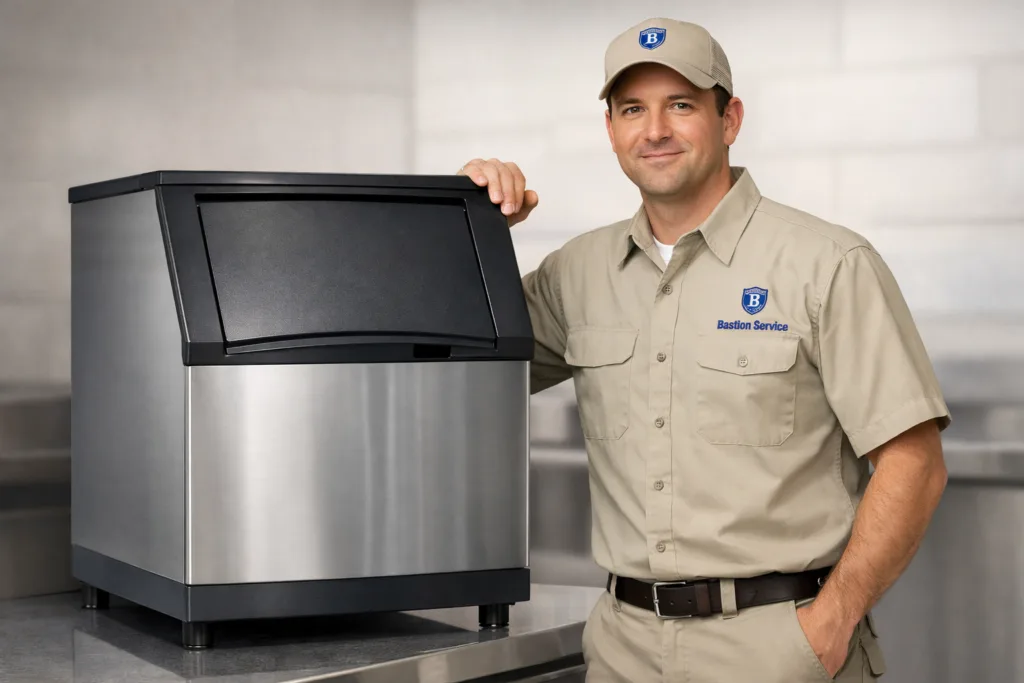




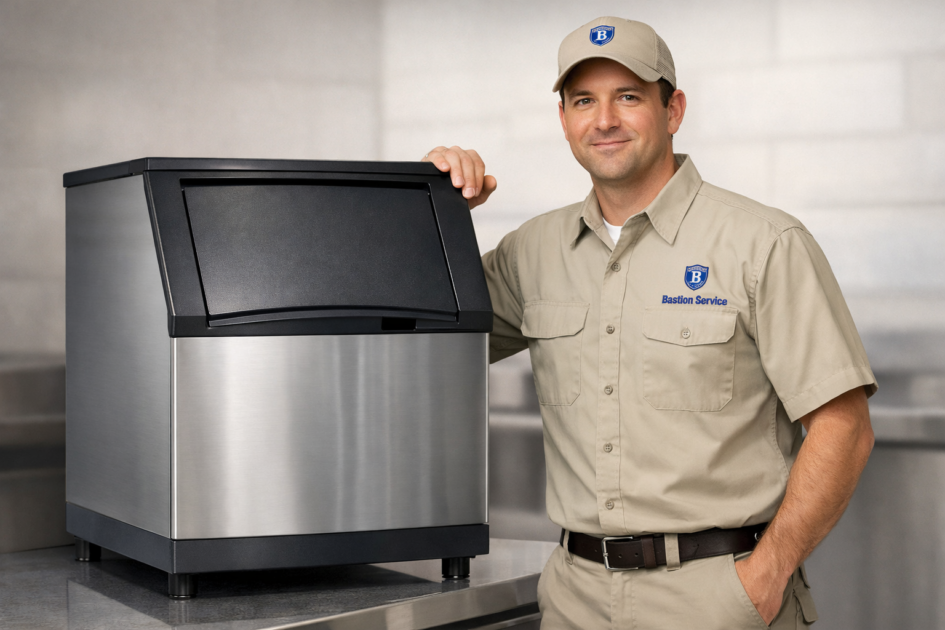
Ice machine problems can disrupt beverage service, food prep, guest experience, and staff workflow faster than many operators expect. When a Manitowoc unit starts missing cycles, leaking, slowing down, or making inconsistent ice, service should be based on the actual symptom pattern, operating conditions, and the risk of further downtime if the machine keeps running in a failed state.
Related commercial service paths in Fairfax include Manitowoc Commercial Repair in Fairfax, Commercial Ice Machine Repair in Fairfax, and Hoshizaki Ice Machine Repair in Fairfax.
For businesses in Fairfax, that usually means scheduling repair once the issue starts affecting production rather than waiting for a complete shutdown. Bastion Service works on Manitowoc ice machine issues with a service-first approach that focuses on diagnosis, repair planning, and the steps needed to get the machine back into stable daily operation.
Common Manitowoc ice machine problems
Low ice production or slow recovery
If the bin is not filling fast enough, the cause may be restricted water supply, scale on water components, poor condenser airflow, sensor problems, or declining refrigeration performance. This often becomes obvious during busy periods when the machine cannot recover between demand cycles.
Low production is not always a single-part failure. A machine may still run, freeze, and harvest, but do so inefficiently enough that output falls below what the kitchen, bar, breakroom, or service area needs. That is why production complaints should be checked against water flow, freeze times, harvest behavior, and overall machine condition.
No ice or repeated shutdowns
A Manitowoc machine that will not start, powers up but does not cycle, or shuts down during operation may have a control fault, sensor issue, water fill problem, electrical failure, or a refrigeration-related problem that prevents normal freeze and harvest sequences. Some units also lock out after repeated failed attempts to complete a cycle.
If the machine is showing error behavior, restarting on its own, or stopping after partially completing a batch, continued use can increase wear and make the root cause harder to isolate. These symptoms usually call for repair scheduling rather than trial-and-error resets.
Leaks, overflow, or water around the unit
Water on the floor may come from a restricted drain, damaged tubing, an inlet valve problem, a pump issue, overflow during fill, or ice forming where it should not. In some cases, the leak is intermittent and only appears during certain parts of the cycle, which makes symptom reporting especially helpful.
Even a minor leak can create bigger concerns for sanitation, flooring, nearby equipment, and safe movement around the work area. If the machine is leaking consistently, it should be checked before normal operation continues.
Misshapen, cloudy, thin, or clumped ice
Ice appearance can reveal a lot about what is going wrong inside the machine. Thin ice may point to water flow or freeze issues. Cloudy or irregular ice can relate to water distribution, scale, or cycle problems. Clumped ice may indicate harvest trouble, partial melting, or inconsistent production timing.
On Manitowoc equipment, these quality changes are often early signs that the unit is no longer completing cycles the way it should. Addressing the issue early can help prevent more serious failures and reduce product waste.
Harvest problems and incomplete release
If the ice does not release cleanly from the evaporator, the machine may stall, produce partial batches, or shut down on repeated failed harvest attempts. Scale buildup, sensor faults, hot gas problems, and refrigeration imbalance can all contribute to poor harvest performance.
Harvest complaints are important because they often overlap with other symptoms such as low output, inconsistent cube formation, and longer cycle times. Looking at the full operating pattern helps determine whether the issue is isolated or part of a broader system problem.
Why symptom-based diagnosis matters
Similar symptoms can come from very different failures. A machine that is making too little ice could have a dirty condenser, weak water fill, sensor trouble, scaling, or a refrigeration issue. A leaking machine might have a drain problem rather than a failed valve. Poor harvest could be caused by buildup, controls, or system performance loss.
That is why repair decisions should start with what the machine is doing now, when the problem began, whether the issue is constant or intermittent, and how the unit behaves during freeze and harvest. A symptom-based inspection helps avoid replacing parts based on guesswork and makes it easier to determine whether the repair is straightforward or whether the machine has multiple contributing issues.
What technicians typically check on a Manitowoc unit
A service visit usually centers on the operating sequence and the conditions affecting it. That may include:
- Water supply and fill behavior
- Drain performance and overflow conditions
- Condenser cleanliness and airflow
- Scale buildup on water-side components
- Freeze time and harvest time
- Sensors, controls, and safety shutdown behavior
- Pumps, valves, and related moving parts
- Overall refrigeration performance
This type of inspection helps narrow the fault to the system actually causing the interruption instead of treating the machine like every no-ice call has the same answer.
Signs you should schedule repair soon
Businesses in Fairfax should plan service when the machine is producing less ice than normal, struggling to keep up with demand, leaking, making unusual sounds, forming poor-quality ice, or stopping mid-cycle. Those issues rarely improve on their own, and delay can turn a smaller repair into a larger one.
It is also smart to schedule service when staff notice the machine taking longer to complete batches, dropping incomplete ice, needing repeated resets, or cycling unpredictably through the day. These patterns often point to a developing failure rather than a one-time interruption.
Repair or replacement?
Many Manitowoc ice machine problems are repairable when the machine is otherwise in good condition and the fault is limited to serviceable components. Repair often makes sense when the equipment still matches the business’s production needs and the issue can be corrected without stacking multiple major repairs together.
Replacement becomes a more serious discussion when the unit has repeated breakdowns, declining reliability, heavy wear across several systems, or repair needs that no longer support stable operation. For most businesses, the real question is whether the machine can return to predictable daily use after service rather than whether one individual part can be changed.
How to prepare before a service visit
Useful details from staff can shorten diagnosis time. It helps to note whether the machine is making no ice at all or just too little, whether leaking happens constantly or only during certain cycles, whether the issue followed cleaning or maintenance, and whether fault lights or unusual noises appeared before the problem got worse.
If possible, businesses should also be ready to describe changes in ice appearance, recent water supply interruptions, drain problems, or times of day when the unit struggles most. Those details can make a difference when the problem is intermittent.
Service that supports daily operations
Ice machines often support more than one part of the workday, so downtime can affect drink stations, prep routines, guest-facing service, staff efficiency, and sanitation procedures all at once. For that reason, repair should focus on restoring reliable cycle performance, not just getting the machine to run temporarily.
If your Manitowoc ice machine in Fairfax is leaking, producing too little ice, failing to harvest properly, or shutting down during operation, the next step is to schedule service based on the exact symptoms you are seeing. A focused repair visit can help identify the fault, confirm whether repair is the right path, and reduce the risk of extended interruption to daily operations.


