
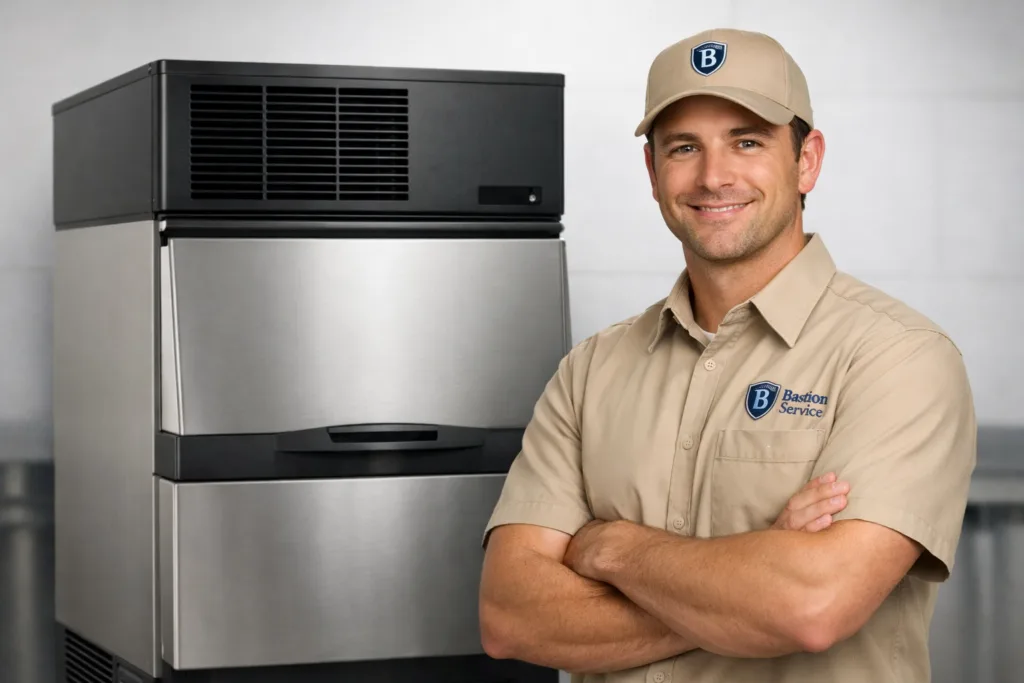





Ice machine problems rarely stay isolated for long. When a Hoshizaki unit starts falling behind, leaking, shutting down, or producing inconsistent ice, the issue can quickly disrupt beverage service, prep routines, sanitation standards, and staff workflow. Bastion Service provides Hoshizaki ice machine repair in Fairfax with attention to the actual symptom pattern, the stage of the cycle where the problem appears, and the repair path that best supports continued operation.
Related commercial service paths in Fairfax include Hoshizaki Commercial Repair in Fairfax, Commercial Ice Machine Repair in Fairfax, and Hoshizaki Refrigerator Repair in Fairfax.
For businesses in Fairfax, the most useful service call is one that identifies whether the fault is related to water supply, drainage, scale buildup, freeze performance, harvest problems, controls, or a worn component. That distinction matters because “not making enough ice” can describe several very different failures, each with a different repair decision and urgency level.
Common Hoshizaki Ice Machine Problems
Low ice production or slow recovery
If the machine still makes ice but cannot keep up with normal demand, the cause may involve restricted water flow, mineral buildup, a dirty condenser, weak airflow, inaccurate sensing, or a refrigeration issue that slows the freeze cycle. Slow recovery often shows up first during busy periods, when bin levels drop faster than the machine can replenish them.
This is the kind of problem that should be checked early. A unit that runs longer than normal to produce the same amount of ice is often operating under strain, which can lead to additional wear on motors, pumps, and refrigeration components.
No ice production
A complete production stop can come from a failed water inlet valve, pump problem, sensor fault, control issue, safety shutdown, or a refrigeration-side failure that keeps the machine from freezing or harvesting properly. In some cases the machine powers on but never moves through the cycle as expected. In others, it may begin a cycle and then stop before ice is formed or released.
Repeated resets may temporarily restart the machine, but they do not correct the underlying cause. If the unit is no longer producing usable ice, service is usually the most efficient next step.
Clumped, small, cloudy, or misshapen ice
Changes in cube quality often point to problems that are already affecting overall performance. Poor fill, uneven freezing, scale buildup, water quality issues, or cycle timing errors can all change the size, clarity, or consistency of the ice. A machine that begins making irregular cubes may still appear functional, but that visible change can be an early warning sign of a deeper operating problem.
For kitchens, bars, and other food-service settings, inconsistent ice quality can also create handling and presentation issues long before total failure occurs.
Leaks, overflow, or water around the unit
Water leaks can be tied to blocked drains, cracked tubing, fill problems, overflow conditions, or ice forming where it should not. Even a small leak deserves attention because it can affect flooring, nearby equipment, and cleanup routines. If the issue is related to drainage or freeze pattern problems, continued operation can make the situation worse.
When leaks appear together with low output or abnormal cycling, it often suggests that more than one condition is contributing to the machine’s performance problems.
Harvest issues or incomplete release
If the machine forms ice but struggles to release it correctly, the problem may involve sensors, water distribution, freeze thickness, control timing, or component wear affecting the harvest sequence. Units with harvest issues may run long, stop mid-cycle, create uneven batches, or leave partial ice formations behind.
This symptom matters because harvest problems can easily be mistaken for simple low production. In reality, the machine may be making ice but failing at a specific stage that requires targeted repair rather than guesswork.
Unusual noise, frequent cycling, or shutdowns
Buzzing, rattling, grinding, or repeated starting and stopping can point to fan motor problems, pump wear, loose components, compressor stress, or ice buildup in the wrong area. If the sound pattern has changed, that change usually means something in the operating cycle is no longer working normally.
Shutdowns after a brief run period may indicate that the machine is entering a protective mode or failing to meet expected cycle conditions. In a business environment, that should be treated as more than an inconvenience, especially if the machine is critical to daily service.
Why One Symptom Can Have Multiple Causes
Ice machines often present broad symptoms that look simple from the outside. Low output, for example, could come from scale restricting water movement, poor condenser airflow, a weak inlet valve, faulty sensing, or a sealed-system problem. Water in the bin area might be a drainage issue, an overfill condition, or a sign that the freeze and harvest process is not staying within normal limits.
That is why repair decisions should be based on where the cycle is failing, not just on the visible complaint. Replacing a part based only on a single symptom can increase cost and still leave the machine unreliable. A good diagnosis helps identify whether the problem is isolated, whether there are contributing maintenance issues, and whether the unit is a strong candidate for repair.
Signs the Machine Should Be Serviced Soon
Businesses in Fairfax should consider scheduling service when a Hoshizaki ice machine shows any of the following signs:
- Daily ice volume has dropped below normal demand
- The machine runs but the bin stays low
- Ice is coming out small, hollow, cloudy, or fused together
- Water is leaking from the cabinet or pooling near the base
- The machine starts and stops without finishing a normal cycle
- Noise levels have changed noticeably
- The unit appears to freeze but does not harvest correctly
- Operation becomes inconsistent from one batch to the next
These symptoms usually mean the machine is no longer operating within normal conditions. Waiting can turn a manageable repair into a larger interruption, especially if the unit is forced to run while airflow, water flow, drainage, or refrigeration performance is compromised.
What a Service Visit Should Help Clarify
A useful ice machine repair visit should answer more than whether the machine is currently making ice. It should help determine where the production cycle is breaking down, whether scale or maintenance-related conditions are contributing to the failure, and whether there are signs of wear that could affect reliability after the immediate repair is completed.
For a Hoshizaki unit, that often means checking fill behavior, freeze consistency, harvest performance, drain function, airflow conditions, and control response rather than focusing on a single part too early. This approach gives the business a clearer idea of what caused the interruption and what needs to happen next.
Repair or Replace?
Many Hoshizaki ice machine problems are repairable, particularly when the issue involves water inlet components, pumps, sensors, drains, fan motors, controls, or scale-related operating problems. If the unit is otherwise in solid condition, a targeted repair can restore output and stabilize daily operation.
Replacement becomes a more serious consideration when the machine has a history of repeated breakdowns, major refrigeration-system concerns, advanced wear, or repair costs that no longer make sense for its age and condition. The right decision usually comes down to whether the machine can return to dependable ice production without continued disruption.
Preparing for Ice Machine Repair
Before service is performed, it helps to note what the machine is doing differently from normal. Useful details include whether production slowed gradually or stopped suddenly, whether leaks started before or after output dropped, whether the issue appears during freezing or harvest, and whether the machine is making unusual sounds. Even simple observations can shorten the path to an accurate diagnosis.
If the unit is leaking heavily, shutting down repeatedly, or producing poor-quality ice that affects daily use, reducing operation until it is checked may help prevent added damage. For businesses in Fairfax that depend on steady ice supply, timely repair scheduling is often the best way to limit downtime and keep the problem from spreading to other parts of the machine.
When a Hoshizaki ice machine starts affecting workflow, product handling, or customer service, the next step should be based on the machine’s actual failure pattern rather than trial-and-error fixes. Professional repair service in Fairfax can help determine the cause, explain the repair path, and get the unit back to more consistent operation with less disruption to the business.


