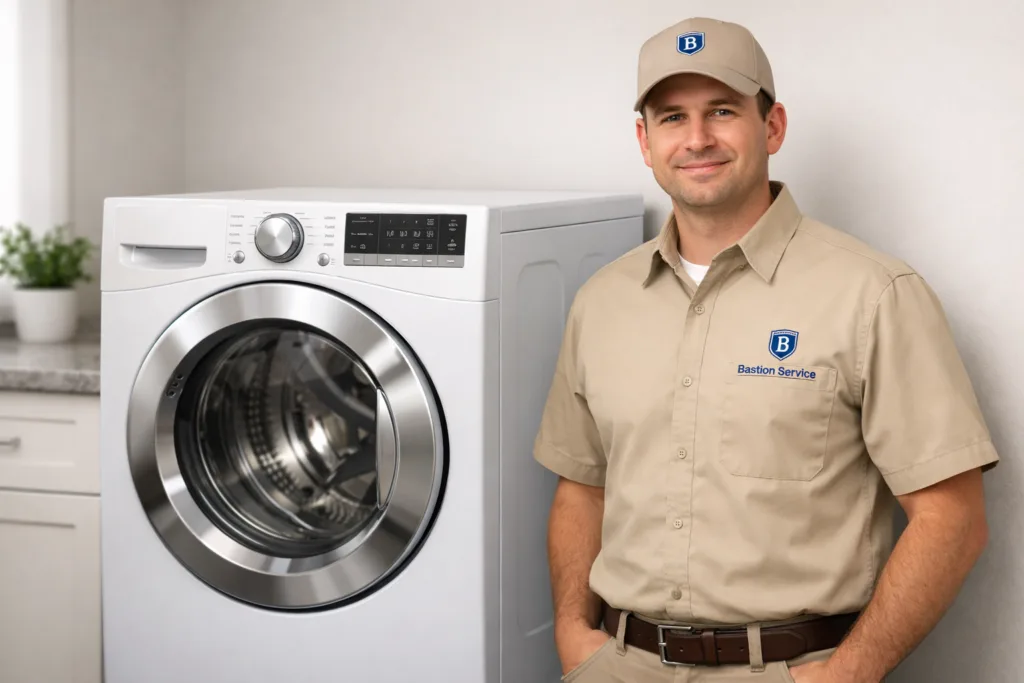
Common LG dryer problems in Rancho Park homes

Dryer trouble usually follows a few recognizable patterns. Paying attention to how the machine behaves before it fails completely can make the repair path much more straightforward and help prevent extra wear on the drum, motor, and heating system.
Dryer runs but clothes are still damp
If the drum turns normally but laundry comes out wet or only partly dry, the problem is not always the same. Restricted airflow is one of the most common causes, especially when heavier items like towels or blankets take much longer than light loads. A heating problem can cause a similar result, but so can a moisture-sensing issue that ends the cycle too soon.
Useful clues include loads that feel warm but not dry, cycles that need to be restarted, or drying performance that changes from one load type to another. When this keeps happening, the dryer is usually working harder than it should.
Dryer will not start
An LG dryer that does nothing when you press start may have a door switch problem, a thermal safety issue, a control fault, or a power-related failure. In some cases the panel lights up but the dryer never begins tumbling. In others, the machine appears completely unresponsive.
That distinction matters. A lit display with no drum movement often points in a different direction than a dryer with no response at all, so noting exactly what happens can save time during diagnosis.
No heat or weak heat
When the dryer tumbles but produces little or no heat, clothes may stay cool and damp after a full cycle. Some homeowners notice that a small load eventually dries after two or three cycles, while larger loads barely improve. That usually suggests partial heating, poor airflow, or a temperature regulation problem rather than a total shutdown of the heating system.
Weak heat should not be ignored. Long cycle times put extra strain on components and can make a minor issue more expensive if the machine continues running in that condition.
Loud thumping, squealing, or scraping
New noise is often the first sign that a moving part is wearing out. A rhythmic thump can come from drum support parts, while a squeal may point to an idler or roller issue. Scraping sounds can mean the drum is not gliding correctly or that an object has worked into the drum path.
If the sound is getting louder, happens every cycle, or is paired with a dragging drum, it is smart to stop using the dryer until it is checked. Continued operation can damage the belt, drum, or support system.
Dryer stops too early or behaves unpredictably
Some LG dryers start and run but shut off before clothes are dry, overheat on one load and underperform on the next, or show inconsistent cycle times with no obvious pattern. That can happen when the sensing system is misreading moisture, airflow is restricted, or temperature control components are not reacting properly.
Intermittent behavior is especially frustrating because it can look like the problem has gone away, only to return on the next load. In those cases, symptom notes are often just as important as the dryer model number.
Why symptom details matter with LG dryers
LG dryers rely on several systems working together: heat, airflow, drum movement, moisture sensing, and electronic controls. One symptom can have several possible causes. For example, long dry times may come from vent restriction, weak heating, a sensor issue, or a drum problem that reduces normal operation.
That is why exact symptom patterns matter. Whether the dryer is warm or completely cold, whether the noise begins at startup or later in the cycle, and whether the issue affects every load or only bulky items can all point toward a different repair path.
A correct diagnosis also helps avoid unnecessary parts replacement. In many cases, the most cost-effective repair is found by confirming which system is actually failing rather than assuming the most obvious part is bad.
Signs the dryer should be checked soon
Some problems can wait a day or two, but others are worth addressing quickly. Schedule service sooner rather than later if you notice any of the following:
- Clothes are taking much longer than normal to dry
- The dryer runs with little or no heat
- The drum makes scraping, thumping, or squealing noises
- The unit stops mid-cycle and needs to be restarted
- The cabinet becomes unusually hot during normal use
- There is a burning smell coming from the dryer itself
These symptoms can indicate anything from restricted airflow to worn mechanical parts or overheating protection issues. Using the machine through those warning signs can sometimes turn a manageable repair into a larger one.
Repair or replace?
For many households in Rancho Park, the decision comes down to the dryer’s age, overall condition, and whether the failure is isolated or part of a larger wear pattern. A dryer with one serviceable fault and otherwise solid performance is often a good repair candidate. A unit with repeated breakdowns, multiple worn components, or major control and drive issues may be harder to justify.
The most helpful approach is to compare the repair scope with the condition of the machine as a whole. A practical repair guidance conversation should include how the dryer has been performing recently, whether problems have been recurring, and whether other symptoms suggest additional parts are nearing the end of their service life.
What homeowners can note before scheduling service
A few details can make diagnosis easier. Before service, it helps to note:
- Whether the drum turns normally
- Whether the dryer produces any heat at all
- How long a typical cycle is taking
- Whether the issue happens on every load or only large ones
- What kind of noise is present and when it starts
- Whether the dryer shuts off on its own or needs multiple restarts
Those observations help narrow the problem to the right system from the start. For Rancho Park homeowners dealing with an LG dryer that is no longer performing the way it should, the fastest path to a sound decision is understanding the symptom pattern first and then matching it to the right repair approach.