
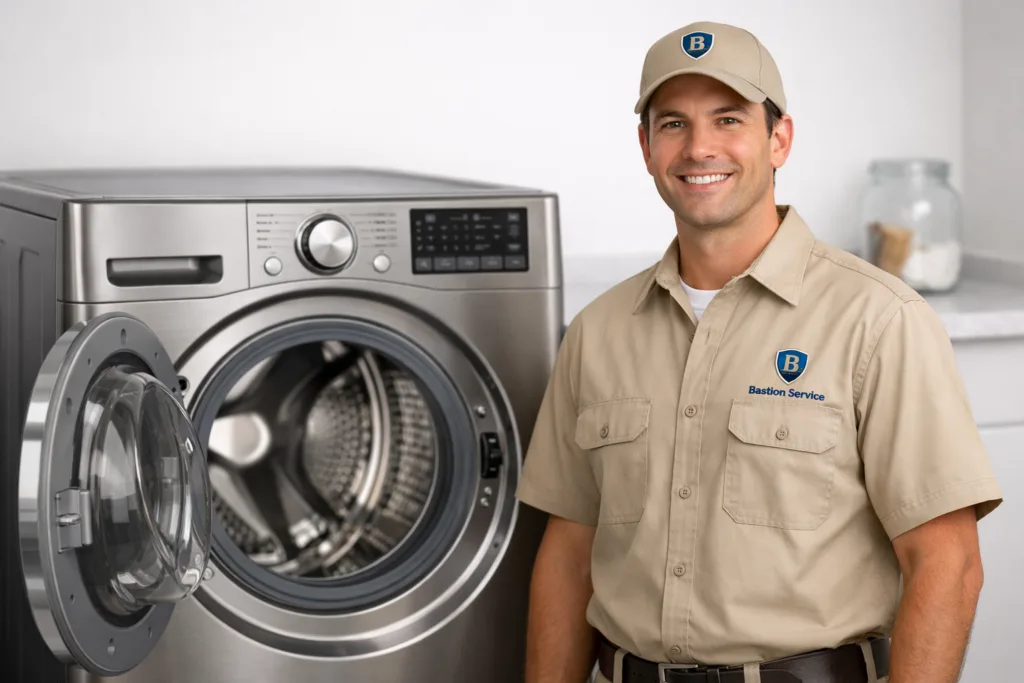





Appliance problems rarely stay neatly contained. A refrigerator that is only “a little warm,” a washer that sometimes drains, or an oven that seems slightly off can become a bigger disruption if the underlying fault keeps developing. With LG units, the most useful starting point is to match the symptom to the system that is most likely failing instead of guessing from one visible sign.
What Rancho Park homeowners usually notice first
Most households do not call for help because an appliance has completely died. More often, the first sign is a pattern: food spoiling sooner than expected, laundry taking two cycles to finish, dishes staying wet, or burners not responding normally. Those patterns matter because they often narrow the issue down faster than the appliance model alone.
Common early warning signs include:
- Temperature swings in a refrigerator, freezer, oven, or cooktop
- Water where it should not be, including leaks, condensation, or standing water
- New noises such as buzzing, grinding, rattling, squealing, or repeated clicking
- Cycles that run too long, stop midway, or fail to start
- Error codes that return after the appliance is reset
- Burning smells, overheating, or repeated breaker trips
When those symptoms start repeating, it is usually time to stop treating the problem as a one-off interruption and look at the actual cause.
Refrigerator and freezer symptoms that deserve quick attention
LG refrigerators and freezers often show trouble through changing temperatures before they stop cooling altogether. Fresh food may feel less cold, ice may soften, or the unit may seem to run much longer than normal. Some homes also notice frost on interior panels, fan noise that comes and goes, or water collecting under drawers.
These symptoms can point to different systems, including airflow restrictions, defrost failures, sensor issues, fan motor problems, door sealing problems, or more serious cooling-related faults. A refrigerator that is still running is not necessarily a healthy refrigerator. If it is operating constantly without keeping stable temperatures, continued use can add stress to major components while food safety becomes less reliable.
Freezer complaints also deserve context. Heavy frost is not always “just moisture,” and warming in only one section does not always mean the whole unit has failed. Uneven freezing often suggests circulation or defrost trouble rather than a simple thermostat issue.
Signs the cooling issue may be getting worse
- Milk, leftovers, or produce spoil faster than usual
- Ice production slows or stops
- The compressor seems to run constantly
- The freezer stays cold but the refrigerator section warms up
- Water leaks appear after a period of frost buildup
Washer problems that often start small
LG washers commonly begin with performance changes rather than a complete failure. A cycle may take longer, the drum may stop before spin, or clothes may come out wetter than normal. Homeowners may also notice door lock delays, repeated draining attempts, or vibration that becomes harder to ignore over time.
Some causes are fairly contained, such as drainage restrictions, pump problems, or imbalance conditions. Others involve suspension wear, motor-related issues, control faults, or bearing deterioration. The reason symptom details matter is that “washer won’t finish” can describe several very different repair paths.
If the unit is leaking, banging hard during spin, or repeatedly stopping with water left inside, repeated restart attempts usually do more frustration than good. That is especially true when the machine has begun making louder mechanical sounds than before.
Helpful clues to note with a washer
- Whether the problem happens during fill, wash, drain, or spin
- If the machine shakes only with large loads or with any load
- Whether water remains in the drum after the cycle ends
- If there is a burning smell, rubbing sound, or grinding noise
- Any code shown on the display and how often it returns
Dryer issues that affect both performance and safety
Dryers often provide clear warning signs before they stop heating completely. Clothes may take much longer to dry, the cabinet may feel unusually hot, or the cycle may end while laundry is still damp. Some LG dryers also develop squealing, thumping, scraping, or intermittent shutoff behavior as parts wear.
Poor drying does not always mean a failed heater. Airflow restrictions, sensing problems, thermostatic components, drum support wear, belt issues, and electrical faults can all create similar complaints. That is why replacing a single part without testing the full symptom pattern can miss the actual problem.
If there is a burning odor, overheating, or repeated shutdown during a normal cycle, stop using the dryer until the cause is identified. Heat-related problems can become more serious quickly when the appliance is kept in service.
Dishwasher problems beyond dishes coming out dirty
When an LG dishwasher starts underperforming, many homeowners first notice spotting, residue, or poor drying. But the more important clues are often the ones around the cycle itself: slow filling, standing water at the bottom, a hum without washing action, leaks at the door, or a cycle that seems to stall.
Dishwasher problems may involve drainage restrictions, wash motor issues, spray arm obstruction, fill valve trouble, door seal wear, or control-related interruptions. If the unit is leaking onto the floor, the concern is not just cleaning performance. Ongoing leaks can affect surrounding cabinetry, trim, and flooring if the issue is allowed to continue.
A dishwasher that occasionally works should not automatically be treated as a minor issue. Intermittent appliance problems are often harder on components than a simple, predictable failure because the underlying fault remains active while the machine tries to complete each cycle.
Cooktop, range, and oven symptoms that should not be brushed off
Cooking appliances tend to create problems homeowners feel immediately. Dinner takes longer, burners click repeatedly, one side of the cooktop runs hotter than the other, or the oven reaches the set temperature unevenly. With LG cooking products, those symptoms can trace back to ignition parts, switches, surface elements, relays, temperature sensors, control boards, or wiring issues.
An oven that preheats slowly or bakes unevenly may still be producing heat, but not in a controlled way. A cooktop burner that cycles unpredictably may not have a simple surface-level issue. In both cases, performance and safety overlap, which is why recurring electrical behavior or ignition trouble should not be ignored.
If there is a strong or persistent gas smell, stop using the appliance immediately. Leave the area if needed and contact the gas utility or emergency service before arranging repair.
Common cooking appliance complaints
- Burners that will not ignite or keep clicking
- Elements that stay too hot or do not heat enough
- Oven temperature that drifts during baking
- Preheat times that become noticeably longer
- Controls that respond inconsistently
Why symptom-based diagnosis matters with LG appliances
LG appliances often combine sensors, boards, motors, switches, and mechanical assemblies in ways that make one symptom overlap with several possible causes. A refrigerator that is warm may not have the same kind of failure as another refrigerator with the same complaint. A washer that will not drain may be dealing with a blockage, a failed pump, a wiring issue, or a control problem. A dryer with no heat may also have an airflow condition that needs attention.
That is why symptom-based diagnosis matters. It helps separate cosmetic frustration from actual system failure, and it gives homeowners a better sense of whether the repair is likely to be straightforward, labor-heavy, or expensive enough to weigh against replacement.
When to stop using the appliance and schedule service
Some appliance issues are inconvenient but temporarily stable. Others can create secondary damage if the unit keeps running. In most Rancho Park homes, service should move higher on the priority list when you notice:
- Loss of cooling in a refrigerator or freezer
- Water leaks from a washer, dishwasher, or refrigerator
- Burning smells, overheating, or repeated shutdown in a dryer
- Severe vibration, banging, or grinding from a washer
- Persistent oven temperature inaccuracy
- Recurring ignition trouble on a cooktop or range
- Breaker trips, flickering displays, or intermittent power loss
- Error codes that keep returning after basic reset attempts
Continuing to use an appliance in those conditions can turn an isolated part failure into wider wear on pumps, motors, fans, seals, boards, and heating components.
Repair or replacement: how households usually weigh the decision
Not every malfunction points to the same answer. A repair often makes sense when the appliance is otherwise in good condition and the failure is limited to one clear system. Replacement becomes more reasonable when the appliance has repeated breakdowns, multiple active problems, or a major repair cost relative to its age and overall condition.
For example, a dishwasher with one drain-related failure is a different decision from a refrigerator with a long history of cooling complaints. A washer with a single latch or pump issue is not the same as a machine showing heavy noise, unstable spin behavior, and control problems at once. Looking at the full symptom history usually gives a clearer picture than focusing on the newest complaint alone.
What to note before a service visit
A few observations from daily use can make troubleshooting much faster. Before the visit, it helps to write down:
- When the issue started
- Whether it is constant or intermittent
- Any displayed code
- Unusual sounds, odors, or leak locations
- The point in the cycle when the problem happens
- Whether the appliance has been reset or restarted repeatedly
For refrigerators and freezers, note temperature changes, frost patterns, and whether one section is affected more than the other. For washers and dishwashers, note whether the problem happens during filling, washing, draining, or spinning. For dryers, note dry times and whether the drum turns normally. For ovens and ranges, note whether the issue affects preheating, burner function, or temperature consistency.
Support across common LG household appliances
In Rancho Park, homeowners often need help interpreting symptoms across several appliance types rather than just one. Cooling problems, drainage issues, weak drying, uneven heating, ignition trouble, and control-related interruptions can all look simple at first while pointing to very different repairs underneath. A diagnosis-first approach is usually the best way to decide what is worth fixing, what should be stopped immediately, and what can be planned without unnecessary guesswork.
Whether the issue involves a refrigerator, freezer, washer, dryer, dishwasher, cooktop, oven, or range, the goal is the same: identify the failed system, understand the likely repair path, and make a sensible decision for the home.


