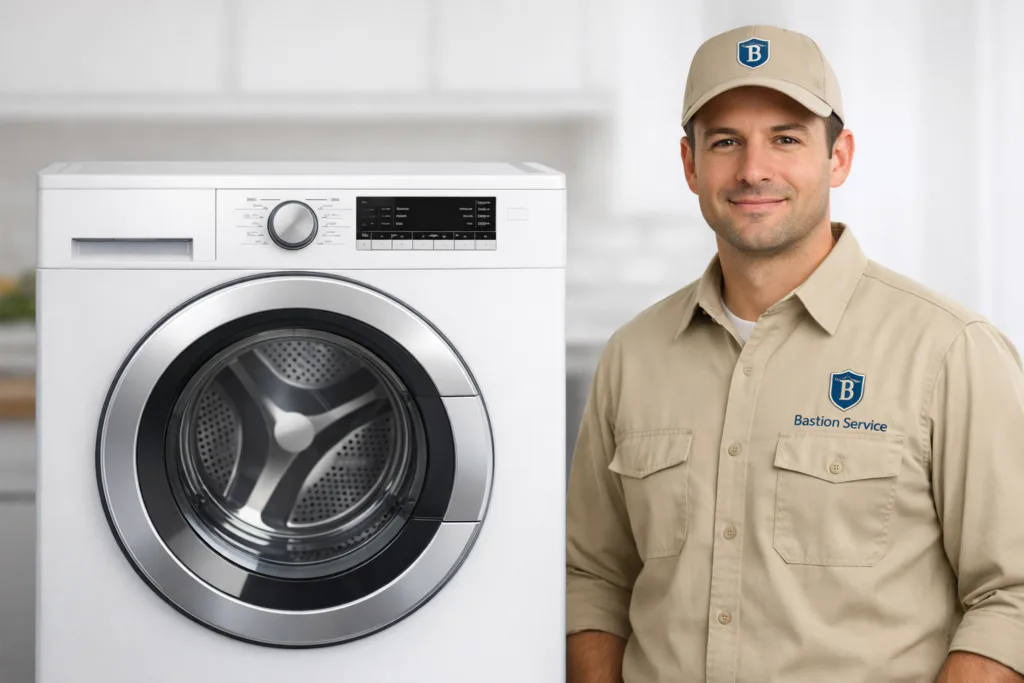
Dryer trouble rarely starts with a single obvious failure. More often, there is a pattern: clothes stay damp even though the drum turns, cycle times get longer over a few weeks, or a new squeal shows up before the machine stops working altogether. With Blomberg dryers, those details matter because similar symptoms can come from very different causes, including airflow restriction, heat circuit failure, drum support wear, sensor trouble, or an electrical issue.
Blomberg dryer symptoms that deserve attention
Runs but does not heat
If the dryer starts and tumbles normally but never gets warm, the problem may involve the heating circuit, thermostat, thermal safety component, control issue, or incoming power. In some homes, the dryer itself is only part of the problem and restricted vent flow is also affecting performance. That is why it helps to look at both the appliance and the airflow path instead of assuming one failed part is the answer.
Takes too long to dry
Long dry times are one of the most common complaints with residential dryers. Sometimes the cause is weak or inconsistent heat, but just as often the issue is poor air movement, a moisture sensing problem, or loads that are not venting moisture efficiently. If towels, jeans, or everyday laundry suddenly need extra cycles, it is usually a sign that something has changed and should be checked before added runtime creates more wear.
Will not start
A no-start dryer can point to several different faults. The door switch, start switch, belt switch, thermal fuse, control board, or power supply may all be involved depending on what the machine does when the button is pressed. A completely dead dryer suggests a different path than one with lights and display activity but no drum movement. Small differences in behavior help narrow the problem much faster.
Makes unusual noise
Thumping, squealing, scraping, grinding, or rattling usually means something mechanical is wearing or has come loose. Common possibilities include drum rollers, idler pulley wear, blower wheel problems, belt issues, or an item caught where it should not be. Noise is easy to put off for a few loads, but continued use can turn a smaller repair into damage affecting the motor, drum, or surrounding components.
Stops mid-cycle
When a dryer shuts off before the load is finished, the issue may be related to overheating, poor venting, sensor behavior, control faults, or a safety device reacting to abnormal temperature. If it restarts after cooling down, that often points in a different direction than a unit that stays off completely. Intermittent shutdowns are worth taking seriously because they often indicate a condition that is getting worse.
How symptom patterns help identify the problem
One complaint by itself does not always tell the full story. A dryer that heats for a few minutes and then goes cold is different from one that never heats at all. A unit that hums but does not turn suggests a different failure than one that turns with a harsh scraping sound. Clothes that come out hot but still damp usually shift attention toward airflow and moisture sensing rather than simple heat production.
These combinations are useful because they help separate likely causes into groups such as:
- Heating system problems
- Airflow or vent restriction
- Drum support or drive component wear
- Sensor or control issues
- Power supply or safety cutoff faults
For homeowners in Rancho Park, that kind of symptom-based review is often the fastest way to understand whether the dryer likely needs a part replacement, vent-related correction, or a broader repair decision.
Signs airflow may be part of the issue
Airflow problems are easy to overlook because the dryer may still run, heat, and appear mostly normal. But when hot, moist air cannot move out effectively, drying times increase and internal temperatures can rise. That can lead to overheating complaints, thermal safety trips, or heat-related wear that seems at first like a separate failure.
Common signs that airflow deserves attention include:
- Clothes remain damp after a normal cycle
- The dryer feels unusually hot on the outside
- The laundry area gets hotter or more humid than usual
- Drying improves only with very small loads
- The machine shuts off before completing the cycle
When these signs appear alongside weak heating or inconsistent performance, it makes sense to consider the full operating path rather than focusing only on the internal heating parts.
When to stop using the dryer
Some symptoms are more than an inconvenience. It is best to stop using the dryer if you notice a burning smell, repeated breaker trips, heavy scraping, loud squealing, a drum that does not turn properly, or very poor drying despite small loads. Those signs can indicate overheating, friction, or electrical trouble that may worsen with continued operation.
You should also pause use if the dryer is shutting down unexpectedly, producing much more heat than normal, or showing a sudden change in behavior from one load to the next. Even when the machine still starts, running it in that condition can increase damage to belts, rollers, motors, controls, or heating components.
Repair or replacement: what usually makes sense
Not every Blomberg dryer problem leads to the same decision. Repair is often worthwhile when the issue is limited to a specific component such as a belt, roller, thermostat, switch, sensor, or heater-related part and the rest of the machine is in solid shape. If the dryer has been reliable until this point, an isolated repair may restore normal use without much uncertainty.
Replacement becomes a more serious consideration when there are multiple failures at the same time, repeated electronic issues, or obvious overall wear that suggests more breakdowns are likely. The most helpful service approach is one that explains what failed, whether related parts are also worn, and whether the total repair path matches the condition of the appliance.
What Rancho Park homeowners can do before service
Before arranging repair, a few observations can make the problem easier to describe. Note whether the drum turns, whether heat is present at any point in the cycle, how long loads are taking, and whether the issue happens on every setting or only some of them. If there is a noise, try to identify whether it is a thump, squeal, scrape, or rattle.
It also helps to pay attention to whether:
- The dryer stopped all at once or gradually got worse
- The display lights up normally
- The machine shuts off on its own
- Clothes feel hot but still come out damp
- The problem started after unusually heavy or repeated loads
Those details can help narrow the issue quickly and make the repair path more straightforward.
Focused service for a Blomberg dryer in Rancho Park
Blomberg dryer repair in Rancho Park is most useful when it stays focused on the actual symptom pattern instead of guessing from one complaint alone. No heat, extended dry times, no-start conditions, noise, and shutdowns each point in different directions depending on how the machine behaves before, during, and after the cycle.
For households trying to get back to normal laundry routines, the goal is simple: identify the fault, understand whether continued use could cause more damage, and decide whether repair is the practical next step for the dryer you already have.