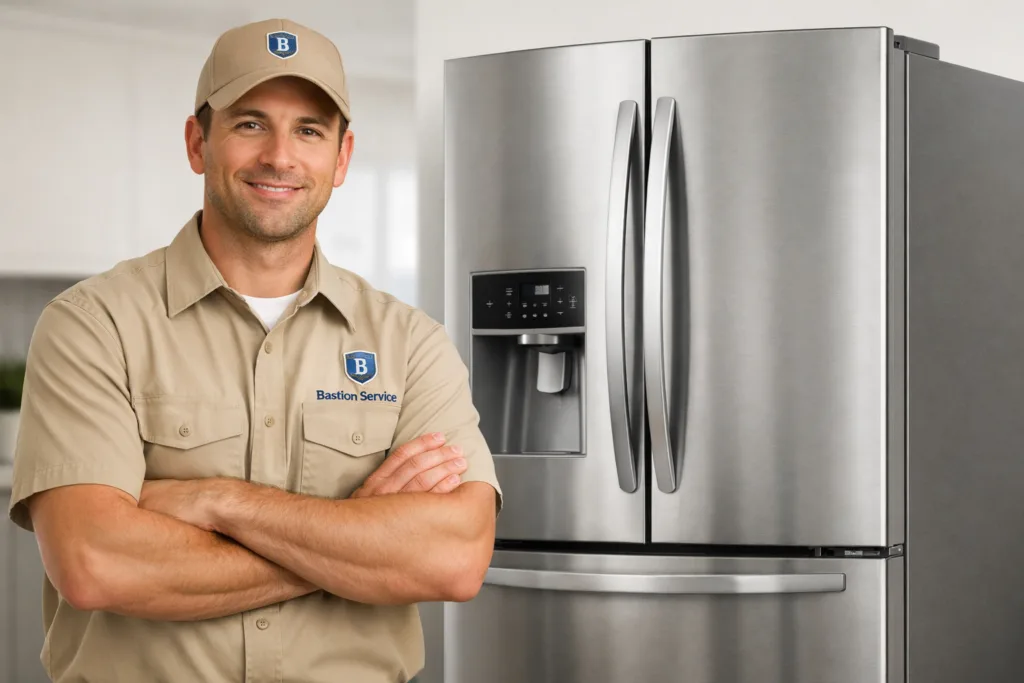
A Kenmore refrigerator that starts leaking, frosting up, running nonstop, or drifting out of temperature can create kitchen problems fast. The most helpful next step is to look at the exact symptom pattern, because a warm compartment, puddle on the floor, or clicking noise can each come from several different causes. In Hawthorne homes, that usually means checking airflow, temperature behavior, frost patterns, drainage, and the components tied to the complaint before deciding whether repair makes sense.
Common Kenmore refrigerator symptoms and what they often mean
Most refrigerator problems show up in recognizable ways. The details matter because they help separate a relatively contained repair from a more serious cooling-system issue.
Refrigerator not cooling well
If the fresh food section is warm, drinks are no longer cold, or both compartments are losing temperature, possible causes include dirty condenser coils, a weak evaporator fan, a condenser fan problem, a sensor or thermostat issue, a control failure, or a compressor-related fault. A gradual loss of cooling often points to airflow or defrost trouble, while a sudden temperature jump may suggest an electrical or start-related problem.
Freezer stays cold but refrigerator section turns warm
This symptom commonly indicates that cold air is not moving correctly from the freezer into the refrigerator compartment. An iced evaporator, blocked vent, failed evaporator fan, or defrost problem can all create this pattern. Homeowners sometimes notice that food near one vent freezes while items on other shelves feel too warm, which is another sign that airflow is uneven rather than completely absent.
Water leaking under or inside the unit
A leak can come from a clogged defrost drain, a loose or damaged water line, excess condensation from a poor door seal, or an issue around the ice maker area. Even a small puddle should not be ignored. Repeated leaking can damage flooring, create odors, and allow hidden moisture to build up around or beneath the refrigerator.
Food freezing in the fresh food compartment
When vegetables, milk, or leftovers begin freezing in the refrigerator section, the cause may be a thermostat or sensor issue, an air damper problem, a control board fault, or restricted circulation from how shelves are loaded. This can seem minor at first, but it often points to a temperature-control problem that will continue until the source is corrected.
Heavy frost buildup
Frost on the back wall of the freezer, around vents, or across stored food often suggests a defrost system issue, a door not sealing properly, or warm air repeatedly entering the compartment. In some cases, frost buildup also starts to block airflow, which can make the refrigerator side warm even though the freezer still seems cold.
Buzzing, clicking, rattling, or constant running
Not every refrigerator sound is a problem, but new or louder noises deserve attention. Clicking can be related to start components, buzzing may come from the compressor or water valve, and grinding or rattling can point to fan or ice maker issues. If the refrigerator runs almost all the time and still struggles to hold temperature, an underlying cooling problem may be putting extra strain on the system.
Why symptom-based diagnosis matters
Kenmore refrigerators come in several configurations, including side-by-side, French door, top-freezer, and bottom-freezer models. Similar complaints do not always lead to the same failed part. A refrigerator that feels warm in one model may have an iced evaporator, while another may have a weak fan or control problem causing nearly identical household symptoms.
That is why diagnosis should focus on how the unit is actually behaving. Temperature readings, fan operation, airflow, visible frost, drain condition, and compressor activity all help narrow down the repair path. Replacing parts based only on guesswork can add cost without fixing the original issue.
Signs the problem should be addressed soon
Some refrigerator problems can wait a short time for scheduling, but others tend to get worse if the appliance keeps running in the same condition. Service is usually worth arranging promptly when:
- Food is spoiling sooner than normal
- The refrigerator side stays warm after basic setting checks
- The freezer develops thick frost or ice around vents
- Water keeps collecting under drawers or on the floor
- The unit clicks repeatedly before starting
- The compressor area feels unusually hot
- The refrigerator runs constantly without reaching normal temperature
- Door gaskets are loose, torn, or no longer sealing well
When cooling is unstable, waiting often increases food loss and may place more stress on fans, controls, or start components.
Problems homeowners can notice before service
There are a few simple observations that can help make the symptom clearer. Check whether the interior lights work normally, whether fans can be heard, whether frost is visible on the freezer back panel, and whether the issue affects one compartment or both. It also helps to notice whether the refrigerator is noisy all the time or only when it tries to start a cooling cycle.
Another useful clue is timing. A refrigerator that slowly worsens over several days often suggests an airflow or defrost issue. A unit that suddenly stops cooling, clicks, and hums may be dealing with a start or compressor problem. A puddle that appears only after the defrost cycle may point toward a drain blockage rather than a water supply leak.
When continued use may cause more damage
Trying to manage around a refrigerator problem for too long can make the situation worse. A clogged drain may keep overflowing. A failing evaporator fan can allow frost to spread until airflow is blocked. A unit that struggles to start may overheat related electrical components. If the refrigerator is warm, leaking, or cycling abnormally, using it as usual is rarely the best option.
Food safety is another consideration. If temperatures are rising and the interior no longer feels reliably cold, the concern is not just appliance wear but the condition of the groceries inside.
Repair or replace?
Many Kenmore refrigerator issues are still worth repairing, especially when the problem is limited to a fan motor, defrost component, thermostat-related part, gasket, drain issue, or another serviceable component. These kinds of failures are often more straightforward than major cooling-system faults.
Replacement becomes a more serious consideration when diagnosis points to a sealed-system problem, a compressor-related repair with high total cost, or several aging components failing close together. The practical choice usually depends on the refrigerator’s age, overall condition, repair scope, and whether the problem is isolated or part of broader wear.
What a service visit should help you understand
For homeowners in Hawthorne, a useful refrigerator repair appointment should clarify what is failing, which symptoms are connected to that failure, whether continued use is reasonable, and whether the repair path is likely to be cost-effective. That kind of straightforward guidance makes it easier to decide whether to move forward with repair, protect food storage in the meantime, or start planning for replacement if the issue is more extensive.
With refrigeration problems, timing matters. Once the symptom is identified correctly, it is much easier to choose the right next step and avoid unnecessary parts, repeat breakdowns, or preventable food loss.