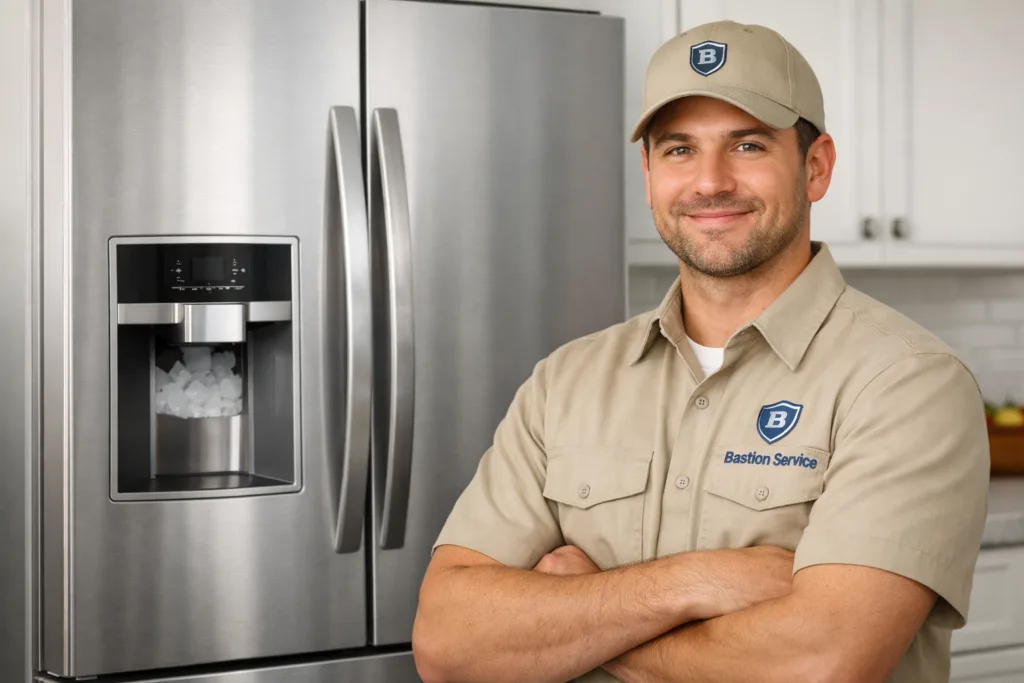
Ice maker trouble usually shows up in ways that are easy to notice but not always easy to interpret. A unit that makes no ice at all, takes too long between batches, drops tiny cubes, or leaves water around the bin can be reacting to different underlying problems. In many Playa Vista homes, the fastest way to avoid wasted food-storage time and repeat service calls is to match the symptom to the part of the system that is actually failing.
Common ice maker problems and what they can indicate
If the ice maker has stopped producing ice completely, the cause may be a shutoff arm out of position, a frozen fill tube, a failed inlet valve, or an internal problem with the ice maker assembly. When production slows down instead of stopping, temperature is often part of the story. Ice makers need stable cold conditions to complete the full fill, freeze, and harvest cycle, so even a small change in freezer performance can lead to weak output.
Small cubes, hollow cubes, or clumped ice often point to water-supply problems rather than a simple mechanical fault. Low household water pressure, a restricted line, or a valve that is not opening correctly can all reduce the amount of water entering the mold. If the symptom is centered on frost buildup, poor airflow, or a freezer compartment that struggles to recover temperature, Freezer Repair in Playa Vista may be the better service path.
Leaks are another common complaint. Water under the ice bin or a thin sheet of ice near the bottom of the compartment can happen when the mold overfills, the fill tube drips between cycles, or melting and refreezing is being mistaken for a direct ice maker failure. Buzzing sounds, repeated clicking, or an ejector that seems to stall can also suggest a jammed mechanism or a component trying to cycle without the right temperature or water conditions.
Why a full diagnosis matters
An ice maker does not work independently from the rest of the cooling system. In a refrigerator with an attached ice maker, the real problem may be poor compartment temperature, a door-seal issue, blocked airflow, or an electronic control fault that affects more than ice production. When fresh-food temperatures seem off at the same time as ice output drops, Refrigerator Repair in Playa Vista may be more relevant to the overall problem.
That distinction matters because replacing the ice maker itself will not solve a temperature problem upstream. A good diagnostic process checks whether the mold is filling properly, whether the thermostat or sensor is allowing harvest, whether the unit is cold enough to complete a cycle, and whether the water system is stable from start to finish.
Warning signs homeowners should not ignore
Some symptoms are more urgent than they first appear. Repeated leaking can damage surrounding shelves and create hidden ice buildup. Water freezing at the fill tube can eventually stop production entirely. A jammed shutoff arm, stuck ejector fingers, or loud grinding during harvest can place extra strain on the mechanism. If the unit keeps trying to cycle without producing usable ice, turning it off until it can be checked is often the safest choice.
Repair or replacement
Repair is often the practical option when the issue is isolated to the valve, sensor, switch, fill tube, or ice maker assembly. In those cases, the rest of the appliance may still be cooling normally and the fix is more targeted. Replacement becomes a more realistic conversation when there are multiple failures, recurring leaks, broader cooling trouble, or age-related wear affecting overall reliability.
For households in Playa Vista, the key question is not just whether the ice maker can be made to run again, but whether the repair will restore normal daily use without continuing performance problems. A single failed part is very different from a cooling system that no longer supports consistent ice production.
How related specialty cooling issues can overlap
Not every cooling complaint around drinks or entertaining points back to the kitchen refrigerator. Some homes have a separate beverage appliance where temperature drift, sensor problems, or inconsistent cooling create similar concerns about ice, chilling, and storage conditions. If the issue involves a dedicated beverage unit rather than the main refrigerator, Wine Cooler Repair in Playa Vista may be the more appropriate service to consider.
What to expect during service
A useful service visit starts with symptom-based testing rather than guesswork. That usually includes checking freezer temperature, confirming water delivery to the mold, testing whether the harvest cycle completes, and inspecting for restrictions, drips, or signs of intermittent freezing. Once the fault is identified, the repair can focus on the failed component or on the cooling condition causing the ice maker to underperform.
The goal is simple: restore reliable ice production, prevent repeat leaks or clumping, and make sure the unit returns to normal household use with predictable results.