





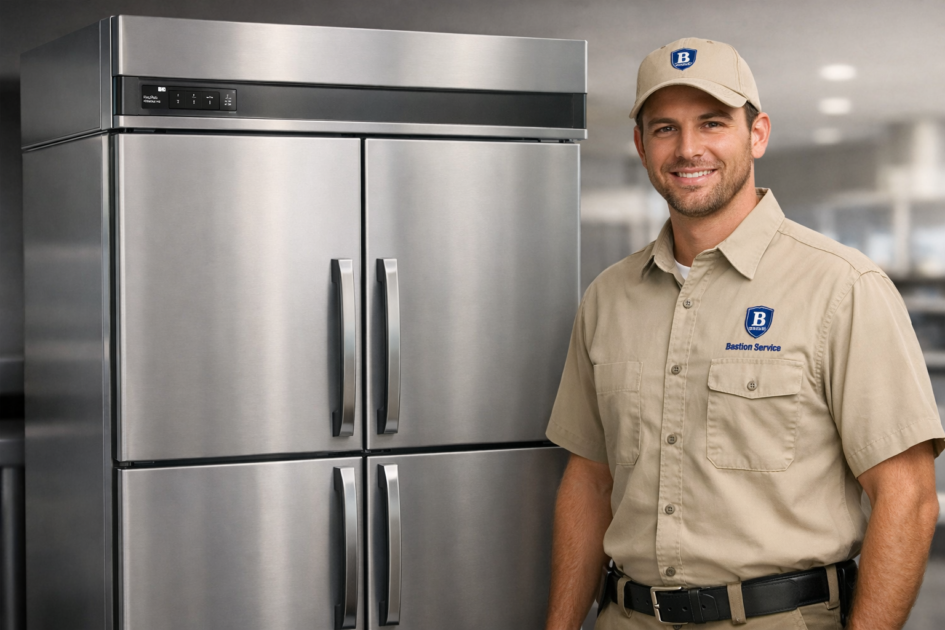
Refrigerator trouble can disrupt prep schedules, storage safety, and daily workflow faster than many businesses expect. When a Hoshizaki unit starts running warm, collecting frost, leaking water, or struggling to recover after normal door openings, service is most useful when it connects the symptom to the likely failure point and the repair decision that follows. Bastion Service helps businesses in Manhattan Beach evaluate Hoshizaki refrigerator problems with attention to temperature performance, airflow, component condition, and downtime risk.
Related commercial service paths in Manhattan Beach include Hoshizaki Commercial Repair in Manhattan Beach, Commercial Fridge Repair in Manhattan Beach, and Hoshizaki Freezer Repair in Manhattan Beach.
Common Hoshizaki Refrigerator Symptoms That Need Service
Most refrigerator failures do not begin with a total shutdown. More often, the first warning signs are gradual performance changes that affect reliability before the cabinet stops cooling altogether. Catching those changes early can help reduce product loss and avoid added strain on major components.
Temperature drift and unstable holding
If the cabinet no longer holds a steady temperature, the problem may involve restricted condenser airflow, a fan motor issue, sensor or control faults, door gasket leakage, frost blocking circulation, or declining cooling capacity. In business settings, even a moderate temperature swing can create storage concerns and force staff to check the unit more often than normal.
Warm cabinet with long recovery times
A refrigerator that cools eventually but takes too long to recover after loading or repeated openings often points to an efficiency problem rather than a complete failure. Dirty coils, weak evaporator airflow, ice buildup, door sealing issues, or refrigeration-system trouble can all slow pull-down and leave the cabinet operating outside expected performance.
Water leaks or condensation around the unit
Water on the floor or excess moisture inside the cabinet can be caused by drain restrictions, frost melt problems, gasket wear, or condensation forming where it should not. Leaks should be addressed promptly because they can affect surrounding surfaces, create slip hazards, and signal that another cooling or airflow issue is developing inside the refrigerator.
Frost buildup on panels or inside the cabinet
Frost usually means warm air is getting in, airflow is being restricted, or the unit is not managing moisture correctly. Once frost begins to build on the evaporator side, circulation can drop and box temperature may become uneven. What starts as a small ice pattern can quickly turn into a holding problem.
Constant running or short cycling
A Hoshizaki refrigerator that seems to run nonstop may be trying to overcome heat infiltration, poor heat rejection, or reduced cooling performance. Short cycling can point to control issues, sensor errors, or system stress. Either pattern deserves attention because both can increase wear while still failing to protect stored product.
Noise changes, vibration, or fan-related sounds
Buzzing, rattling, clicking, or abnormal fan noise often shows up before a larger breakdown. A worn motor, loose panel, blade obstruction, or compressor-related problem may start as an intermittent sound and then become a more disruptive failure during service hours.
Why Hoshizaki Refrigerator Problems Often Overlap
One symptom can have several different causes. A warm cabinet does not automatically mean the compressor has failed, just as frost does not always mean there is a defrost problem. Refrigeration diagnosis matters because airflow restrictions, door sealing problems, sensor faults, fan failures, control issues, and sealed-system concerns can produce similar results from the outside.
That is why repair decisions should be based on how the unit is behaving as a whole. Cabinet temperature, cycle pattern, airflow strength, frost location, drain condition, and recovery time all help narrow down whether the problem is isolated to a replaceable part or part of a broader performance issue.
Why Is My Hoshizaki Refrigerator Not Holding Temperature?
This is one of the most common service complaints, and the answer is not always obvious from the temperature reading alone. A Hoshizaki refrigerator may stop holding temperature properly because:
- Condenser coils are clogged and heat cannot leave the system efficiently
- Evaporator or condenser fan motors are weak, blocked, or not running
- Door gaskets are torn, loose, or no longer sealing evenly
- Frost or ice is restricting evaporator airflow
- Sensors or controls are reading cabinet conditions incorrectly
- The refrigeration system is losing cooling capacity
- The cabinet is overloaded in a way that blocks normal air movement
Because these conditions can look similar in daily use, it helps to schedule service when the first pattern becomes noticeable instead of waiting for a complete no-cool event.
Signs the Problem Is Getting Worse
Some refrigerators still appear to be working even as the failure progresses. If staff are adjusting settings more often, moving product away from certain shelves, noticing warmer spots in the cabinet, or cleaning up recurring condensation, the equipment is already signaling that normal operation has changed.
Other warning signs include:
- Frequent alarm activity or unexplained resets
- Longer runtimes during normal kitchen or facility use
- Ice forming repeatedly after being cleared
- Doors that no longer close squarely or latch properly
- Product temperature concerns despite the unit still running
- Intermittent fan operation or changes in sound from inside the cabinet
When Continued Use Can Increase Repair Costs
Running a struggling refrigerator for too long can turn a manageable repair into a more involved one. A system that operates continuously while airflow is restricted can place extra load on motors and cooling components. Frost left in place can spread to the point that circulation drops even further. Water leaks that seem minor can affect insulation, flooring, or nearby surfaces if they continue.
Door problems are another example. A torn gasket or misaligned door may look minor, but repeated warm-air intrusion can force the refrigerator to run harder, create condensation, and contribute to icing. Correcting the issue early is usually less disruptive than waiting until the cabinet can no longer maintain safe holding conditions.
Repair Decisions Based on the Actual Failure
Not every Hoshizaki refrigerator issue points toward replacement. Many service calls involve repairable problems such as fan motors, sensors, controls, drains, gaskets, airflow restrictions, or ice-related performance loss. More serious decisions tend to come up when cooling-system problems are combined with heavy wear, repeated breakdowns, or poor cabinet condition.
The most useful repair evaluation usually comes down to a few practical questions:
- What exact symptom is affecting operation right now?
- Is the failure isolated, or are multiple issues appearing at once?
- Has the refrigerator been losing performance gradually over time?
- Will the repair restore reliable operation rather than only temporary cooling?
- How much downtime can the business absorb if service is delayed?
Preparing for a Service Visit
Before scheduling repair, it helps to note what the refrigerator is doing under normal use. Temperature swings, visible frost, water location, cycle pattern, unusual noise, and whether the issue appears at certain times of day can all help narrow the cause. If the unit has alarms or digital readings, those details are useful as well.
Businesses in Manhattan Beach can also help speed up the visit by making sure the model information is accessible, the cabinet can be inspected safely, and staff can describe when the problem first appeared. That context often helps separate a control issue from an airflow issue or a drain problem from a broader cooling failure.
Service for Businesses in Manhattan Beach
For businesses in Manhattan Beach, a refrigerator problem is rarely just an equipment issue. It affects storage confidence, staff routines, and the ability to keep operations moving without interruption. If your Hoshizaki refrigerator is leaking, frosting up, running constantly, making unusual noise, or failing to hold temperature, scheduling repair promptly is the most practical next step before the problem leads to larger downtime or inventory risk.


