
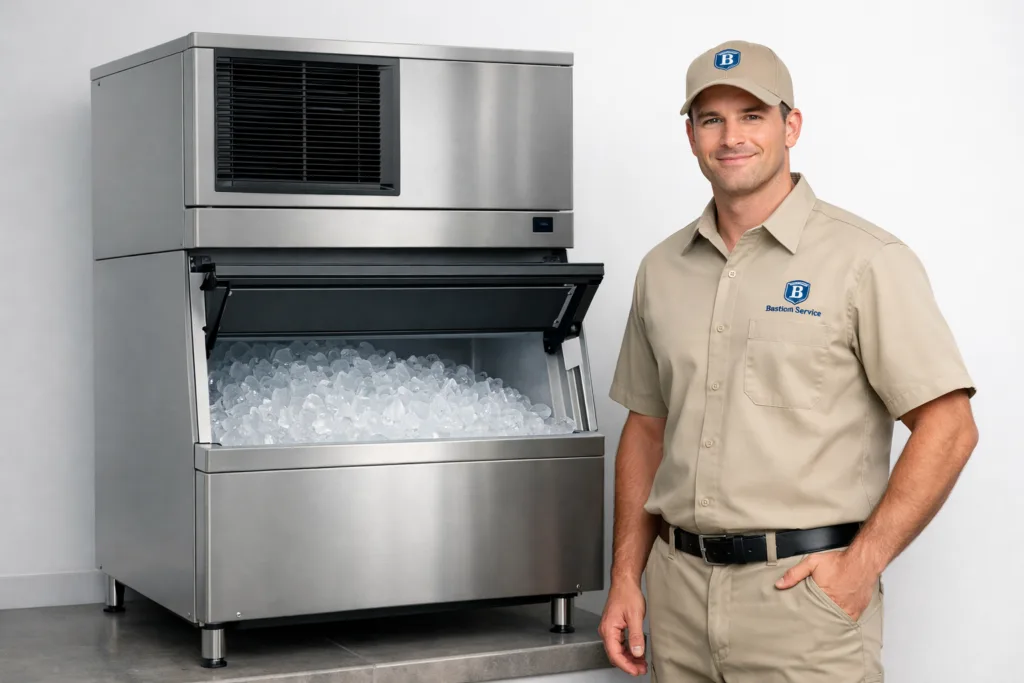




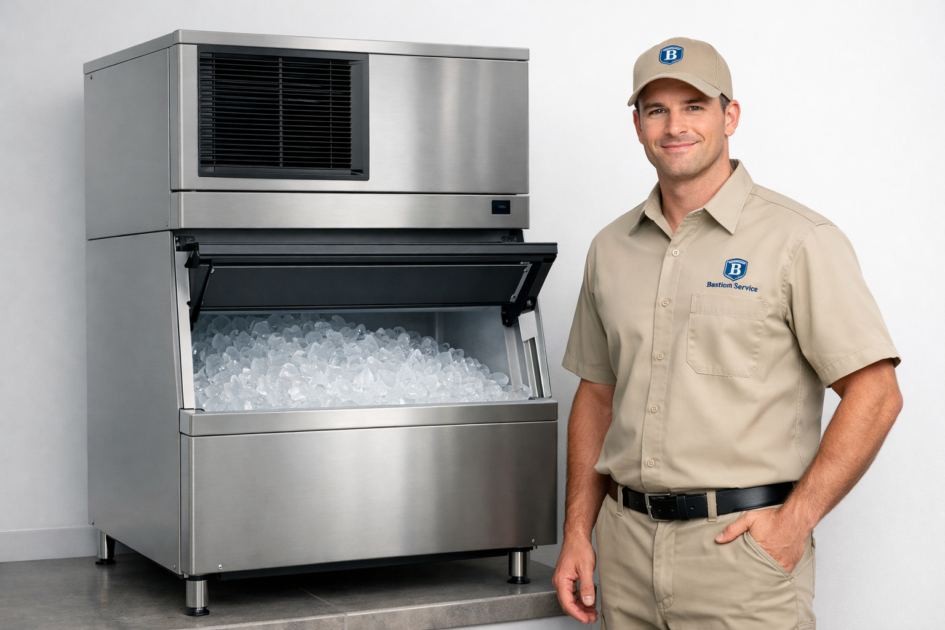
When a Hoshizaki ice machine starts underperforming during business hours, the most important step is figuring out whether the problem is coming from water flow, scale buildup, a control fault, drainage, refrigeration-related stress, or a harvest problem. That diagnosis matters because low output, leaks, shutdowns, and uneven ice quality can quickly affect drink service, prep flow, and day-to-day operations for businesses in Manhattan Beach. Bastion Service helps identify the source of the failure, explain whether continued use is likely to worsen the issue, and schedule repair based on the urgency of the symptom pattern.
For specific equipment paths in Manhattan Beach, review Hoshizaki Fridge Repair in Manhattan Beach, Hoshizaki Freezer Repair in Manhattan Beach, and Hoshizaki Ice Machine Repair in Manhattan Beach.
Common Hoshizaki ice machine problems that call for repair
Many service calls begin with a machine that still runs but no longer performs the way it should. Instead of a total stop, businesses often notice slower production, smaller batches, inconsistent cube formation, water around the unit, or cycles that seem to take longer than normal. These issues usually point to a real mechanical or system problem rather than a temporary fluctuation.
Low ice production
If the machine is making less ice than usual, several causes may be involved. Mineral buildup can restrict normal water movement, inlet components may not be filling correctly, sensors may be reading conditions inaccurately, or refrigeration performance may be slipping enough to reduce output. A machine that produces some ice but not enough is often easier to repair before the strain spreads to additional parts.
Ice quality concerns
Cloudy ice, hollow cubes, soft ice, odd shapes, or off-tasting ice usually indicate that the machine is no longer managing water distribution or freeze cycles correctly. In some cases, sanitation and scale are part of the issue. In others, the problem is tied to harvest timing, temperature sensing, or water delivery inside the unit. For businesses, poor ice quality affects both presentation and confidence in the equipment.
Leaks and water where it should not be
Water on the floor or around the base of the machine should be treated as a repair issue, not just a cleanup issue. Drain restrictions, cracked tubing, loose fittings, pump faults, overflow conditions, and internal freeze-related problems can all lead to leaks. Left unresolved, those issues can create slip hazards, damage surrounding surfaces, and turn a manageable repair into a larger service event.
What shutdowns and cycle problems usually mean
Unexpected shutdowns
If a Hoshizaki machine powers off, locks out, or needs repeated resets, the cause may involve a control issue, safety cutoff, sensor fault, electrical problem, or overheating component. A machine that repeatedly stops is often protecting itself from further damage, which is why ongoing resets are not a long-term solution. Service is important to determine whether the shutdown is a warning response or the direct result of a failing part.
Freeze and harvest issues
Some machines make ice but do not release it properly. Others get stuck during freeze or harvest, then restart without completing a normal cycle. These symptoms often point to scale interference, harvest component wear, water circuit restrictions, thermistor problems, or control timing faults. Because the machine continues trying to cycle, this type of issue can worsen quickly and lead to more noticeable production loss.
Erratic cycling or unusual timing
If batches are taking much longer than expected, or the machine seems to switch stages irregularly, the problem may not be obvious from the outside. What looks like random performance can reflect a sensor reading issue, weak water fill, partial freeze-up, or a board-related fault. Tracking those timing changes is useful because they often appear before a full shutdown.
Symptoms that should not be ignored
Some problems seem minor at first but become much more disruptive if the machine stays in operation. A small drop in output can turn into complete ice shortage. An occasional leak can become a recurring overflow. Intermittent alarms can become a hard lockout. The earlier warning signs are often the best time to schedule repair because the failure is usually more contained.
- Ice production falls below normal daily demand
- The machine leaks during or after a cycle
- Ice forms inconsistently or releases poorly
- The unit shuts down and restarts without a clear reason
- Ice looks cloudy, hollow, soft, or otherwise abnormal
- Cycle timing becomes noticeably longer or erratic
- Noises or vibration change during normal operation
When several of these symptoms appear together, they may trace back to one root cause, such as restricted water movement or scale affecting multiple functions. In other cases, they reflect separate wear issues that should be prioritized based on downtime risk.
How water flow and scale buildup affect performance
Water-related problems are behind many Hoshizaki service calls. If water is not entering, circulating, or draining correctly, the machine cannot maintain proper freeze and harvest conditions. That can lead to smaller batches, poor cube formation, long cycles, overflow, or protective shutdowns.
Scale buildup is also a common contributor to performance loss. As mineral deposits accumulate on internal components, the machine may struggle to transfer heat correctly, sense conditions accurately, or move water as designed. Businesses sometimes notice only the symptom that affects service most, such as low output, but the underlying issue may already be affecting multiple systems inside the machine.
When repair is usually the right next step
Not every Hoshizaki issue points to replacement. Many problems involve serviceable faults such as pumps, valves, sensors, controls, water flow restrictions, drain issues, or scale-related performance loss. Repair is often the practical choice when the equipment is otherwise in solid condition and the failure is specific enough to correct without broader reliability concerns.
Replacement becomes a more serious conversation when the machine has recurring major failures, heavy wear across multiple systems, or repair costs that no longer support dependable operation. The value of a service visit is that it separates a repairable fault from a larger pattern of decline, so the decision is based on operating reality rather than guesswork.
Scheduling repair around business operations
For businesses in Manhattan Beach, equipment problems are rarely just technical issues. Ice production supports service speed, kitchen flow, beverage quality, and customer experience. That is why repair planning should account for how fast the problem is progressing, whether the unit can safely remain in use, and whether parts are likely to be involved. A useful appointment should help clarify what failed, what should happen next, and how to reduce disruption while the machine is being addressed.
If your Hoshizaki ice machine is leaking, underproducing, cycling poorly, shutting down, or making inconsistent ice, the next practical step is to schedule service before the problem forces unplanned downtime. Prompt diagnosis helps businesses in Manhattan Beach decide whether the machine can remain in limited use, needs immediate repair, or should be taken offline to prevent a wider interruption.


