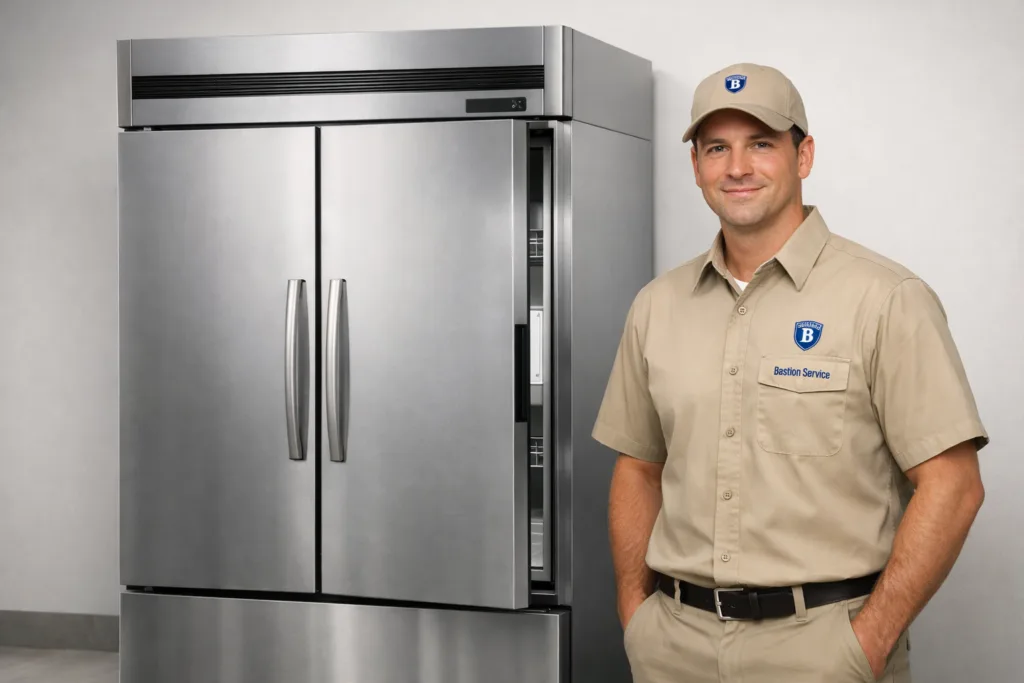




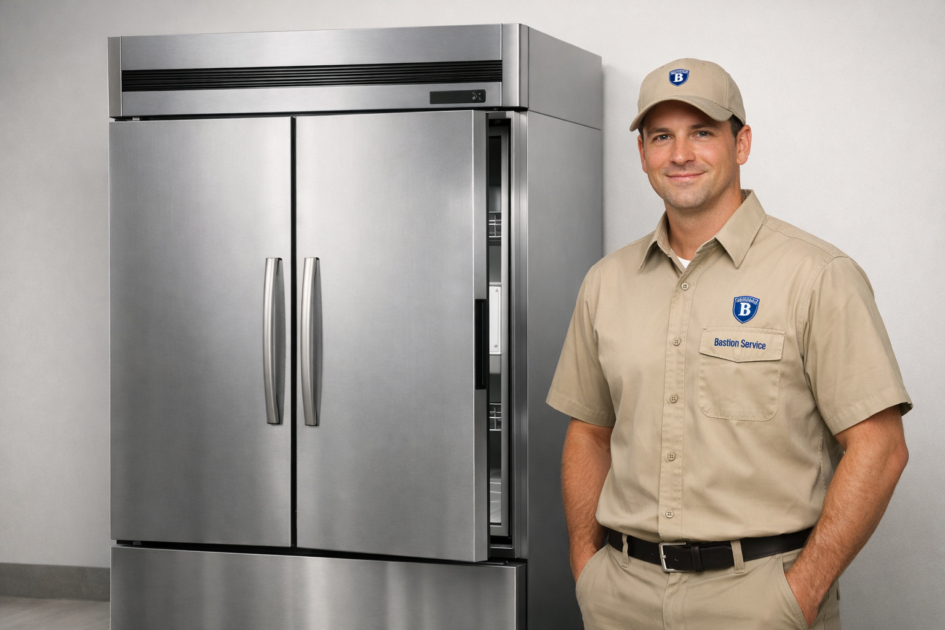
When a Turbo Air refrigerator starts running warm, icing over, leaking, or cycling oddly, the immediate concern is usually product protection, workflow disruption, and how quickly the unit can be evaluated without adding more downtime. In Manhattan Beach, the most effective approach is to match the repair plan to the actual symptom pattern rather than assume every cooling complaint points to the same failed part. Bastion Service helps businesses identify whether the issue is tied to airflow, controls, fan operation, door sealing, drainage, or a deeper refrigeration fault so scheduling and repair decisions can be made with more confidence.
Related commercial service paths in Manhattan Beach include Turbo Air Commercial Repair in Manhattan Beach, Commercial Fridge Repair in Manhattan Beach, and Turbo Air Freezer Repair in Manhattan Beach.
For kitchens, prep areas, storage rooms, and other business settings, refrigerator problems rarely stay isolated for long. A cabinet that is only a few degrees off target can lead to inventory loss, uneven holding temperatures, and staff workarounds that slow daily operations. Early diagnosis also helps determine whether the unit can be stabilized, whether parts should be approved right away, and whether continued use is likely to create additional damage.
Common Turbo Air refrigerator problems businesses see in Manhattan Beach
Not holding temperature consistently
If the refrigerator is running but product temperatures are drifting, the cause may be restricted condenser airflow, a faulty sensor, evaporator fan trouble, a control issue, frost restricting circulation, or a sealed-system problem. A cabinet can appear to cool at one moment and still fail during busier periods or after repeated door openings. That is why temperature complaints should be checked against actual operating conditions, not just the display reading.
In many cases, staff first notice that items on one shelf stay colder than others, recovery after loading takes too long, or the compressor seems to run continuously without bringing the box back to target. Those symptoms often point to an airflow or control problem, but they can also signal a more serious cooling failure that should be addressed before stored product is affected.
Frost or ice buildup inside the unit
Heavy frost around the evaporator section, interior panels, or door openings can interfere with airflow and reduce cooling performance. On a Turbo Air refrigerator, this may be related to gasket leakage, defrost issues, fan problems, humidity intrusion, or doors being opened more often than the unit can reasonably recover from during peak use.
Frost should not be treated as a minor nuisance when it keeps returning. Ice buildup can block air movement, increase run time, stress motors, and eventually lead to warmer cabinet temperatures even though the unit still appears to be operating. If frost returns shortly after cleaning or manual defrosting, it usually indicates a fault that needs repair rather than simple maintenance.
Water leaks inside the cabinet or onto the floor
Water under or inside a refrigerator may come from a clogged drain, melting ice caused by airflow imbalance, damaged door gaskets, or condensation developing because temperatures are no longer being controlled correctly. In a business setting, leaks create more than cleanup work. They can become slip hazards, damage surrounding materials, and point to a larger cooling issue that has not yet fully surfaced.
Recurring moisture is especially important to investigate when it appears alongside warm temperatures, frost, or unusual cycling. Those combined symptoms often suggest the unit is not managing moisture and air movement the way it should.
Unusual noise or irregular cycling
Buzzing, rattling, fan scraping, frequent starts, clicking, or long nonstop run times can indicate failing motors, loose components, dirty coils, relay or control issues, or a refrigeration system struggling to maintain set temperature. Noise complaints are worth addressing early because they often show up before a full loss of cooling.
If the sound changes throughout the day or becomes worse when the box is under heavier use, that pattern can help narrow down whether the problem is tied to fan operation, compressor load, or a component that is beginning to fail under heat and demand.
Why a symptom-based diagnosis matters
A warm cabinet does not automatically mean a bad compressor, just as ice buildup does not automatically mean a defrost failure. Turbo Air refrigerators can present similar symptoms for very different reasons, and replacing parts based on guesswork can waste time while the real problem continues. A proper diagnosis should identify whether the fault is electrical, mechanical, airflow-related, drainage-related, or within the sealed system.
That distinction matters when deciding how urgent the repair is, whether the unit can remain in limited use, and whether a single failed part is the issue or one problem has already started affecting others. For businesses in Manhattan Beach, this helps with labor planning, approval decisions, and reducing repeat service interruptions.
Signs service should be scheduled promptly
- Cabinet temperature is rising above the normal holding range.
- The unit cools unevenly from shelf to shelf.
- Frost returns soon after being cleared.
- Water continues pooling inside the cabinet or on the floor.
- The compressor runs constantly or short cycles.
- Fans sound rough, scrape, or stop moving air properly.
- Door gaskets are torn, loose, or no longer sealing well.
- The refrigerator struggles after loading or during busy operating periods.
Delaying service when these symptoms are already present can turn a smaller repair into a larger one. A restricted airflow problem can increase compressor strain. A failing fan can allow frost to spread. A bad seal can create recurring temperature instability that leads staff to overload or over-adjust the unit. The earlier the problem is isolated, the better the chance of protecting both inventory and equipment life.
What technicians typically check on a Turbo Air refrigerator
A useful service visit should do more than confirm that the cabinet feels warm. It should focus on how the refrigerator is actually performing and what condition is driving the complaint. That often includes checking cabinet temperature behavior, airflow through the evaporator and condenser sections, fan operation, frost pattern, drain condition, door closure, gasket sealing, control response, and overall component wear.
For some calls, the main issue is straightforward, such as a fan motor, control component, or door-related air leak. In other cases, the visible symptom is only the end result of a larger cooling problem. Verifying that difference helps avoid unnecessary parts replacement and gives the business a clearer picture of expected repair scope.
Repair or replace?
Repair is often the right move when the cabinet remains structurally sound and the problem is limited to serviceable components such as motors, sensors, controls, gaskets, door hardware, drainage issues, or condenser-side faults. These types of problems can often be addressed without replacing the entire unit, especially when the refrigerator has otherwise been supporting daily operations well.
Replacement becomes a more serious consideration when the refrigerator has repeated breakdowns, major sealed-system trouble, poor recovery even after recent repairs, or overall wear that makes future reliability uncertain. The decision usually comes down to equipment age, severity of failure, cost relative to condition, and how much disruption another breakdown would cause the business.
Preparing for a repair visit
Before service is scheduled, it helps to note the exact symptom pattern. Useful details include whether the refrigerator is warm all the time or only during peak hours, whether frost appears in a specific location, whether leaks are constant or intermittent, and whether noise begins at startup or after the unit has been running for a while. If product temperatures have been checked independently, that information can also help narrow the diagnosis.
Staff can also identify whether recent changes may be contributing, such as heavier loading, blocked vents, frequent door openings, cleaning disruptions, or a unit that was moved and no longer has proper airflow clearance. These details do not replace technical diagnosis, but they often help speed up the repair process and improve accuracy.
Service-focused next steps for Manhattan Beach businesses
If a Turbo Air refrigerator is warming up, building frost, leaking, or making unusual noise, the smartest next step is to schedule service before the issue affects more product and creates avoidable downtime. A repair visit tied to the exact symptoms, operating conditions, and urgency of the unit gives businesses in Manhattan Beach a better basis for approving repairs, planning around workflow, and returning the refrigerator to stable operation as quickly as practical.