
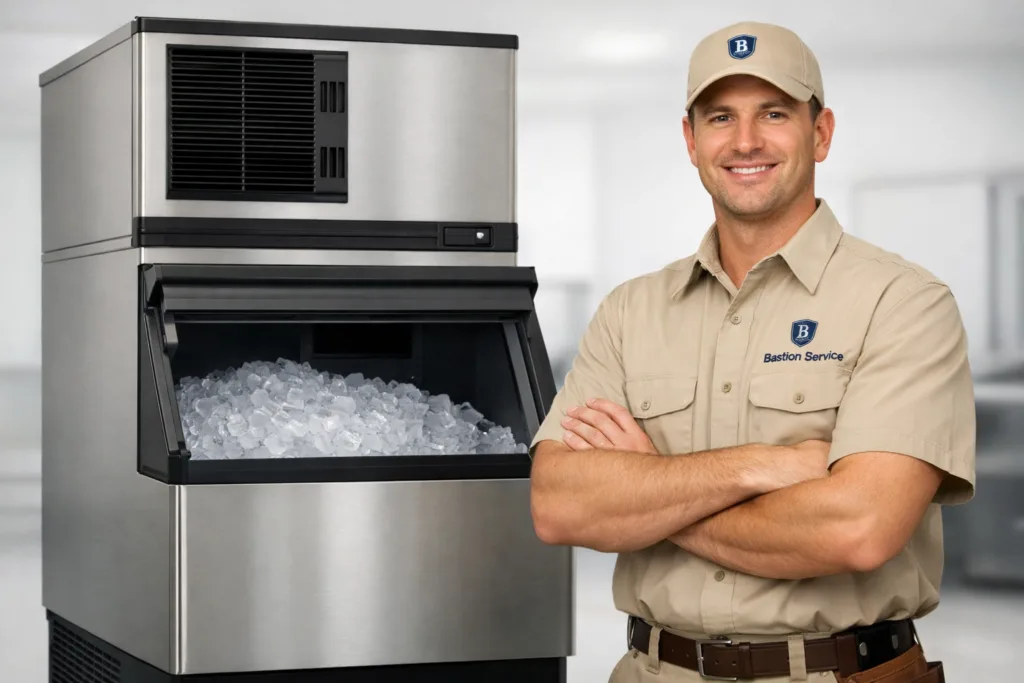




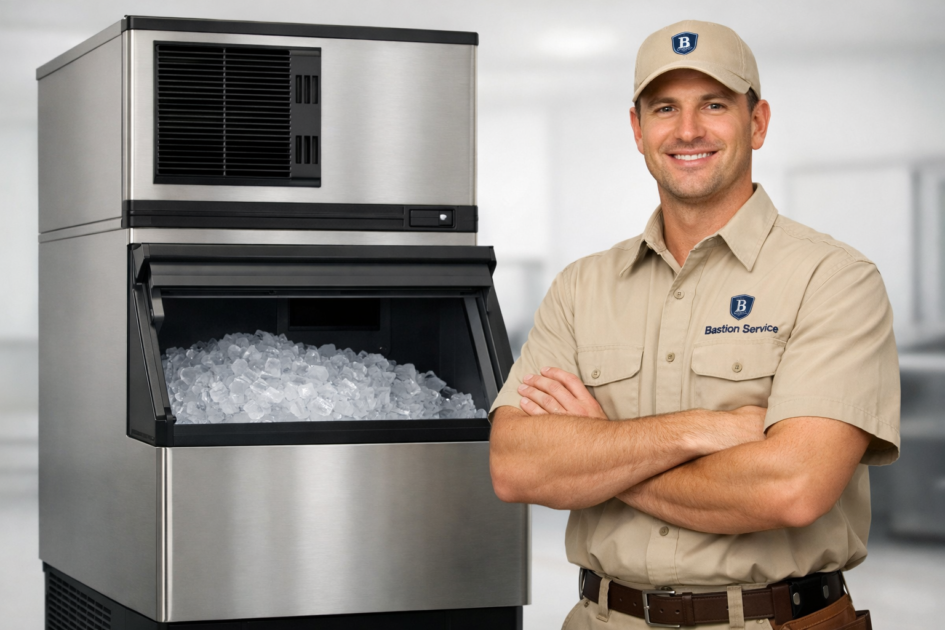
Ice machine problems can interrupt beverage service, prep routines, and normal kitchen flow faster than many teams expect. When a Hoshizaki unit starts underproducing, leaking, shutting down, or struggling through harvest, the right next step is to have the symptom pattern evaluated so repair scheduling is based on the actual cause instead of trial-and-error adjustments. Bastion Service provides Hoshizaki equipment repair support for Fairfax businesses that need to protect uptime and make informed decisions about continued use, parts, and timing.
For specific equipment paths in Fairfax, review Hoshizaki Refrigerator Repair in Fairfax, Hoshizaki Freezer Repair in Fairfax, and Hoshizaki Ice Machine Repair in Fairfax.
Common Hoshizaki Ice Machine Problems That Call for Service
Many ice machine complaints start with one visible symptom, but the underlying issue may involve more than one system. Water supply, drainage, freeze timing, harvest performance, scale buildup, sensors, pumps, and refrigeration-related components can all affect output and reliability. That is why similar-looking problems often require very different repairs.
Low ice production
If the bin is not filling as expected, the machine may be dealing with restricted water flow, mineral buildup, poor freeze performance, control issues, or a harvest problem that slows the entire cycle. A unit that still makes some ice can give the impression that the problem is minor, but reduced output often gets worse as the machine falls further behind demand.
Water leaks or overflow
Water on the floor or around the unit should be checked promptly. The source may be a drain issue, loose connection, damaged line, internal overflow condition, or a problem during freeze and release. Even a small leak can create cleanup burdens, slip risks, and avoidable strain on surrounding equipment areas.
Unexpected shutdowns
If the machine stops mid-cycle, trips into protection mode, or only runs again after a reset, the unit is usually responding to a fault that has not been resolved. Intermittent operation often becomes more disruptive over time, especially when peak demand exposes the problem more clearly.
Ice Quality Issues That Often Point to Repair Needs
Changes in ice appearance or consistency are not just cosmetic. They often signal operating conditions that reduce output, affect drink presentation, or suggest internal buildup and cycle problems.
Cloudy, thin, or misshapen cubes
Poor cube quality can be tied to scale, inconsistent water fill, filtration-related concerns, uneven freezing, or faults that affect how the unit completes each batch. If normal cleaning does not correct the issue, service is usually the better next step.
Ice with unusual odor or appearance
When ice no longer looks or seems normal, the cause may involve water quality concerns, residue, buildup inside the machine, or drainage-related issues. This matters because ice quality problems can overlap with sanitation concerns and broader performance decline.
Incomplete batches
If the machine begins a cycle but releases smaller batches than expected, the problem may involve fill timing, freeze performance, controls, or harvest efficiency. This symptom often develops gradually, which is why staff may first notice that the bin just never seems full enough.
Harvest Problems and Why They Matter
Harvest issues are one of the most disruptive ice machine faults because they affect every cycle. A unit that cannot release ice correctly cannot maintain normal production, even if other systems are partially functioning.
Slow harvest cycles
When batches take too long to drop, overall output falls and the machine may run longer than it should. Common causes include scale, temperature-related faults, wear in key components, or control problems that interfere with timing.
Ice sticking to the evaporator
If ice clings during release, the machine may pause, retry, or stop altogether. That can lead to inconsistent bin levels, repeated interruptions, and extra strain on parts that are trying to complete the cycle.
Frequent cycle interruptions
A machine that starts and stops abnormally, or seems unable to complete freeze and harvest in a normal rhythm, often needs more than a basic cleaning. This is typically the point where diagnosis becomes important for deciding whether the unit should keep running until repair is completed.
Water Flow and Scale Buildup Symptoms
Water-related issues are a common reason Hoshizaki units lose performance. In many cases, the machine is still operating, but not at a level that supports daily demand.
- Slow fill or inconsistent water supply to the cycle
- Visible mineral buildup affecting normal operation
- Drainage that backs up or clears poorly
- Overflow behavior during fill or release
- Reduced production after a period of scale accumulation
Scale is especially important because it can affect multiple systems at once. What begins as slower production or weaker ice quality may also lead to harvest trouble, water flow inconsistency, and stress on components that depend on proper timing.
Signs the Machine Should Be Checked Soon
Some businesses wait because the machine is still making ice, just not enough of it. In practice, that is often when service is most useful, before the issue becomes a full outage. Scheduling repair is usually a smart move when staff notice any of the following:
- The bin no longer fills on the usual schedule
- Leaks are recurring or getting worse
- The machine needs repeated resets
- Harvest takes longer than it used to
- Ice quality has changed and stays inconsistent
- Noise, vibration, or cycling behavior is different from normal
Repeated workarounds are another warning sign. If staff are changing routines, shutting the unit off between uses, or adjusting around the machine just to keep service moving, the equipment usually needs a closer look.
Repair Decisions: Keep Running or Shut It Down?
Not every problem requires the same response. Some issues may allow limited short-term operation while parts and scheduling are being arranged. Others should be addressed immediately because continued use can worsen water damage, scale-related stress, sanitation concerns, or component failure.
In general, significant leaks, repeated shutdowns, severe production loss, and persistent harvest failure should be treated as higher-priority conditions. A service visit helps determine whether the unit can continue operating safely in the short term or whether stopping use is the better decision.
What Fairfax Businesses Gain From Prompt Service
Ice machine trouble affects more than the machine itself. Delays can spill into beverage service, prep planning, staff workflow, and customer-facing consistency. Getting the unit evaluated early helps businesses understand whether the issue is isolated, whether multiple faults are developing, and what repair path makes the most sense for current operations.
If your Hoshizaki ice machine in Fairfax is producing less ice, leaking, showing shutdowns, struggling with harvest, or creating ice quality concerns, the most useful next step is to schedule service so the fault can be confirmed and repairs can be planned before downtime spreads further into the day.


