
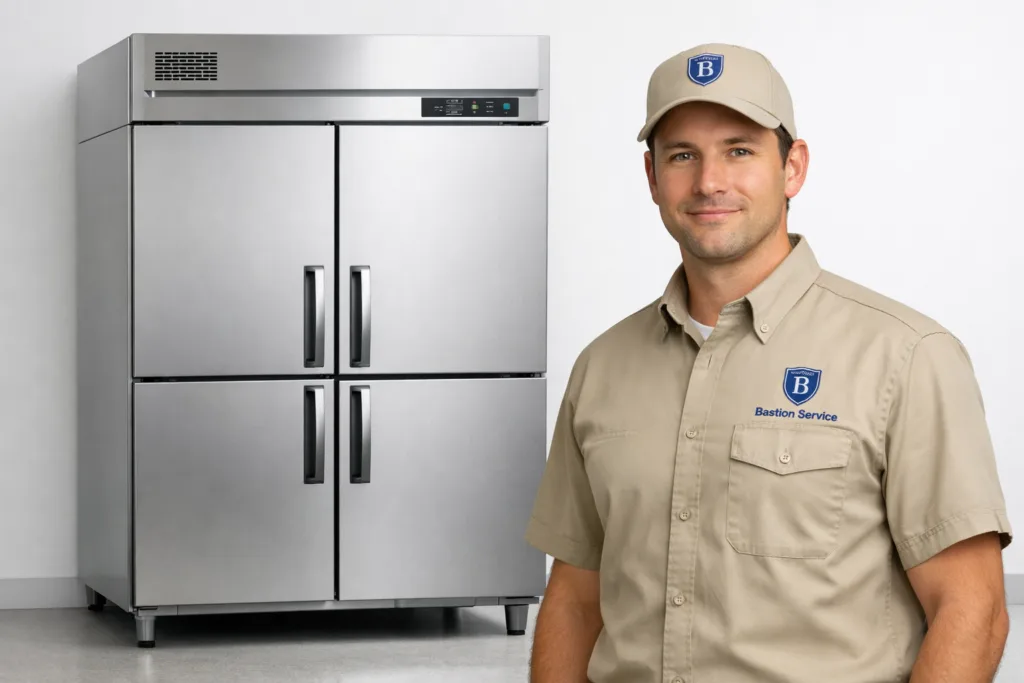




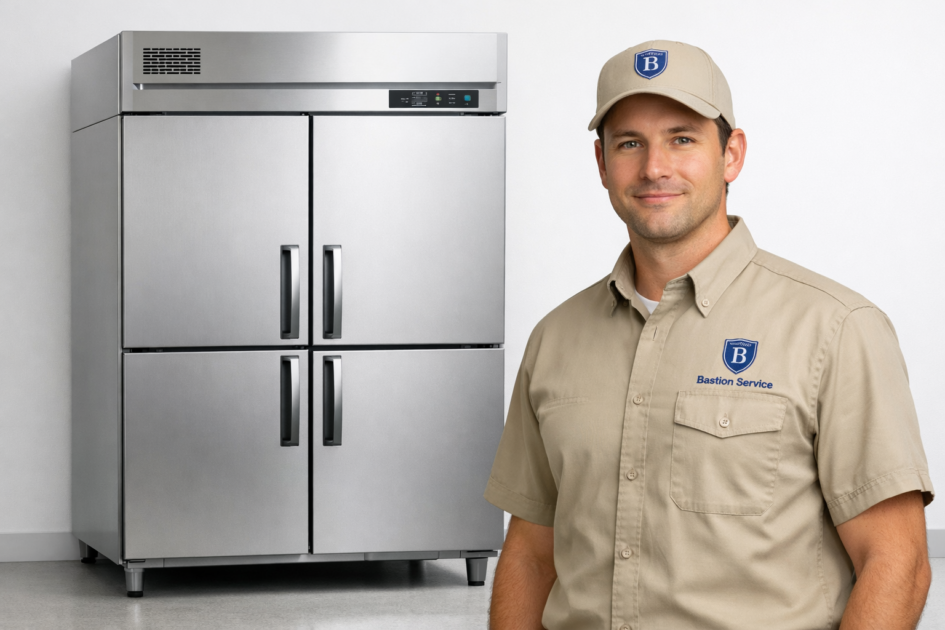
Accurate service starts with the symptom, not a guess. When a Hoshizaki freezer begins running warm, icing over, leaking, or making unusual noise, the real question is what failure path is developing and how quickly it could affect inventory, workflow, and safe operation. For businesses in Westwood, timely repair scheduling can prevent a temperature problem from turning into product loss, extended downtime, or strain on major components.
Related commercial service paths in Westwood include Hoshizaki Commercial Repair in Westwood, Commercial Freezer Repair in Westwood, and Hoshizaki Refrigerator Repair in Westwood.
Common Hoshizaki freezer symptoms and what they can mean
Freezer problems do not always begin with a complete shutdown. Many units continue operating while performance declines in ways staff notice during normal use. The most useful next step is to match the symptom pattern to the likely mechanical, electrical, airflow, or control issue behind it.
Not staying cold enough
If the cabinet temperature is rising, product is softening, or recovery after door openings is unusually slow, several causes are possible. Restricted airflow, evaporator ice buildup, weak fan operation, sensor problems, control faults, refrigerant-system issues, and door seal leakage can all reduce holding performance. A freezer that still runs but cannot maintain set temperature should be inspected before staff rely on repeated setpoint changes to keep it usable.
Frost buildup in the cabinet or around the evaporator
Heavy frost often points to warm-air infiltration, gasket wear, defrost failure, poor door closing, or airflow disruption inside the unit. Ice accumulation can eventually block circulation, reduce cooling across the cabinet, and place extra stress on motors and refrigeration components. Fast-building frost is usually a sign that continued use will make the repair more involved if the cause is not corrected early.
Water leaks or excessive condensation
Water on the floor or inside the cabinet may be tied to drainage restrictions, thaw-and-refreeze cycles, gasket gaps, or temperature instability that causes excess moisture to collect. In a busy kitchen or storage area, this is more than an inconvenience. It can interfere with daily operations and create avoidable cleanup and safety concerns.
Fan noise, rattling, or unusual operating sounds
Loud fan noise, buzzing, vibration, or a freezer that sounds like it is laboring can indicate fan blade ice contact, worn motors, loose panels, compressor stress, or airflow problems that are forcing the unit to work harder than normal. Noise changes matter because they often appear before a more obvious cooling failure.
Constant running or frequent cycling
A freezer that runs nonstop or cycles too often may be struggling with heat removal, temperature sensing, airflow, or refrigeration performance. Even if the cabinet is still partially cold, inefficient run behavior can signal that the unit is no longer reaching conditions the way it should. That usually means higher strain and less predictable temperature control.
Why these issues should be diagnosed before parts are replaced
Several freezer symptoms overlap. For example, a temperature complaint may come from an airflow problem rather than a sealed-system problem, while frost buildup may be caused by a door issue rather than a failed defrost part. Replacing parts too early can waste time and budget without correcting the actual cause.
For Westwood businesses, diagnosis matters because the repair decision is tied to operations. Staff need to know whether the freezer can remain in limited use, whether inventory should be moved, and whether the issue is isolated to one component or part of a larger decline in performance. A proper inspection helps separate a manageable repair from a situation that could worsen under continued demand.
Signs service should be scheduled right away
- The freezer is no longer holding safe storage temperatures.
- Frost or ice returns quickly after being cleared.
- Water is leaking onto the floor.
- The unit is running constantly without reaching normal temperature.
- Fans are noisy, intermittent, or not moving air correctly.
- Staff are repeatedly adjusting controls just to keep product cold.
- Alarms or error conditions keep returning after reset attempts.
These symptoms usually do not correct themselves. If the freezer is already struggling during normal operation, delay can lead to more severe icing, fan damage, compressor wear, or a complete cooling loss at the worst time.
What often causes poor freezer performance
Hoshizaki freezer issues are commonly tied to a handful of core problem areas. Identifying which category the failure falls into helps determine repair urgency and expected scope.
Airflow restrictions
Blocked evaporator passages, ice accumulation, overloaded storage patterns, or fan problems can prevent cold air from moving correctly through the cabinet. When airflow drops, some areas warm up faster than others and recovery after door openings becomes slower.
Door gasket and closure problems
A worn gasket, misaligned door, or poor seal allows warm air and moisture to enter the cabinet. That can trigger frost, longer run times, and unstable box temperatures. Gasket-related issues are often overlooked because the freezer may still appear to be operating normally at first.
Defrost-related faults
If the freezer is not clearing frost as intended, ice can gradually interfere with circulation and temperature transfer. What begins as minor performance loss may eventually become a cabinet-wide cooling problem if the ice load increases enough.
Controls and sensors
Temperature sensors, boards, and related controls influence how the freezer cycles and responds to demand. When they fall out of range or fail intermittently, staff may notice inconsistent temperatures, unexplained alarms, or behavior that does not match the actual condition inside the cabinet.
Refrigeration-system performance loss
When the freezer runs but cannot pull down or maintain temperature, the issue may extend beyond airflow or controls. In those cases, service needs to determine whether the problem involves component efficiency, refrigerant movement, or compressor-related stress.
When continued use may make the problem worse
Some businesses try to keep a struggling freezer in service while watching temperatures closely. In limited situations that may be possible, but only after the unit’s condition is assessed. If airflow is blocked by ice, the door is not sealing, the cabinet is leaking heavily, or the freezer is running almost nonstop, continued operation can push wear onto motors and refrigeration components.
The practical issue is reliability. A unit that is technically still on is not necessarily stable enough for daily use. If the freezer cannot recover normally, hold product consistently, or operate without repeated staff intervention, service should move from optional to immediate.
Repair or replacement: how the decision is usually made
Many Hoshizaki freezer problems are repairable, especially when the cabinet is in otherwise solid condition and the fault is tied to fans, sensors, controls, gaskets, drainage, or defrost components. In those situations, repair can restore normal performance without changing out the unit.
Replacement becomes more likely when the freezer has a pattern of major failures, poor overall condition, or a larger refrigeration-system issue that does not make financial sense relative to the equipment’s role in the operation. The decision should be based on the actual failure, total condition, downtime impact, and cost of returning the unit to dependable service.
What to have ready before a service visit
Businesses in Westwood can help speed diagnosis by gathering a few details before the appointment:
- Current temperature readings and how long the issue has been happening
- Whether the problem is constant or intermittent
- Any recent frost buildup, leaks, alarms, or unusual sounds
- Whether staff have adjusted controls or restarted power
- How the problem is affecting product storage or workflow
That information helps connect the complaint to the most likely cause and makes it easier to decide whether the freezer should remain in service until repair is completed.
Service-focused support for Hoshizaki freezer problems in Westwood
Freezer repair is ultimately about protecting operations, not just fixing a cold box. Bastion Service helps businesses in Westwood evaluate Hoshizaki freezer problems based on actual symptoms, operating behavior, and downtime risk so the next step is clear. If your unit is not freezing properly, building frost, leaking, or struggling to recover temperature, scheduling service promptly is the best way to limit disruption and move toward a stable repair solution.


