
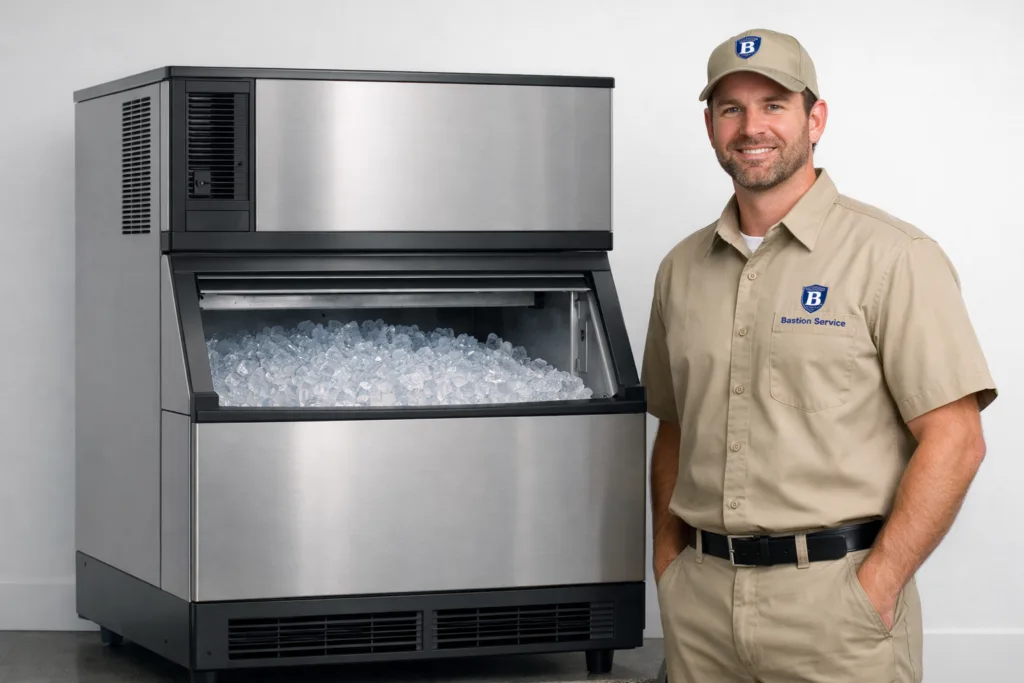




When an ice machine starts falling behind, leaking onto the floor, or stopping mid-cycle, the main priority is getting the problem identified before downtime spreads into service delays, product issues, or sanitation concerns. For businesses in Westwood, repair scheduling is usually less about one visible symptom and more about understanding whether the fault involves water flow, scale buildup, refrigeration performance, controls, or harvest operation. Bastion Service provides Hoshizaki repair support with that service-focused approach so businesses can move from symptom to repair plan without unnecessary trial and error.
For specific equipment paths in Westwood, review Hoshizaki Refrigerator Repair in Westwood, Hoshizaki Freezer Repair in Westwood, and Hoshizaki Ice Machine Repair in Westwood.
Common Hoshizaki ice machine issues that point to repair needs
Ice machine problems rarely stay isolated for long. A machine that is still running may already be producing less ice, taking longer to freeze, making poor-quality cubes, or showing signs of internal restriction. These patterns matter because they help determine how urgent the repair is and whether continued use could make the failure worse.
Low ice production or no ice at all
If the machine is not keeping up with normal demand, several different causes may be involved. Restricted incoming water flow, scale accumulation, sensor problems, refrigeration weakness, or a failing component in the freeze cycle can all reduce output. In some cases, the unit still appears active even though actual production has dropped enough to disrupt daily operations.
This symptom usually becomes more urgent when you notice:
- Longer-than-normal freeze times
- Smaller batches than usual
- Partially formed cubes
- Periods where the machine runs but does not complete a full cycle
- A complete stop after several weak production cycles
When low production starts affecting beverage service, kitchen workflow, or customer-facing operations, it is usually time to schedule repair rather than wait for a full shutdown.
Leaks, overflow, or water around the machine
Water on the floor is not always caused by the same fault. It may come from a drain restriction, an inlet issue, overflow during fill, loose connections, or internal scale that changes how water moves through the machine. Even a minor leak can become a bigger operational problem when it creates cleanup demands, safety risks, or hidden moisture around the equipment area.
Leak-related service should usually be prioritized when:
- Water returns after cleanup
- The bin area or surrounding floor is staying wet
- The machine appears to overfill during operation
- Drainage is slow or backing up
- The unit shuts down after leaking or overflowing
Harvest issues and incomplete cycling
Harvest problems are one of the more disruptive ice machine symptoms because they interfere with the normal release of ice and often cause the machine to stall between stages. If cubes are sticking, batches are incomplete, or the unit seems to hesitate between freezing and release, the problem may involve scaling, temperature-related performance, mechanical wear, or a control issue.
These calls benefit from direct testing because multiple faults can create similar outside symptoms. What looks like a simple ice-release problem may actually be tied to a deeper operating issue that affects the full cycle.
Shutdowns, resets, or inconsistent operation
A machine that turns off unexpectedly, restarts irregularly, or runs for a while and then stops should not be treated as stable just because it comes back on. Intermittent shutdowns often signal a condition that is worsening under load. Depending on the machine’s behavior, the cause may involve water supply, sensors, safeties, control faults, or another internal problem interrupting normal operation.
If a Hoshizaki unit in Westwood is requiring repeated resets or cannot stay in a consistent production rhythm, that is usually a sign to take the issue seriously before the machine drops out completely during business hours.
Ice quality concerns
Changes in ice appearance or consistency can be an early warning sign that the machine is no longer operating correctly. Cloudy cubes, brittle ice, odd shapes, weak structure, or ice that does not look normal may point to fill issues, scale, poor freeze performance, or maintenance conditions that need attention.
For businesses, ice quality is not just a visual issue. It can affect beverage standards, customer perception, and confidence in the machine’s overall condition. When ice quality changes at the same time as slow production or erratic cycling, both symptoms should be evaluated together.
Why symptom-based diagnosis matters
Many Hoshizaki ice machine failures overlap. A water flow problem can look like a refrigeration issue. A machine that appears to be failing in harvest may actually be struggling earlier in the cycle. A shutdown may be the end result of a restriction, not the beginning of the problem. That is why the most useful repair path starts with the full symptom pattern rather than a guess based on one visible complaint.
For businesses in Westwood, that matters because repair decisions affect staffing, service continuity, and how long the machine can safely remain in use. A proper diagnosis helps answer practical questions such as:
- Is the problem likely to worsen if the machine stays on?
- Is the issue limited to one failed part or part of a larger condition?
- Does the machine need to be taken offline due to leaks or ice quality concerns?
- Can service be scheduled around operations, or is immediate attention more appropriate?
When continued use can create a bigger repair
Some ice machine issues develop gradually enough that a business can schedule service during the next workable window. Others should be addressed faster because the machine is no longer operating in a controlled or sanitary way. Continued use can add risk when the unit is leaking, producing questionable ice, struggling through repeated harvest failures, or shutting down multiple times in a day.
Running the machine in that condition may increase wear on related components or turn a manageable repair into a longer outage. If the unit is central to daily service, the best next step is often to report the exact behavior clearly so repair can be scheduled with the actual operating problem in mind.
Repair versus replacement considerations
Not every Hoshizaki problem leads to replacement. In many cases, a focused repair is the right move when the fault is isolated and the rest of the equipment remains in good operating condition. Replacement becomes a more serious discussion when the machine has recurring breakdowns, multiple declining systems, heavy scale-related deterioration, or a history of lost production that keeps returning after service.
Businesses usually weigh the decision based on several factors:
- The confirmed cause of the current failure
- Age and general condition of the unit
- Whether the machine has had repeat repair needs
- How critical reliable ice production is to the operation
- The likelihood of stable performance after repair
An on-site assessment is often the most useful way to make that call because it ties the repair recommendation to the actual condition of the machine instead of assumptions about age alone.
Preparing for a service visit
Before repair is scheduled, it helps to note what the machine is doing right now rather than what it did several days ago. Recent symptoms are the most useful for diagnosis. If possible, be ready to describe whether the machine is underproducing, not filling correctly, leaking, shutting off, making unusual ice, or failing during harvest. It is also helpful to note whether the issue is constant or intermittent.
That information can help shape the repair visit, set urgency, and reduce delays in identifying the actual failure.
Service support for Hoshizaki ice machine problems in Westwood
When ice production problems begin affecting daily operations, the most practical next step is to schedule service based on the machine’s current symptoms and the downtime risk to the business. Whether the issue involves low output, water flow trouble, leaks, shutdowns, harvest problems, scale buildup, or poor ice quality, timely repair helps protect operations and keeps a smaller issue from becoming a longer interruption.


