
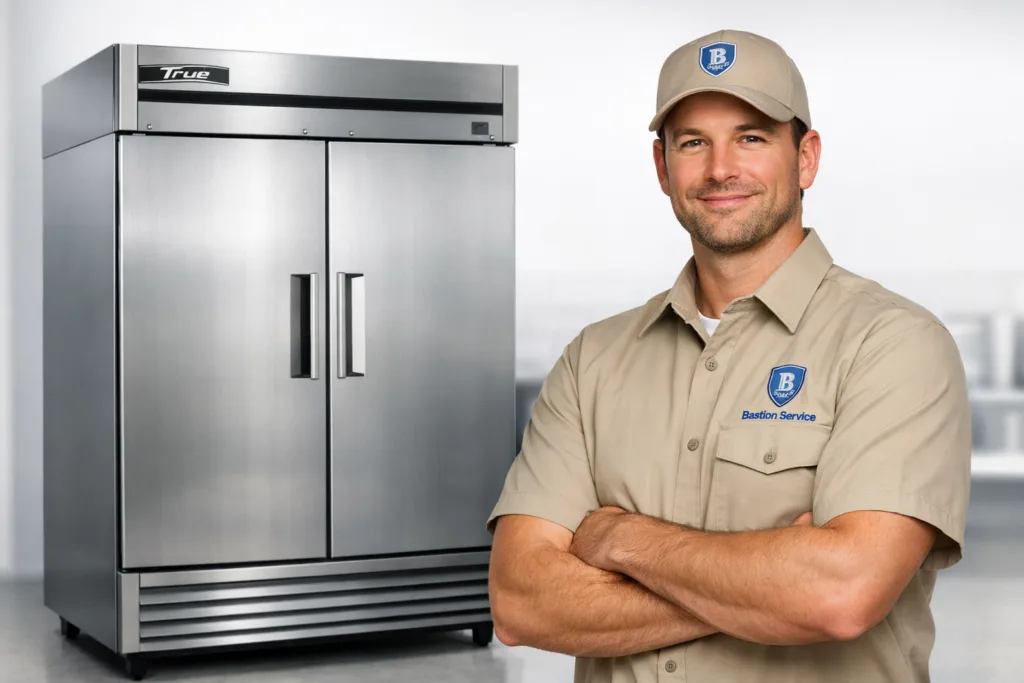




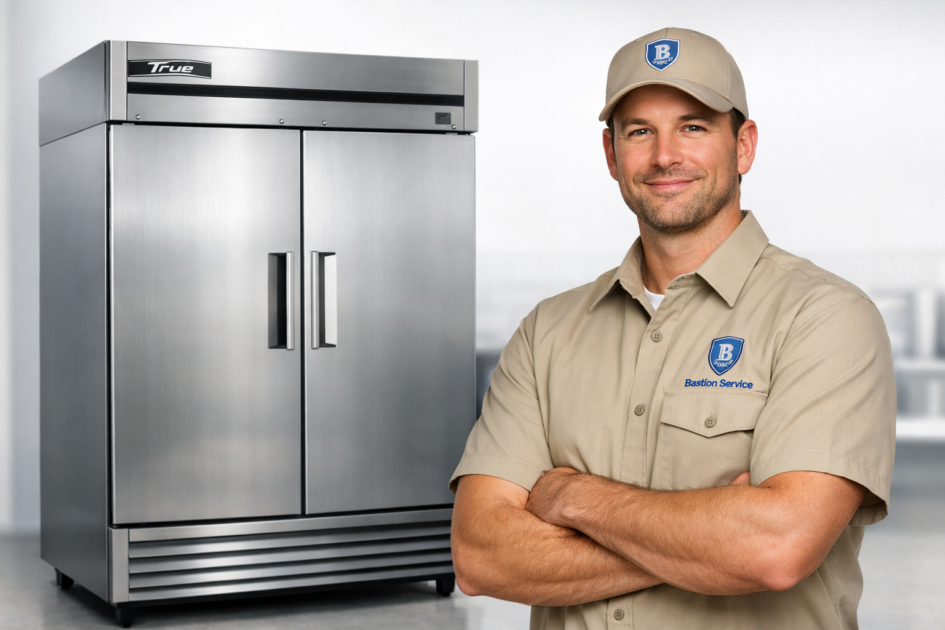
When a True freezer starts warming, building frost, or running nonstop, the most important step is to identify the fault before product loss and downtime spread into the rest of the workday. In Westwood, businesses that rely on frozen storage often need service based on symptoms that have already started affecting prep, inventory, or daily workflow. Bastion Service provides True freezer repair with attention to what the unit is doing now, what may be causing it, and how quickly the problem needs to be corrected.
Related commercial service paths in Westwood include True Commercial Repair in Westwood, Commercial Freezer Repair in Westwood, and True Refrigerator Repair in Westwood.
Start with the symptom pattern, not the part
Freezer problems do not always begin with a total shutdown. A unit may still appear to run while temperatures drift, recovery slows, frost builds up, or airflow weakens. That is why repair decisions are usually best made from the full symptom pattern rather than from one visible issue alone.
The same freezer may show more than one warning sign at once. A door that is not sealing properly can lead to frost, longer run times, unstable temperatures, and strain on fans or refrigeration components. A control or defrost issue can create similar symptoms. Looking at how those signs connect helps narrow the repair path.
Temperature rise or product not staying fully frozen
If the cabinet is running but not holding temperature, the cause may be restricted condenser airflow, evaporator frost, fan motor failure, sensor or control issues, or loss of refrigeration performance. In some cases, the freezer cools unevenly, with one section appearing colder than another. That pattern matters because it can point toward airflow or evaporator-related trouble instead of a complete system failure.
Even a modest temperature increase should be taken seriously. A freezer that is only slightly warmer than normal may still be outside acceptable holding conditions, and the longer it struggles, the more stress it places on major components.
Frost buildup, ice accumulation, or blocked circulation
Heavy frost inside the cabinet often means unwanted warm air is entering or moisture is not being cleared as expected. Common reasons include worn gaskets, poor door alignment, frequent door openings, or defrost problems. Once frost begins restricting airflow around the evaporator area, cooling performance often drops quickly.
In a busy business environment, this can look like a freezer that runs constantly but still fails to recover after the door is opened. Ice around panels, product, or fan pathways is usually a sign that service should not be delayed.
Constant running or short cycling
A freezer that never seems to shut off may be compensating for heat gain, dirty coils, weak airflow, gasket leakage, or a deeper refrigeration issue. On the other side, short cycling can point to electrical faults, control problems, or compressor protection events. Neither pattern is normal, and both can lead to more expensive damage if ignored.
Long run times also tend to hide the true severity of the problem. Because the unit is still making some effort to cool, staff may continue using it until recovery becomes too slow or the cabinet finally stops freezing altogether.
Fan noise, clicking, buzzing, or intermittent shutdowns
Unusual sound changes are often useful clues. Rattling can indicate loose panels or vibration. Scraping or repetitive fan noise may suggest ice interference or fan blade contact. Clicking can point to electrical or compressor start issues. If the freezer shuts down and restarts intermittently, that inconsistency can create unnoticed temperature swings during service hours.
When the sound profile changes at the same time as warming, frost, or moisture, it usually makes sense to have the unit evaluated before the condition spreads into a broader failure.
Common repair issues found on True freezers
While every diagnosis depends on the exact model and symptom set, several fault categories appear often when a True freezer is not performing correctly:
- Dirty or restricted condenser airflow
- Evaporator fan motor or condenser fan motor problems
- Door gasket wear, poor door closure, or hinge issues
- Defrost system faults leading to frost and blocked airflow
- Temperature control, sensor, or board-related failures
- Drain or moisture issues contributing to ice formation
- Electrical component failures affecting startup or cycling
- Sealed-system or compressor-related performance loss
These issues can overlap. For example, a freezer with poor airflow and gasket leakage may show both frost buildup and soft product. That is one reason symptom-based diagnosis is more useful than assuming one failed part from the start.
Why diagnosis matters before approving repair
On a True freezer, one symptom can come from several different causes. Warming temperatures may be tied to a fan problem, an iced evaporator, a failing sensor, a door leak, or sealed-system trouble. Replacing parts too early can waste time and still leave the freezer unreliable.
A proper service visit should determine what is affecting temperature, whether the issue is isolated or part of a larger decline, and whether repair is likely to restore stable operation. That matters for businesses in Westwood that need to protect stored product, manage staffing, and reduce repeat interruptions.
Signs service should be scheduled right away
Some freezer issues can wait a short time for planned service, but others should be addressed as soon as possible. Prompt scheduling is usually the right move when you notice:
- Cabinet temperature climbing above normal
- Soft product or slow freeze recovery
- Persistent frost or interior ice buildup
- Moisture around the door or on the floor near the unit
- Fans that sound louder, weaker, or inconsistent
- Repeated alarms or control irregularities
- Breaker trips, failed restart attempts, or random shutdowns
If the freezer has stopped cooling entirely or appears to be struggling to restart, continued operation can increase damage. In those cases, quick evaluation is often the best next step.
Repair or replacement depends on the full condition of the unit
Many True freezer problems are repairable, especially when the cabinet remains structurally sound and the failure is limited to fans, controls, sensors, gaskets, defrost components, or other serviceable parts. Replacement becomes more likely when there is major sealed-system damage, recurring breakdown history, or overall wear that makes another repair difficult to justify.
The decision usually depends on a few practical questions:
- How critical is the freezer to daily operations?
- Is the fault isolated or part of repeated decline?
- What is the overall age and condition of the equipment?
- Will repair restore reliable performance or only delay a larger failure?
For businesses in Westwood, that choice is often driven by uptime, product protection, and whether the unit can return to stable operation without creating another disruption soon after service.
How to prepare for a service visit
A little preparation can make freezer diagnosis more efficient. If possible, note when the problem started, whether temperatures are rising steadily or intermittently, and whether frost, alarms, leaks, or unusual noises appeared at the same time. It also helps to know if the issue follows heavy door use, cleaning, power disruption, or a recent period of poor recovery.
During service, staff may also want to be ready to describe:
- Whether the freezer is still running
- If some shelves are colder than others
- How long the unit takes to recover after opening
- Whether the door closes and seals normally
- If the problem is constant or comes and goes
These details can help narrow the likely cause faster and support a better repair decision.
What good freezer service should accomplish
A useful repair visit should do more than get the cabinet running for the moment. It should identify why the freezer lost performance, explain how that fault affects temperature and operation, and clarify whether continued use is likely to worsen the condition. That may involve correcting airflow problems, replacing failed components, addressing door sealing issues, or confirming a deeper refrigeration concern.
For businesses in Westwood, the practical next step is to schedule service when temperature changes, frost buildup, leaks, or abnormal noise first appear. Early attention often limits downtime, protects stored product, and gives you a stronger chance of resolving the True freezer problem before it turns into a full outage.


