
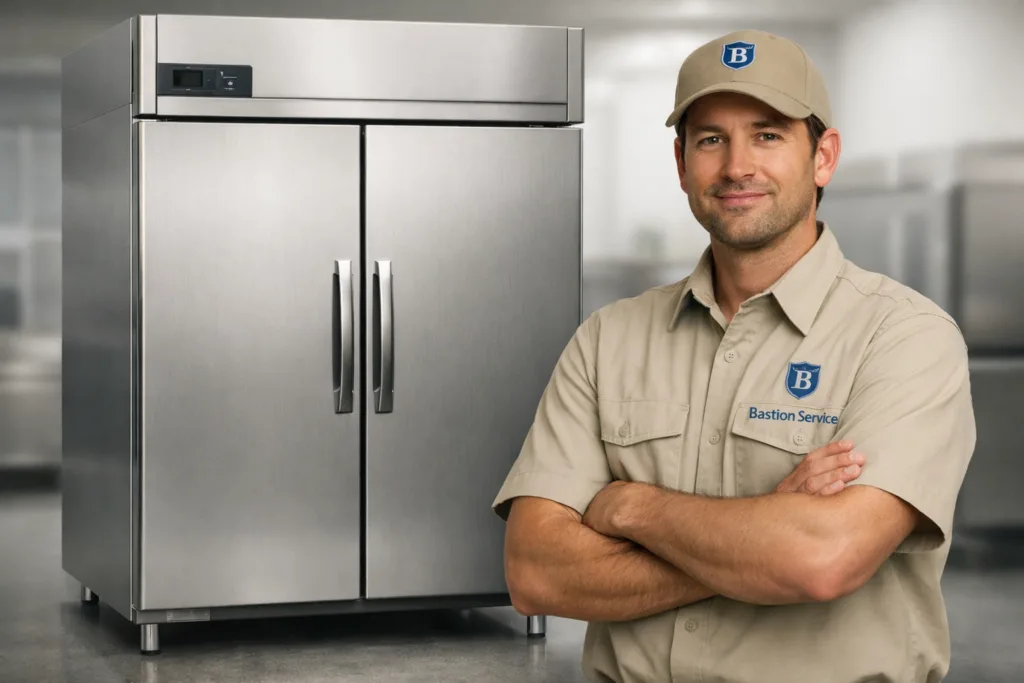




Freezer problems can disrupt storage, prep flow, and daily operations quickly, especially when a Hoshizaki unit starts missing temperature targets or building up frost. In many cases, the visible symptom is only part of the story. A freezer that seems to be “running warm” may actually have an airflow restriction, a defrost failure, a door-seal issue, a sensor problem, or a refrigeration-system fault. For businesses in Hawthorne, timely service helps limit product loss, reduce stress on the equipment, and keep downtime from spreading into a larger workflow issue.
Related commercial service paths in Hawthorne include Hoshizaki Commercial Repair in Hawthorne, Commercial Freezer Repair in Hawthorne, and Hoshizaki Refrigerator Repair in Hawthorne.
Bastion Service handles Hoshizaki freezer repair for businesses in Hawthorne by focusing on symptom patterns, equipment condition, and the repair path most likely to restore stable operation. That includes checking temperature performance, fan operation, frost patterns, door closure, controls, drain function, and other factors that can point to the real cause of the problem before work moves forward.
Common Hoshizaki freezer symptoms and what they may indicate
Freezer not staying cold enough
If the cabinet temperature rises above the normal range or struggles to recover after the door is opened, several issues may be involved. Dirty condenser coils, weak evaporator airflow, sensor errors, failing fan motors, gasket leaks, and compressor-related problems can all lead to similar temperature complaints. A unit may still cool somewhat while falling behind during busy periods, which is often a sign that the system is losing capacity or efficiency.
Temperature inconsistency also matters when only certain shelves or product zones seem affected. Uneven cooling can point to blocked airflow, ice accumulation around the evaporator, overloading patterns, or fan issues that keep cold air from circulating correctly through the cabinet.
Frost buildup on walls, product, or evaporator areas
Heavy frost is often linked to moist air entering the cabinet, but the underlying reason can vary. Door gaskets may be torn, the door may not be closing squarely, hinges may be worn, or the defrost system may not be clearing ice as intended. Once frost gets thick enough, airflow drops and the freezer may look like it has a major cooling failure when the original problem started with air infiltration or a defrost component.
Repeated frost after staff clears it manually is a sign that the cause has not been addressed. Ice will usually return until the underlying fault is corrected.
Freezer runs all the time
A Hoshizaki freezer that seems to run nonstop is usually working harder than it should to hold temperature. That can happen when heat cannot leave the system efficiently, when cold air is not moving properly through the cabinet, or when the controls are not reading conditions correctly. Constant operation increases wear and can shorten the time before a more serious failure develops.
Clicking, buzzing, fan noise, or vibration
Noise complaints are worth checking early because they can reveal developing problems before total shutdown. Fan motors may be wearing out, blades may be striking ice, mounting hardware may be loose, or startup components may be struggling during compressor cycles. The location and timing of the sound often help narrow down whether the issue is tied to airflow, electrical parts, or compressor stress.
Water leaks or sheets of interior ice
Water around the unit is not always a simple drain issue. Defrost problems, blocked drains, unstable cabinet temperature, and gasket leakage can all create meltwater or refreeze patterns. Inside the cabinet, ice sheets can interfere with storage, airflow, and door function. Outside the cabinet, leaks can create cleanup problems and hazards around the equipment area.
Why diagnosis matters before replacing parts
Freezer symptoms overlap. A warm cabinet does not automatically mean the compressor is failing, and frost does not always mean the defrost heater is bad. Replacing parts too quickly can add cost without solving the problem if the actual cause is elsewhere in the system.
A proper service visit should sort out questions such as:
- Is the freezer failing to produce enough cooling, or is cold air being blocked?
- Is the problem constant, or does it happen mainly after loading and door traffic?
- Are controls and sensors reporting conditions accurately?
- Is frost the root problem, or the result of another fault?
- Has continued operation already caused secondary damage?
These details affect repair scope, parts selection, and whether the unit is likely to return to stable service after the repair is completed.
Signs it is time to schedule service
Some failures are obvious, but many start with smaller changes that staff notice during normal use. Service is usually worth scheduling when any of the following keeps happening:
- Product is softening or cabinet temperature is trending upward
- Recovery is slow after door openings or restocking
- Frost returns soon after being cleared
- The door does not seal tightly or pops back open
- Fans sound different or stop intermittently
- The unit short cycles or seems to run continuously
- Condensation or leaking water appears around the cabinet
- Interior sections cool unevenly from top to bottom or front to back
These symptoms may still allow the freezer to operate for a while, but they often signal a condition that gets worse under daily load.
How specific symptoms affect repair decisions
Slow pull-down after loading
When a freezer eventually reaches temperature but takes too long to get there, the issue may involve reduced cooling capacity, weak airflow, dirty heat-transfer surfaces, or a door that is allowing too much warm air in during normal use. This type of complaint is important because it often appears before a complete cooling failure.
Soft product near the door or on certain shelves
Localized warming usually points away from a simple “all or nothing” failure. Air movement problems, loading patterns, gasket leaks, or evaporator icing may be creating hot spots inside the cabinet. Product condition can reveal a lot about where airflow is being interrupted.
Alarm conditions or repeated resets
If staff has to reset the unit repeatedly, the freezer is not operating normally even if it seems to recover for a period. Repeated resets can mask an electrical, control, sensor, or operating fault that still needs attention. Temporary recovery should not be treated as a lasting fix.
When continued operation can cause bigger problems
Using a freezer while it struggles to maintain temperature can create more than one repair issue at the same time. A unit that runs too long may overheat components, build additional frost, or place extra stress on the compressor and fans. A door that does not seal well can turn a manageable gasket problem into widespread icing and poor airflow. Water from defrost or drain problems can freeze in places that interfere with normal operation.
If temperature stability is declining, product is at risk, or the freezer is making new noises, delaying service may turn a repairable problem into a longer outage.
Repair versus replacement considerations
Many Hoshizaki freezer issues are repairable, especially when the cabinet is in good condition and the problem is tied to controls, sensors, fan motors, gaskets, hinges, drains, electrical components, or isolated operating faults. In those situations, repair can restore useful service life without unnecessary equipment turnover.
Replacement tends to become part of the conversation when there are repeated major failures, extensive cabinet deterioration, severe corrosion, or high-cost refrigeration-system problems combined with age and overall wear. The decision usually depends on the confirmed fault, not just the symptom that first got attention.
What businesses in Hawthorne can do before the visit
Simple preparation can help move service faster and make the freezer easier to evaluate. Before the appointment, it helps to note:
- How long the problem has been happening
- Whether the issue is constant or only appears during busy periods
- Any recent noises, alarms, leaks, or frost patterns
- Whether product is warming in specific zones
- Any resets, manual defrosting, or temporary workarounds already tried
It is also useful to keep the area around the unit accessible so key components, door alignment, and airflow areas can be checked without extra delay.
Service focus for Hoshizaki freezer repair in Hawthorne
Businesses in Hawthorne usually need more than a guess based on one symptom. They need a service response that connects the complaint to the likely failure point, explains whether the problem is isolated or spreading, and helps determine the best next step for restoring normal freezer performance. When a Hoshizaki freezer starts running warm, icing over, leaking, or making unusual noise, prompt evaluation can help protect inventory and reduce avoidable downtime.
If the unit is no longer holding temperature, recovering too slowly, or showing repeated signs of airflow or defrost trouble, scheduling repair is the most practical way to prevent a smaller issue from becoming a larger interruption to daily operations.


