
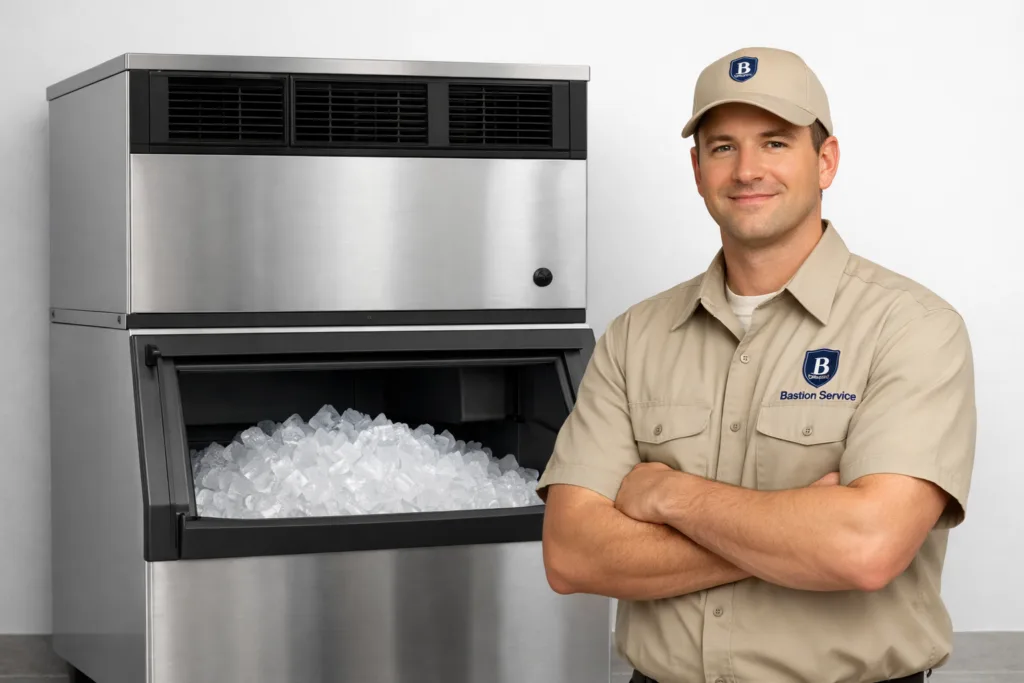




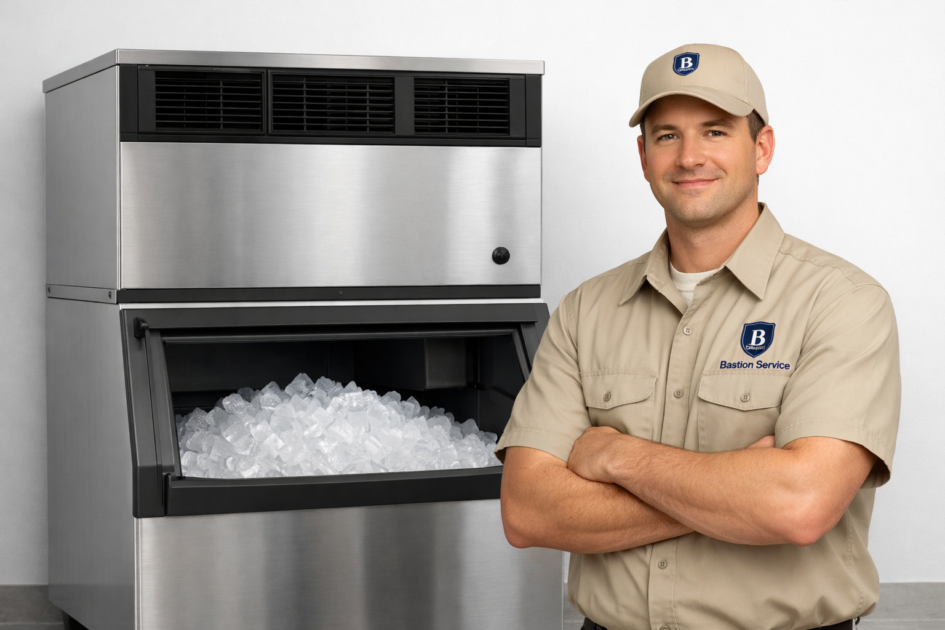
When a Hoshizaki ice machine starts falling behind, leaking, producing poor ice, or stopping mid-cycle, the main priority is protecting day-to-day operations while identifying the actual fault. For restaurants, bars, cafés, hotels, and food-service businesses in Hawthorne, ice shortages and inconsistent machine performance can affect drink service, food handling routines, staff workflow, and cleanup demands. Bastion Service provides repair support focused on symptom-based diagnosis, repair scheduling, and the next step that makes sense for the equipment and the business.
For specific equipment paths in Hawthorne, review Hoshizaki Refrigerator Repair in Hawthorne, Hoshizaki Freezer Repair in Hawthorne, and Hoshizaki Ice Machine Repair in Hawthorne.
Common Hoshizaki Ice Machine Problems That Need Service
Most ice machine issues do not begin with a total failure. They usually show up first as slower production, thinner cubes, unusual cycling, standing water, or a machine that needs frequent resets. What looks like one simple problem can be tied to water supply restrictions, scale buildup, drain issues, controls, sensors, pumps, or refrigeration-related performance loss.
Low Ice Production or No Ice
If the bin is not filling as expected, the machine may be dealing with restricted water flow, partial fill problems, scaling, long freeze times, or trouble completing harvest. Some units continue running while producing far less ice than normal, which can make the issue easy to overlook until demand rises. Businesses usually benefit from scheduling service once output drops noticeably instead of waiting for a complete stop.
Low production often shows up alongside other clues, including smaller batches, slower recovery, or ice that looks thinner or less consistent than usual. Those patterns help narrow whether the issue is related to water delivery, internal buildup, or cycle control.
Water Leaks and Drainage Problems
Water around the base of the machine should not be ignored. Leaks can come from supply lines, drain restrictions, overflow conditions, internal ice formation, or components that are no longer directing water properly through the cycle. Even a minor leak can become a larger operations problem if it affects flooring, creates slip risk, or leads staff to keep wiping up the same area without addressing the source.
Drain-related issues may also appear as slow melting in the bin, standing water, or unusual ice formation where it should not collect. If the machine is leaking and the source is unclear, a repair visit can help determine whether it is safe to keep the unit operating until service is completed.
Harvest Issues and Ice Release Problems
When ice does not release cleanly, the machine may stall between cycles, produce irregular sheets, or shut itself down after repeated failed attempts. Harvest trouble is especially disruptive because the machine may appear to be running while producing little usable ice. Staff may hear longer cycle times, notice clumping, or find that the unit restarts only after being reset.
These symptoms often point to a problem that will continue returning until the underlying cause is repaired. Repeated manual resets are usually a sign that the machine needs service rather than observation.
Scale Buildup and Water Flow Restrictions
Scale buildup can reduce efficiency, interfere with water movement, affect sensors, and change the way ice forms and releases. In busy kitchens and beverage operations, buildup is often first noticed through reduced output, cloudy ice, incomplete batches, or inconsistent cycle timing. Water flow restrictions may produce similar symptoms, which is why the machine should be evaluated based on the full symptom pattern rather than one visible issue alone.
When scale or restricted flow is involved, delaying service can allow performance to keep drifting downward until the machine becomes unreliable during peak demand.
Shutdowns, Fault Conditions, and Intermittent Operation
A machine that stops unexpectedly, starts and stops throughout the day, or only runs after power cycling is already affecting reliability. Intermittent faults are frustrating because they can disappear briefly and then return during the busiest part of service. In business settings, that usually means lost time, staff workarounds, and uncertainty about whether the unit will keep up through the shift.
Service is especially important when shutdowns happen alongside leaks, poor harvest, long freeze times, or changes in ice quality. Those combinations usually indicate a broader operating problem that should be diagnosed before the machine is relied on again.
Ice Quality Problems Often Point to Larger Performance Issues
Ice quality matters for more than appearance. Cloudy cubes, hollow cubes, soft ice, odd shapes, excess melting, or inconsistent sizing can all signal that the machine is not operating within normal conditions. Sometimes the issue is water-related. In other cases, the problem involves scale, poor distribution, incorrect cycle timing, or a fault that is disrupting normal freeze and release behavior.
For businesses serving drinks or using ice as part of food-service workflow, poor ice quality can quickly become a customer-facing issue. It can also be an early warning sign that the machine needs attention before a more serious production failure develops.
Why Symptom Patterns Matter Before Repair Decisions
Two machines can both show low output but need very different repairs. One may have a water supply issue, while another may be struggling with scaling, drain trouble, or a control problem affecting cycle timing. That is why the most useful service approach starts with how the machine is behaving over time:
- Did production drop gradually or all at once?
- Is the issue constant or intermittent?
- Are there visible leaks or standing water?
- Is the machine still making ice, but not enough?
- Are cubes changing in size, clarity, or shape?
- Does the unit need repeated resets to keep running?
These details help determine urgency, likely repair scope, and whether continued operation may make the problem worse.
When to Keep the Machine Running and When to Take It Out of Service
Some issues allow limited short-term operation while a repair appointment is being arranged. Others justify shutting the machine down to avoid bigger damage, sanitation concerns, or unsafe conditions around the equipment. In many cases, faster service is the better choice when the machine shows any of the following:
- repeated leaks or recurring water on the floor
- major drop in ice production
- failed harvest cycles or stuck ice
- noticeably poor ice quality
- frequent shutdowns or reset-dependent operation
- obvious scale buildup affecting performance
If staff are compensating by rationing ice, emptying bins more slowly, restarting the machine throughout the day, or watching for overflow, the equipment is already creating avoidable disruption. A scheduled repair visit helps clarify whether the problem is contained or progressing.
Repair Planning for Businesses in Hawthorne
Ice machine repair is not only about replacing a failed part. It is also about minimizing interruption and making a sound decision about the equipment. Managers often need to know whether the unit can remain in service temporarily, whether a repair is likely to restore normal production, and whether the machine is showing signs of broader wear that affect future reliability.
Useful information to have ready when scheduling service includes when the symptom started, whether output has dropped suddenly or slowly, whether leaking is continuous or occasional, and whether the machine is producing abnormal ice before shutting down. That information can make diagnosis more efficient and help set expectations for the repair path.
Repair or Replacement Considerations
Not every Hoshizaki service call ends the same way. Some machines need a focused repair to restore water flow, harvest performance, or stable production. Others may have multiple recurring issues that make continued investment harder to justify. The right recommendation depends on the condition of the machine, frequency of recent problems, repair scope, and the impact of downtime on the business.
For operators in Hawthorne, the practical question is usually straightforward: restore this unit, plan for a larger repair, or stop putting money into an ice machine that is becoming unpredictable. A service evaluation helps answer that based on actual equipment condition rather than guesswork.
Scheduling Service Before a Small Problem Becomes a Longer Outage
If your Hoshizaki ice machine is making less ice, leaking, struggling to harvest, shutting down, or producing ice with noticeable quality issues, scheduling repair sooner usually protects operations better than waiting for a full failure. Early service can narrow the cause, identify whether the machine should stay in use, and help reduce the risk of a more disruptive outage for your business in Hawthorne.


