





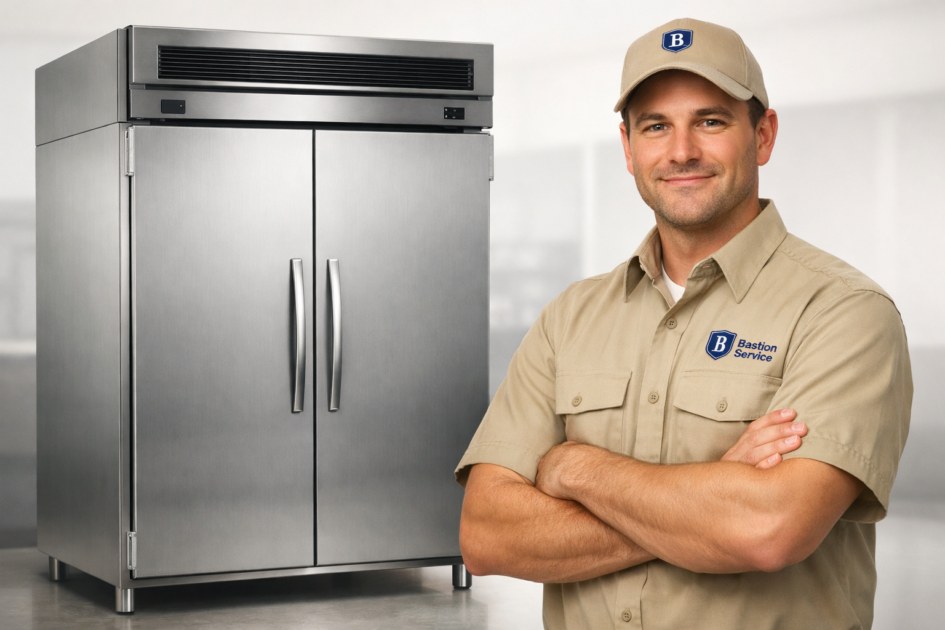
Freezer problems can move from minor inconvenience to product risk quickly, especially when temperature recovery slows, frost starts spreading, or the cabinet begins running harder than usual. For businesses in Hawthorne, the best next step is service that focuses on the actual failure pattern, how the unit is operating under load, and what repair action will restore stable performance with the least disruption. Bastion Service handles Traulsen freezer issues with symptom-based testing so repair decisions are based on what the equipment is doing now, not guesswork.
Related commercial service paths in Hawthorne include Traulsen Commercial Repair in Hawthorne, Commercial Freezer Repair in Hawthorne, and Traulsen Refrigerator Repair in Hawthorne.
How Traulsen freezer problems usually show up in daily operation
Many freezer failures start with small warning signs before a full cooling loss happens. Staff may notice softer product, longer pull-down times, uneven cabinet temperatures, moisture near the door, or a fan sound that has changed from normal operation. Those symptoms often point to one of a few core problem areas: airflow restriction, defrost failure, door sealing issues, control or sensor faults, or refrigeration-system performance trouble.
What matters is not only whether the freezer is still running, but whether it is holding temperature consistently enough to support normal workflow. A unit that still seems “cold” can still be underperforming, overcycling, or building hidden frost that leads to a larger breakdown.
Why is my Traulsen freezer not staying cold enough?
If a Traulsen freezer is not staying cold enough, the cause may be as simple as poor airflow through the cabinet or as serious as a refrigeration-system problem. Warm temperatures can come from dirty condenser conditions, a failing evaporator fan motor, restricted air movement from ice buildup, weak door sealing, sensor misreads, or control issues that cause the unit to run at the wrong times.
In a business setting, this symptom should be taken seriously early. A freezer that drifts above its normal range may still appear to be operating, but slow recovery and unstable temperatures can affect product quality and put more strain on major components. Service is usually most effective when the technician can compare the complaint with actual box temperature behavior, cycle timing, airflow, and frost pattern rather than replacing parts based on assumption.
Common symptom groups and what they can indicate
Frost buildup on walls, shelves, or around the evaporator
Excess frost usually means moisture is getting into the cabinet or the unit is not completing defrost properly. Worn gaskets, misaligned doors, doors left slightly open, failed heaters, control faults, or drain problems can all contribute. Once frost starts interfering with airflow, temperature consistency often drops and run time increases.
Freezer runs constantly
A Traulsen freezer that rarely cycles off may be trying to overcome warm air infiltration, poor heat rejection, weak airflow, or a cooling-system issue. Constant operation often raises energy use and can accelerate wear on motors and the compressor. If the cabinet is running nonstop while still struggling to hold set temperature, service should not be delayed.
Short cycling or repeated stopping and starting
Rapid cycling can point to control problems, electrical issues, safety cutout behavior, or system stress. This pattern is different from normal on-and-off operation. When it happens repeatedly, it can affect reliability and make temperature performance inconsistent throughout the day.
Fan noise, rattling, buzzing, or vibration
Changes in sound often help narrow down the problem. A scraping or ticking noise may suggest ice contact or blade interference. A louder hum or buzz can point to motor strain or compressor stress. Rattling may be as simple as panel vibration, but when it appears alongside poor cooling or frost, it usually means the freezer needs inspection before the issue grows.
Water leaks or condensation near the unit
Water around a freezer is often connected to a blocked or frozen drain, failed defrost management, poor door sealing, or melting ice caused by temperature swings. Even if the cabinet still feels cold, visible moisture is a sign that the freezer is not operating normally.
What technicians check during a freezer diagnosis
Good freezer service starts by matching the complaint to the machine’s actual behavior. That typically includes checking cabinet temperature, setpoint response, fan operation, door condition, ice formation, condenser and evaporator condition, control readings, and whether the unit is recovering temperature at a normal rate after door openings.
On a Traulsen freezer, overlapping symptoms are common. What looks like a thermostat problem may actually be restricted airflow. What appears to be a defrost issue may begin with a leaking gasket that keeps introducing moisture. What seems like low cooling capacity may be tied to heavy frost blocking circulation inside the cabinet. Finding the true source of the problem helps avoid repeat visits and unnecessary part replacement.
When to schedule repair instead of waiting
Service should be scheduled promptly when the freezer shows signs that performance is no longer stable. Waiting is risky when the unit supports daily inventory, back-of-house prep, or temperature-sensitive storage. Early attention can prevent a small fault from turning into a longer outage.
- Cabinet temperature is higher than normal or fluctuates
- Product is softening or freezing unevenly
- Frost is spreading faster than usual
- Doors do not seal tightly or close cleanly
- Fans are not running normally or airflow feels weak
- The freezer is running constantly or cycling abnormally
- Water is collecting around or inside the cabinet
- New noises appear during operation
When continued use can make the problem worse
Some freezers can keep running while already causing damage to themselves. If airflow is blocked by ice, if the cabinet is operating warm, or if motors are struggling, continued use can increase wear on the compressor, fan assemblies, controls, and other components. A door that does not seal properly may keep feeding moisture into the cabinet, which creates more frost and forces longer run times. In that situation, the freezer is not just underperforming; it is becoming more expensive to recover.
For businesses in Hawthorne, the practical concern is uptime. If the unit is no longer holding a dependable temperature or if staff are having to compensate for it throughout the day, it is usually time to stop treating the symptom as temporary and schedule repair.
Repair or replace?
Many Traulsen freezer problems are repairable, especially when the issue involves gaskets, fan motors, controls, sensors, drains, defrost components, or isolated electrical faults. In those cases, repair is often the fastest route back to normal operation. The decision becomes harder when the freezer has repeated breakdowns, poor recovery after prior repairs, multiple failing systems, or signs of broader reliability decline.
The right choice depends on current condition, not age alone. If the problem is isolated and the rest of the unit is sound, repair often makes sense. If several systems are failing at once and downtime is becoming frequent, replacement may be the more practical investment. A proper evaluation should look at likely uptime after repair, not just the immediate part cost.
How to prepare for a service visit
A few details can make diagnosis faster and more accurate. It helps to note when the problem started, whether it is constant or intermittent, what temperature changes staff have seen, and whether the issue appeared after cleaning, loading changes, door use changes, or recent power interruption. If frost, leaks, or noise are involved, knowing where they appear and when they are worst can also help narrow down the cause.
Before service, businesses should avoid repeatedly adjusting controls in hopes of forcing a recovery. Multiple setting changes can hide the original symptom and make the failure pattern less clear. It is better to leave the freezer as found and report what the staff has been seeing during normal use.
Service-focused next steps for businesses in Hawthorne
When a Traulsen freezer starts showing temperature loss, frost buildup, airflow trouble, noise, or moisture issues, the most useful next step is to have the unit checked before a partial problem turns into a shutdown. A repair visit should answer three things clearly: what is failing, how urgent it is, and whether repair is likely to restore dependable operation. For businesses in Hawthorne, acting early usually means less downtime, better product protection, and a more straightforward path back to normal workflow.


