
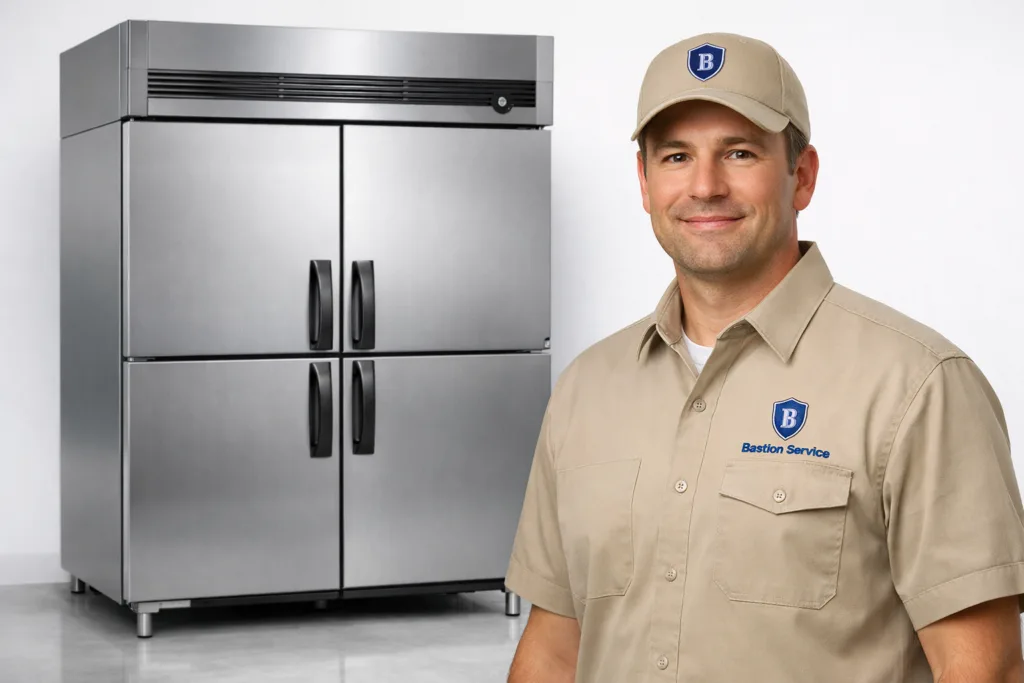




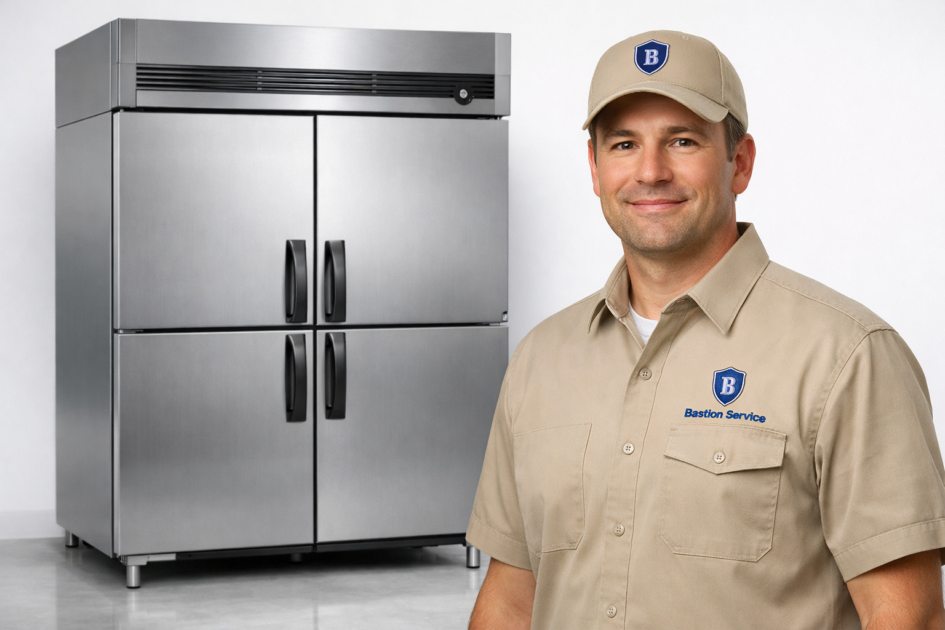
Freezer trouble can interrupt prep schedules, threaten stored inventory, and put extra strain on equipment that is already being pushed through daily use. For Hoshizaki units in Beverly Hills, the most useful next step is service that traces the symptom back to the actual failure, whether that points to airflow restrictions, defrost problems, sensor issues, door sealing trouble, or a refrigeration fault. Bastion Service works with businesses in Beverly Hills to diagnose freezer problems, explain the likely repair path, and help schedule service based on urgency and operating impact.
Related commercial service paths in Beverly Hills include Hoshizaki Commercial Repair in Beverly Hills, Commercial Freezer Repair in Beverly Hills, and Hoshizaki Refrigerator Repair in Beverly Hills.
Common Hoshizaki freezer problems businesses notice first
Freezer not staying cold enough
When a Hoshizaki freezer is no longer holding temperature, the issue may show up as soft product, slow pull-down after loading, warmer cabinet readings, or a unit that seems to cool unevenly from one section to another. This can be caused by dirty condenser components, evaporator icing, weak fan performance, sensor or control problems, gasket leakage, or declining refrigeration performance. Because several different failures can create the same temperature complaint, inspection matters before any part is replaced.
Frost buildup inside the cabinet
Frost around the evaporator area, door opening, shelves, or stored product usually means moisture is getting where it should not or the defrost process is not working as intended. In many cases, the problem starts with torn gaskets, doors not sealing cleanly, a hinge issue, a control fault, or airflow being blocked by ice. Frost buildup is more than a cosmetic issue. It can reduce usable storage space, interfere with circulation, and force the freezer to run longer than normal.
Constant running or short cycling
A freezer that seems to run all day may be fighting warm air infiltration, restricted condenser airflow, an iced evaporator, or a control problem that is not responding correctly to cabinet conditions. On the other end, short cycling can point to electrical faults, control issues, or protection circuits reacting to a deeper problem. Either pattern deserves attention because both can lead to unstable temperatures and added wear on major components.
Unusual fan noise or vibration
Grinding, rattling, buzzing, or airflow sounds that suddenly change can suggest fan motor wear, ice striking a fan blade, loose panels, compressor stress, or mounting problems. Noise alone does not confirm the failed part, but it often helps narrow the diagnostic path. If the sound is paired with poor cooling or frost buildup, the underlying issue may be advancing beyond a minor annoyance.
Water leaks or refreezing moisture
Water under the unit, puddling inside the cabinet, or ice forming in unwanted areas often points to drainage restrictions, defrost issues, excess condensation, or sealing problems. In a busy kitchen or food-service setting, that can quickly affect sanitation, safety, and daily workflow. Leaks that seem small at first can also signal a larger problem with moisture control inside the freezer.
Why the same symptom can come from different failures
Freezer symptoms overlap more than many operators expect. A warm cabinet does not automatically mean the compressor has failed. Heavy frost does not always mean the defrost heater is bad. Fan noise does not always mean the fan motor is the only issue. A proper service call looks at temperature behavior, airflow, frost pattern, door closure, control response, electrical condition, and component operation together.
That matters because the wrong repair wastes time and does little to protect uptime. If a unit is still running but performance has changed, this is often the best stage to diagnose it before a partial problem becomes a full cooling failure.
What a symptom-based freezer diagnosis usually includes
For Hoshizaki freezer repair in Beverly Hills, symptom-based diagnosis usually starts with how the equipment is behaving during normal use, not just whether it powers on. Service may include:
- Verifying cabinet temperature and recovery behavior
- Checking condenser and evaporator airflow
- Inspecting for frost pattern abnormalities or ice blockage
- Evaluating door gasket condition and door alignment
- Testing fan operation, controls, sensors, and electrical components
- Reviewing drainage and moisture-related issues
- Determining whether the problem is isolated or part of a larger system decline
This kind of process helps separate a targeted repair from a bigger equipment decision and reduces the risk of replacing parts based only on surface symptoms.
Signs service should be scheduled promptly
Some freezer issues can wait for a planned visit, but others should be addressed quickly because they tend to escalate. It is smart to schedule service when you notice:
- Temperature swings or product not freezing properly
- Frost building faster than usual
- The freezer running nonstop or cycling abnormally
- Door gaskets not sealing tightly
- New fan noise, clicking, or vibration
- Water leaks, refreezing moisture, or drainage concerns
- Slow recovery after normal door openings
For businesses in Beverly Hills, waiting too long can turn a repairable issue into product loss, heavier icing, compressor strain, or a more disruptive shutdown during operating hours.
When continued use can make the problem worse
A freezer that is still partially cooling can create a false sense of security. Continued use under the wrong conditions may increase internal stress and expand the repair. Restricted airflow can force extended run times. Defrost faults can create more severe ice accumulation. A leaking gasket can pull in warm, humid air all day and cause both frost and poor temperature control. If the cabinet is no longer stable, loading it normally may increase downtime risk instead of buying time.
The practical question is not only whether the unit is still on, but whether it is protecting product consistently enough to keep using it without adding damage.
Repair versus replacement considerations
Many Hoshizaki freezer problems can be resolved without replacing the unit, especially when the cabinet is in good condition and the failure is limited to fans, controls, sensors, gaskets, drainage components, or other serviceable parts. Replacement becomes a more serious consideration when there are repeated major failures, expensive refrigeration work on an aging unit, or a pattern of breakdowns that keeps disrupting operations.
The better decision usually comes from the overall condition of the freezer, the severity of the current failure, and how much downtime the business can absorb. A focused repair often makes sense when it restores stable operation. If reliability has already become unpredictable, a larger equipment decision may be the more efficient path.
Preparing for a freezer repair visit
Before service is scheduled, it helps to note how the freezer has been acting over the last few days. Useful details include whether the problem is constant or intermittent, whether frost appeared before temperature issues, whether noise changed recently, and whether the unit struggles more during busy periods. If there are alarm codes, visible ice, water around the cabinet, or a door that does not close properly, those observations can help speed diagnosis.
If product protection is becoming a concern, moving sensitive inventory and reducing unnecessary door openings can also help limit additional temperature loss before the technician arrives.
Service support for Hoshizaki freezer issues in Beverly Hills
When a freezer starts slipping out of normal operation, the goal is to identify the fault, judge the urgency, and move toward repair without guesswork. For Beverly Hills businesses using Hoshizaki equipment, that means looking closely at cooling performance, airflow, defrost behavior, sealing condition, and component response so the repair matches the real cause of the problem. If your unit is warming, icing over, leaking, or making new noise, scheduling service early is often the best way to limit downtime and restore reliable operation.


