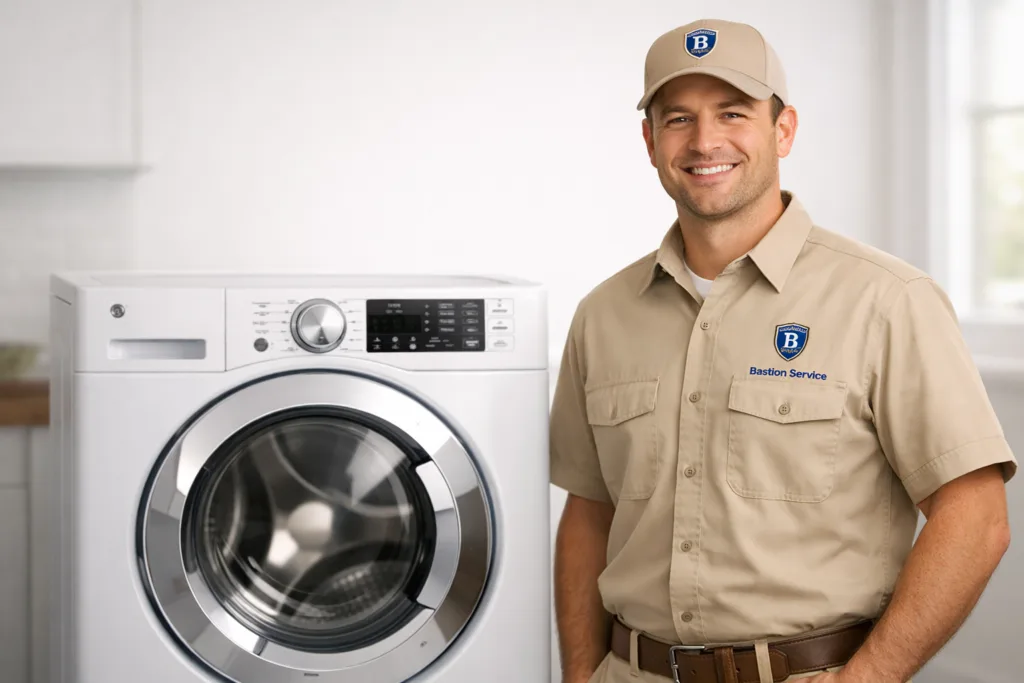
Washer problems rarely stay contained for long. A machine that leaves clothes soaked, pauses before spin, or starts making a new grinding sound can quickly turn into a missed laundry day, a wet floor, or added strain on other components. With GE washers, the most efficient path is to match the exact symptom to the system most likely causing it instead of assuming one common part is always to blame.
Common GE washer symptoms and what they may point to
Many washer complaints sound similar at first, but the timing of the failure matters. Whether the issue happens during fill, wash, drain, spin, or unlocking helps narrow down the likely cause and whether the repair is relatively contained or part of a broader wear pattern.
Not draining or leaving water in the drum
If your GE washer finishes with standing water inside, the problem may involve the drain pump, a restriction in the drain path, a control interruption, or a door or lid condition that prevents the cycle from advancing correctly. In some cases the washer hums but does not pump out. In others, it drains slowly and stops before the final spin, leaving clothes heavy and wet.
This type of symptom should not be ignored. Continued use can lead to odor, repeat cycle failures, and extra stress on parts that are trying to complete a cycle the machine cannot finish properly.
Spinning problems and wet clothes after the cycle
A GE washer that drains but does not spin well may have a balance issue, worn suspension components, a lid or door sensing fault, or trouble within the drive system. If the washer seems to start spinning and then stops, or if it tumbles normally but never reaches full-speed extraction, the underlying issue is often more than simple load placement.
Watch for patterns such as:
- Clothes coming out wetter than usual every load
- The cycle ending early or skipping the final spin
- Repeated off-balance behavior with normal loads
- Loud banging during high-speed spin
Leaks, drips, and water on the floor
Water around the washer can come from several places, including supply hoses, drain hose connections, a damaged door boot or seal, internal tub-related issues, or oversudsing that pushes water out during agitation or spin. The location and timing of the leak matter. A leak at the start of the cycle suggests a different source than water appearing only during drain or high spin.
In Mid-Wilshire homes, even a small repeat leak is worth addressing promptly because washer moisture can affect flooring, baseboards, and nearby walls if the problem continues unchecked.
Won’t start, stops mid-cycle, or won’t unlock
When a GE washer powers on but refuses to begin, the fault may involve the latch system, user interface, control board, fill sequence, or a safety condition the machine is detecting. If it stops in the middle of a load, the cause could be electrical, mechanical, or related to a sensor reading that prevents the cycle from moving forward.
A door or lid that stays locked is not always a lock failure by itself. On many washers, the machine will keep the door locked if it still senses water inside or believes the cycle has not reached a safe stopping point.
Loud noises, shaking, or burning smells
Not every noisy washer needs major repair, but recurring mechanical noise should be taken seriously. Thumping from an overloaded or off-balance load is one thing. Grinding, scraping, metal-on-metal sounds, or a burning odor are different and often indicate wear that should be inspected before more loads are run.
If the machine walks forward, slams during spin, or sounds rough every cycle, there may be a suspension, basket, motor, or drive-related issue behind the symptom.
Fill and wash performance issues
Some GE washer problems are less dramatic but still disruptive. If the tub fills too slowly, overfills, adds no water, or washes poorly even though the machine appears to complete the cycle, the issue may be connected to inlet valves, screens, pressure sensing, detergent buildup, or control problems.
Homeowners often notice these issues as:
- Clothes that do not come out fully clean
- Detergent residue left on fabrics
- The washer taking much longer than normal
- Hot, warm, or cold settings not behaving correctly
- Error behavior tied to fill time or water level
Because poor wash results can stem from several unrelated causes, symptom history is useful. Knowing whether performance dropped suddenly or worsened over time helps separate a developing mechanical issue from a water supply, sensor, or control problem.
Why symptom-based diagnosis matters
Washer symptoms overlap more than most homeowners expect. Wet clothes at the end of a cycle might point to a drain issue, a spin issue, a control interruption, or a safety lock condition that prevents the washer from completing its final steps. A machine that will not start might actually be waiting on a fill, latch, or sensing input rather than suffering from total control failure.
That is why accurate diagnosis matters before parts are replaced. It reduces the chance of chasing the wrong fix and helps determine whether the repair is likely to restore normal operation or whether multiple systems are showing wear at the same time.
When to stop using the washer and schedule service
Some issues can wait a day or two. Others should be checked before the next load. It is usually best to stop using the washer if the symptom creates risk of water damage, electrical trouble, or mechanical damage that could spread.
Schedule service if your GE washer is doing any of the following:
- Leaking onto the floor or into the cabinet area
- Leaving standing water in the drum
- Failing to spin clothes dry repeatedly
- Making grinding, scraping, or burning-smell noises
- Stopping mid-cycle with laundry trapped inside
- Refusing to lock, unlock, fill, or drain normally
- Showing recurring cycle failure or control issues
A one-time unbalanced load is not the same as a repeat fault. But when the same symptom keeps returning, the washer is usually telling you something more specific is failing.
Repair or replace?
Repair is often the sensible choice when the washer is otherwise in good condition and the problem is isolated to one system. Replacement becomes a more serious consideration when there are multiple failures, extensive wear, a significant tub or drive problem, or a history of repeated breakdowns in a short period.
The right decision depends on more than age alone. A newer machine with a major internal failure may not make sense to keep, while an older washer with one contained issue may still be worth repairing if the rest of the appliance is stable. For Mid-Wilshire homeowners, the key question is whether the machine is likely to return to reliable household use without piling one repair on top of another.
What homeowners can note before a service visit
A few details can make diagnosis faster and more accurate. Before the appointment, it helps to note:
- Whether the washer fills, agitates, drains, and spins at all
- When the noise or failure happens in the cycle
- Whether the problem affects every load or only some loads
- If the issue began suddenly or developed gradually
- Whether water is visible under the front, rear, or inside the drum
You do not need to troubleshoot the machine extensively, but these observations can help connect the symptom pattern to the correct repair path.
GE washer repair for homes in Mid-Wilshire
Household laundry equipment gets used hard, and washer problems tend to disrupt routines immediately. For homes in Mid-Wilshire, GE washer repair is most useful when the visit focuses on the actual behavior of the machine rather than assumptions based on one broad symptom. That approach helps determine whether the issue is tied to drainage, spin, fill, control, locking, or a developing mechanical fault.
If your washer is leaking, failing to finish cycles, leaving clothes wet, or making new noises, addressing the problem early usually gives you a better chance of limiting damage and restoring normal laundry use without unnecessary delays.