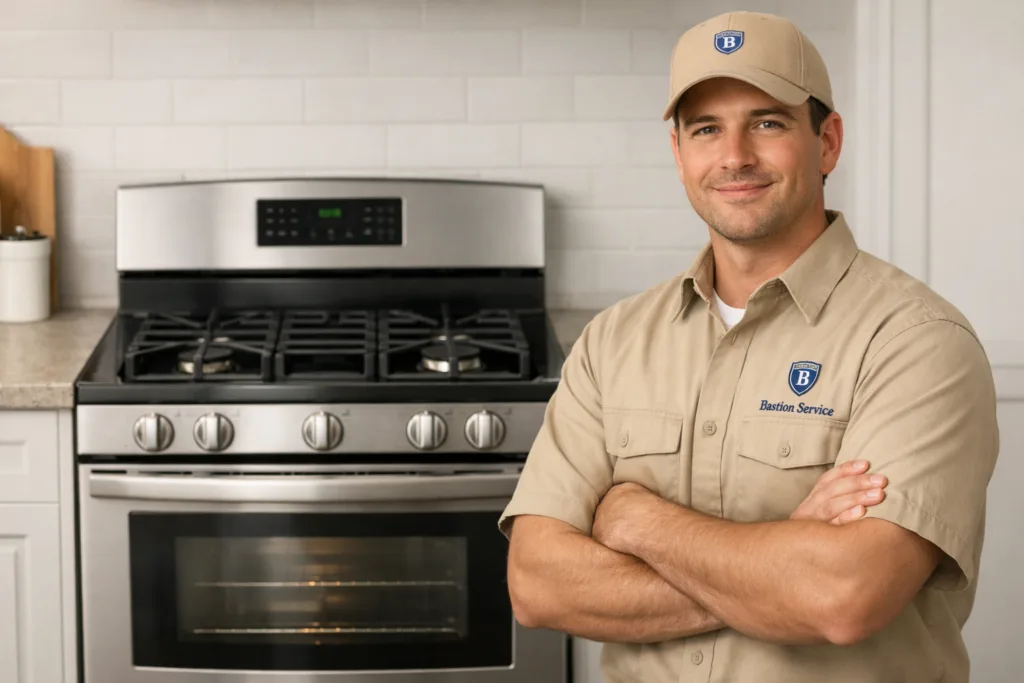
Range problems are easier to solve when the symptom is described as precisely as possible. A GE range may show the same outward issue in more than one way, such as an oven that seems slow to heat because of a weak element, a sensor problem, or a control issue. Noting whether the problem happens every time, only on certain settings, or only after the appliance has been on for a while can make the repair path much clearer.
How GE range problems usually show up in daily use
Most homeowners notice trouble during normal cooking rather than during a complete failure. Dinner takes longer than usual, one burner stops lighting reliably, or baked food starts coming out unevenly. Those patterns matter because they often point to the system involved.
- Ignition symptoms: repeated clicking, delayed lighting, or a burner that lights only after several tries
- Heating symptoms: slow preheat, food staying underdone, or an oven that never reaches the selected temperature
- Control symptoms: a blank display, flashing codes, or buttons that work inconsistently
- Performance symptoms: uneven baking, weak burner output, or temperature swings during cooking
When these issues become repeatable, they usually need more than a reset or basic cleaning.
Common GE range issues in Sawtelle homes
Burners that click but do not ignite
On a gas range, continuous clicking without ignition often means the burner cap is out of position, the igniter area is dirty, moisture is interfering with the spark, or an ignition component is failing. If the burner lights sometimes but not others, that inconsistency is still important because it can signal an issue that is getting worse.
If there is a strong or persistent gas smell, stop using the range until the safety issue is addressed. A burner that clicks without lighting should not be ignored just because it eventually works on the second or third try.
Oven not heating properly
Some GE ovens fail completely and stay cold. Others heat partially, preheat slowly, or appear to reach temperature but do not cook correctly. Depending on the model, the cause may involve a bake element, broil element, igniter, sensor, wiring, or electronic control. What matters most is whether the oven is producing consistent and usable heat.
Signs homeowners often notice include:
- preheat taking much longer than usual
- the oven saying it is ready when food still cooks too slowly
- the broil function working better than bake, or the reverse
- recipes that suddenly need more time than before
Uneven baking and temperature swings
An oven can still turn on and yet perform poorly. Cookies browning on one side, casseroles finishing unevenly, or food burning at the edges while staying undercooked in the center can point to temperature regulation trouble. In many cases, the problem is not obvious from the control panel alone. Sensor drift, weak heating performance, or cycling issues can all create this kind of complaint.
Electric surface elements not heating correctly
On electric GE ranges, a surface element may stay cold, heat only part of the coil, or cycle in a way that feels erratic. That can be caused by the element itself, the receptacle, the switch, or damaged wiring connections. If one burner consistently behaves differently from the others, that difference is useful during diagnosis.
Gas burners with weak or uneven flame
If a burner lights but the flame is uneven, too low, or does not spread well around the burner, the issue may be blocked ports, alignment problems, or an ignition-related fault. Homeowners sometimes assume this is normal wear, but poor flame performance can affect daily cooking more than expected, especially when simmering or trying to boil water in a reasonable time.
Display, keypad, and control failures
A GE range with a dead display, unresponsive buttons, or intermittent error behavior may have a control-side problem rather than a pure heating problem. These issues can overlap. For example, an oven that will not start may look like a heating failure when the actual problem is in the interface or control system. When the screen flickers, resets, or stops responding, the range should be checked before the symptoms spread to more functions.
Symptoms that should not be brushed off
Some problems are more than a convenience issue. Repeated breaker trips, overheating, erratic controls, and persistent ignition trouble can create bigger repairs if the range keeps being used in the same condition. Even a seemingly minor issue, like a burner that clicks after cleaning or an oven that runs slightly hot, can gradually turn into a complete loss of function.
It is usually wise to stop and schedule service when you notice:
- burners failing to ignite consistently
- the oven overheating or not shutting off normally
- controls that change settings on their own or stop responding
- error behavior that keeps returning after a reset
- heating performance that makes cooking unreliable from one meal to the next
What to check before arranging service
A few basic observations can help separate a simple use issue from a repair need. Make sure burner caps are seated correctly, confirm the range has power if the display is blank, and note whether the problem affects one function or several. For gas models, notice whether the clicking happens on one burner or all burners. For electric models, see whether one element fails or whether multiple heating zones act strangely.
You do not need to disassemble anything to be helpful. The most useful details are usually the simplest ones:
- what feature is not working
- whether the symptom is constant or intermittent
- whether it began suddenly or worsened over time
- any error code or unusual sound
- whether cleaning, resetting, or turning the breaker off changed anything
Repair or replace?
Many GE range problems are repairable, especially when the appliance is otherwise in good condition and the issue is limited to one main system. Repair becomes a harder choice when the range has several unrelated failures, shows heavy wear, or needs a high-cost part on top of existing performance problems.
For most households in Sawtelle, the decision comes down to a few practical questions:
- Is the problem confined to one burner, one oven function, or one control issue?
- Has the range been reliable up to this point?
- Would a completed repair reasonably restore normal daily cooking?
- Does the condition of the rest of the appliance support keeping it?
A good diagnosis answers those questions before money is spent on parts that may not solve the real problem.
What homeowners in Sawtelle usually want from range service
Most people are not looking for a technical explanation as much as a workable outcome: identify the fault, understand whether the range is safe to keep using, and know whether the repair makes sense. That is especially true when the appliance is central to everyday meals and the problem is interfering with normal routines at home.
Whether the issue is a burner that will not light before breakfast, an oven that misses temperature during baking, or controls that act unpredictably, the next step should be based on the actual symptom pattern rather than guesswork. That approach helps avoid unnecessary part replacement and gives homeowners a better idea of what to expect from the repair.