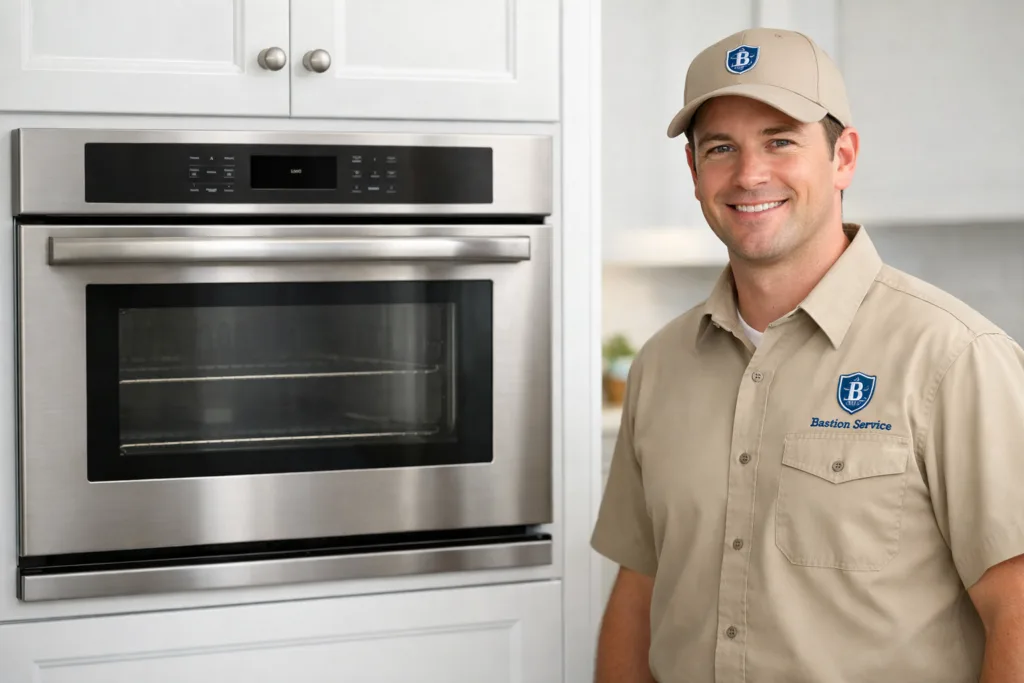
Oven problems rarely stay minor for long. A GE oven that preheats slowly one week may start missing temperature targets the next, and a control issue that appears occasional can turn into a complete no-heat failure. For households in Sawtelle, the best approach is to look at the exact symptom pattern before deciding on a repair path.
How GE oven problems usually show up
Most oven failures do not begin with a total shutdown. Instead, performance changes gradually. Food may take longer to finish, the top browns too fast while the center stays underdone, or the oven may seem hot one day and cool the next. These clues matter because they often point to different failed parts.
On GE ovens, heating problems can involve the bake element, broil element, igniter on gas models, temperature sensor, wiring, relay functions, or the electronic control. Door-related heat loss and calibration drift can also mimic larger mechanical issues. Looking at what the oven does in bake, broil, and preheat usually helps narrow the likely cause.
Common symptoms and what they may mean
Oven is not heating at all
If the display works but the oven cavity never gets hot, the cause may be a failed heating component, a bad igniter, a sensor fault, or a control problem. On electric models, one common clue is whether the broil function still works while bake does not. On gas models, delayed ignition or no ignition at all can point toward a weak or failed igniter.
A complete no-heat condition should not be treated as a guessing game. Several different faults can produce the same symptom, and replacing parts without testing often leads to wasted cost.
Slow preheat
Slow preheating is easy to dismiss at first, especially if the oven still eventually reaches temperature. But this is often one of the earliest signs of a weakening component. A bake element that is losing output, an igniter that is no longer drawing properly, or a sensor that is no longer reading accurately can all stretch preheat times.
If preheat keeps getting longer, the oven may also begin baking unevenly because it is struggling to maintain temperature after the initial warm-up.
Uneven baking
When one rack cooks faster than another or one side of a dish finishes ahead of the rest, heat circulation and temperature regulation become the main suspects. A partially failing element, sensor drift, convection fan issue, or door seal problem can all contribute to uneven results.
Homeowners often notice this first with cookies, casseroles, and sheet-pan meals. If rotating pans has become necessary on nearly every use, the oven likely is not heating as consistently as it should.
Temperature swings or overheating
Some variation in oven cycling is normal, but wide swings are not. If food burns at the set temperature, the cavity feels excessively hot, or recipes that used to work now finish much too quickly, the oven may be running above the selected setting. A faulty sensor, calibration problem, or control issue is often involved.
Overheating should be addressed promptly because it affects both cooking results and safe operation.
Broil works but bake does not
This is one of the more helpful symptom patterns because it can isolate the problem to the bake side of the heating system. On many GE models, that may mean the bake element itself, the related circuit, or a control relay issue. The reverse can also happen, with bake functioning while broil does not.
Noting exactly which cooking modes work and which do not can make diagnosis much more efficient.
Display, keypad, or controls are acting up
If the control panel flickers, beeps unexpectedly, fails to respond, or shows error codes, the problem may be in the user interface, main control, or power supply to the unit. These issues can appear random at first, especially if the oven works normally for part of the day and then stops responding later.
Intermittent control failures are especially important to evaluate because they can affect temperature regulation as well as basic operation.
Door does not seal well
A worn gasket, bent hinge, or door alignment issue can let heat escape during cooking. That often leads to longer cooking times, inconsistent baking, and extra strain on heating components as the oven tries to recover lost heat. If the door looks slightly open when latched or the surrounding area becomes unusually hot during use, the seal may no longer be doing its job.
Signs the issue may be getting worse
Small changes in cooking performance usually appear before major failure. Watch for patterns such as:
- Preheat times that keep increasing
- Food coming out differently even with familiar settings
- Temperature that seems correct on one cycle and wrong on the next
- Controls that work intermittently
- New clicking, buzzing, or repeated relay sounds
- Error codes that clear and then return
When these warning signs are ignored, a repair that might have stayed limited to one component can spread into added wear on other parts of the system.
When to stop using the oven
Some oven issues are inconvenient but manageable for a short time. Others are a reason to stop using the appliance until it is checked. Discontinue use if the oven trips the breaker, sparks, gives off a burning electrical smell, overheats severely, or shows obvious wiring-related symptoms.
For gas models, a strong or persistent gas smell should always be taken seriously. Stop using the oven immediately and follow appropriate safety steps before arranging appliance service.
What you can check before scheduling service
There are a few simple observations that can help make the service visit more productive. Write down whether the problem affects bake, broil, or both. Notice whether the oven never heats, heats slowly, or heats past the selected temperature. If an error code appears, note the exact code rather than a general description.
You can also check:
- Whether the circuit breaker has tripped
- Whether the cooking mode and temperature were set correctly
- Whether the oven door closes evenly
- Whether a visible bake element shows blistering, separation, or damage on electric models
- Whether the problem is constant or only happens sometimes
Beyond these basic checks, internal diagnosis is best left to trained service because ovens involve live voltage, heat-sensitive components, and model-specific control systems.
Repair or replace?
For many Sawtelle homeowners, repair is the sensible option when the oven is otherwise in solid condition and the failure can be traced to a specific part or system. This is often true with issues involving heating elements, igniters, sensors, door hardware, and some control-related faults.
Replacement may deserve stronger consideration if the oven has multiple active problems, significant interior wear, recurring electronic failures, or age-related parts availability concerns. A good decision depends on the full condition of the appliance, not just the most visible symptom.
Why symptom-based diagnosis matters on GE ovens
Two ovens can show the same complaint and need entirely different repairs. One unit that “does not heat” may have a failed bake element, while another may have a sensor problem causing the control to respond incorrectly. An oven that “burns everything” may be badly out of calibration, or it may have a control fault causing overheating.
That is why the most useful service starts with testing and confirmation rather than swapping parts based on guesswork. For GE oven repair in Sawtelle, a symptom-based approach helps homeowners understand whether the issue is isolated, whether repair is practical, and what to expect once the problem is identified.
Residential GE oven service in Sawtelle
In day-to-day home use, an oven needs to do three things well: heat reliably, hold temperature consistently, and respond correctly to the controls. When one of those functions starts to fail, cooking becomes unpredictable fast. Whether the issue is no heat, uneven baking, slow preheat, temperature swings, or a control panel that no longer behaves normally, addressing the problem early usually leads to a simpler repair path and a better chance of restoring normal kitchen use.