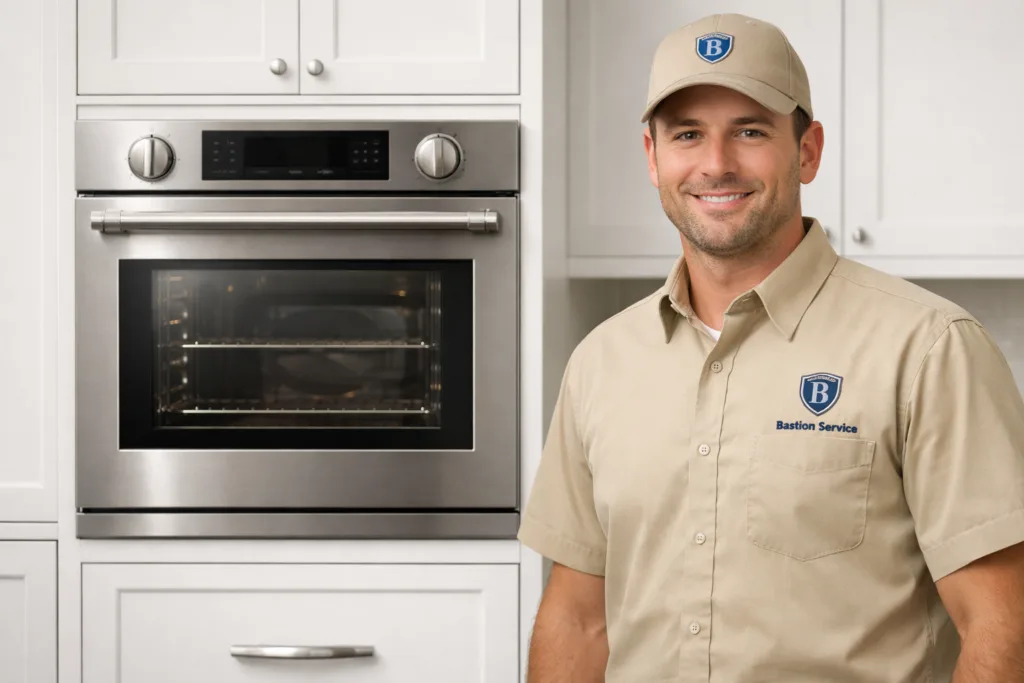
Oven problems rarely stay minor for long. A unit that starts with slow preheat or inconsistent baking can turn into a complete no-heat failure, a door that will not lock, or a control panel that stops responding right when you need it. For homeowners in Sawtelle, the most useful approach is to match the repair path to the exact symptom instead of assuming every heating issue has the same cause.
Start with the way the oven is failing
Monogram ovens can develop similar symptoms for very different reasons. An oven that will not reach temperature may have a failed heating component, but it can also be dealing with a sensor issue, a relay problem, wiring damage, or a control fault. That is why the pattern matters: whether the problem happens every cycle, only during bake, only after preheat, or only when the oven gets fully hot.
Small details often help narrow the issue quickly. If the display works but the cavity stays cold, the fault is usually different from a unit that heats briefly and then shuts down. If meals are overcooked on the top rack but pale underneath, the problem may involve one side of the heating system not contributing properly.
Common Monogram oven symptoms and what they often mean
Oven not heating at all
When the oven appears to start but never gets warm, the likely causes depend on the model type and how it behaves during startup. Electric ovens may have a failed bake element, broil element, thermal protection issue, damaged wiring, or an electronic control problem. Gas ovens may be dealing with an igniter that glows weakly or not at all, preventing the burner from lighting correctly.
If the clock and touch controls still work normally, that does not rule out a significant internal failure. Many no-heat calls involve a heating circuit problem rather than a full loss of power to the appliance.
Uneven baking or roasting
Cookies browning more on one side, casseroles taking longer in the center, or roasts cooking unevenly can point to weak heat output, a failing sensor, poor airflow, or a convection system problem. In some cases, the oven is technically heating but not distributing heat the way it should.
Door seal wear can also contribute. If heat is escaping, the oven may cycle longer, recover more slowly after opening, and produce inconsistent results from rack to rack.
Preheat takes too long
Slow preheating is one of the most commonly ignored warning signs. The oven may eventually hit the set temperature, but that does not mean everything is working correctly. Often, one heating function is partially failing, so the oven reaches temperature late and then struggles to maintain stable heat during the cooking cycle.
This symptom is especially noticeable with foods that depend on timing and even heat, such as baked goods, sheet-pan meals, and multi-rack cooking.
Temperature swings, overheating, or underheating
If familiar recipes suddenly burn, come out underdone, or need much more time than usual, the oven may be reading temperature incorrectly or cycling heat at the wrong intervals. Common causes include a bad sensor, calibration drift, stuck relays, or a control board issue.
Some homeowners first notice this as “the oven feels off” before they can describe a specific failure. That instinct is often accurate. Repeated temperature inconsistency usually means the appliance is no longer regulating heat normally.
Error codes or random shutdowns
Fault codes, beeping, resets, and intermittent power loss usually indicate a communication or control problem inside the appliance. In some ovens, the issue appears only after the unit has been running for a while and internal temperatures rise. That can make the problem seem unpredictable even when there is a consistent component failure behind it.
Intermittent shutdowns should not be dismissed as a one-time glitch. They tend to become more frequent and more disruptive over time.
Door, hinge, latch, or self-clean issues
If the door will not close tightly, will not unlock, or feels misaligned, the problem can affect more than convenience. Poor door closure changes heat retention and can lead to uneven cooking, longer cycle times, and excess strain on internal parts. Problems that appear after a self-clean cycle may involve the latch assembly, heat-stressed controls, or related safety components.
Signs the problem is getting worse
Some oven issues stay manageable for a short time, but several warning signs usually point to a worsening failure:
- Preheat time keeps increasing from week to week
- The oven works on broil but not on bake, or the reverse
- Set temperatures no longer match actual cooking results
- The display flickers, resets, or becomes unresponsive during use
- The oven shuts off mid-cycle or fails to recover after the door is opened
- The door gasket looks worn, flattened, or pulled away from the frame
When those symptoms show up together, the issue is often more than normal aging. Continued use can lead to more inconsistent performance and may put added stress on related components.
When to stop using the oven and schedule service
It is usually better to stop using the oven if it overheats, trips power, gives repeated fault codes, shuts off unexpectedly, or cannot hold temperature safely. Those problems affect both cooking results and appliance reliability.
For gas models, a persistent gas smell is a separate safety concern. If that occurs, stop using the appliance and follow appropriate gas safety steps before arranging repair.
Repair or replace: what usually makes sense
Many Monogram oven repairs are worthwhile when the problem is limited to a specific serviceable part and the appliance is otherwise in solid condition. Built-in installations especially tend to favor repair, since replacing the unit may involve added planning around fit, trim, and kitchen layout.
Replacement becomes more likely when there are repeated major electronic failures, multiple systems wearing out at once, or a long pattern of recurring problems. The key is understanding whether the current symptom traces back to one failed component or a broader reliability issue. That is where dependable local service can make the decision easier.
What homeowners in Sawtelle should expect from oven diagnosis
A helpful service visit should do more than confirm that the oven is “not working right.” It should identify which part of the heating, sensing, control, or door system is responsible for the symptom and whether that failure is isolated or affecting other functions. That matters because a temperature complaint, a preheat complaint, and an uneven baking complaint can all overlap without having the same fix.
For Sawtelle households, good repair guidance should also reflect how the oven is actually used. A problem that shows up during frequent roasting, holiday baking, or everyday family meals may reveal itself differently than a fault noticed only during occasional use. Matching the repair plan to the real symptom pattern helps avoid unnecessary parts changes and gives a clearer next step.
Why early attention often saves time and frustration
Oven performance problems tend to show up first in the kitchen, not on a diagnostic screen. You notice the muffins baking unevenly, the pizza needing extra time, or the roast browning too fast on top. Taking those changes seriously early often prevents a more disruptive failure later.
If your Monogram oven in Sawtelle is no longer heating properly, baking evenly, or responding consistently, the smartest next step is to have the symptom checked before the problem spreads to additional components.