





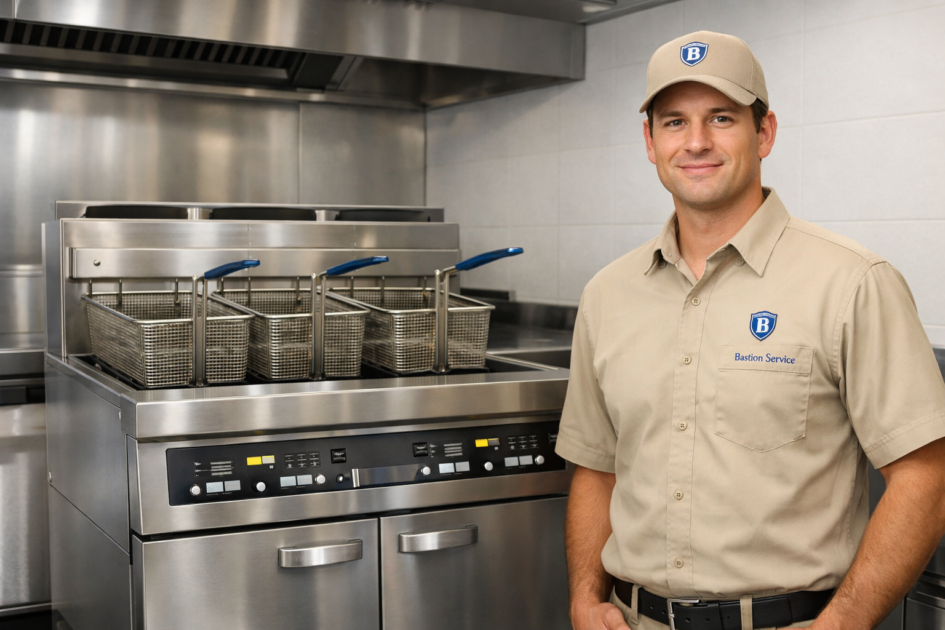
When a Frymaster fryer starts dropping temperature, overheating oil, showing ignition problems, or shutting down during production, the next step should be service based on the actual symptom pattern. In Torrance kitchens, the same complaint can come from very different causes, and running the unit too long without proper testing can lead to more downtime, wasted oil, and disrupted output. Bastion Service helps businesses evaluate what is failing, whether the fryer should stay in use, and what repair path makes the most sense for the unit on site.
Related commercial service paths in Torrance include Frymaster Commercial Repair in Torrance, Commercial Fryer Repair in Torrance, and Pitco Fryer Repair in Torrance.
Common Frymaster Fryer Problems Seen in Torrance Kitchens
Slow heat-up or failure to reach set temperature
If the fryer takes too long to preheat or never reaches the selected temperature, the issue may involve burner performance, a faulty temperature probe, control problems, gas supply concerns, or restricted heat transfer. Staff often notice this first through longer ticket times, uneven browning, or the need to adjust basket timing to compensate. Those workarounds may keep production moving temporarily, but they also mask a problem that usually gets worse under load.
Oil temperature swings or overheating
Oil that runs too hot, too cool, or fluctuates noticeably during normal use can affect both food quality and fryer safety. In many cases, the cause is tied to sensing or control accuracy, but relay faults, calibration drift, or other electrical issues can also be involved. Repeated high-limit trips or unstable temperature behavior should not be treated as a minor nuisance, because the fryer is no longer operating predictably.
Ignition failure or burner operation that cuts in and out
A fryer that tries to light repeatedly, lights and then drops out, or fails to maintain burner operation may have an ignitor issue, flame sensing problem, wiring fault, gas valve problem, or burner contamination. Intermittent ignition is especially disruptive because the unit may seem normal for part of the day and then fail during a rush. That pattern usually points to a repair need rather than something solved by resetting power or restarting the fryer.
Recovery problems during busy periods
Some Frymaster fryers appear normal when idle but cannot recover temperature fast enough once baskets start cycling. This often shows up as inconsistent cook times, soggy product, or a fryer that falls behind when volume increases. Recovery complaints matter because they directly affect throughput. A unit with weak recovery may still produce heat, but it is no longer keeping up with kitchen demand.
Control faults, error codes, and random shutdowns
Display messages and fault codes can be useful, but they do not replace testing. A repeated code may reflect a failed component, an intermittent connection, or a larger operating problem that triggers a protection response. When the fryer locks out, resets unexpectedly, or behaves inconsistently at the control, the real issue is confirming why the fault occurs and whether it is isolated or part of a broader reliability problem.
Oil leaks, drain valve issues, or filtration-related trouble
Not every service call starts with a heating complaint. Oil around the base of the fryer, a valve that does not seal correctly, slow draining, or filtration problems can interrupt workflow just as much as a burner fault. Leaks and oil-handling issues should be addressed promptly because they can create cleanup delays, safety concerns, and additional wear on nearby components.
Why Accurate Diagnosis Matters Before Approving Repair
Fryer symptoms overlap more than many operators expect. Poor recovery can come from burner weakness, sensor error, control failure, or other restrictions. Temperature swings can point to sensing problems, but they can also reflect relay or board issues. If a visible part is replaced without confirming the actual cause, the fryer may return to service briefly and then fail again.
For businesses in Torrance, diagnosis also affects scheduling decisions. Some conditions justify taking the fryer out of use immediately, especially when there are ignition faults, repeated shutdowns, overheating, or oil leaks. Other problems may allow a short service window if the unit is stable enough to avoid a larger disruption. Good troubleshooting helps management decide whether the issue is urgent, manageable for a short period, or likely to escalate quickly.
Signs the Fryer Should Be Serviced Soon
It is usually time to schedule repair when you notice one or more of the following:
- The fryer is not heating at all or struggles to maintain normal cooking temperature
- Recovery time has become noticeably slower during regular production
- The burner lights inconsistently or drops out during operation
- The unit trips limits, shows repeated fault messages, or shuts down without a clear reason
- Oil temperature seems unreliable from batch to batch
- Oil is leaking, draining poorly, or creating a recurring mess around the fryer
- Staff have started changing normal cooking habits just to keep the fryer usable
That last point is easy to overlook. If the team is lowering batch sizes, extending cook times, restarting the fryer repeatedly, or avoiding one vat because it cannot be trusted, the equipment is already affecting operations and should be evaluated before the problem turns into a full outage.
Why a Frymaster Fryer May Not Heat or Recover Temperature Properly
When a fryer will not heat correctly or cannot recover after baskets are dropped, the problem is often tied to one of a few main systems: ignition, burner performance, temperature sensing, controls, or fuel and power supply conditions. In some cases, the fryer still produces some heat but not enough to hold target temperature under normal kitchen demand. In others, the unit heats briefly and then stops because a safety or control fault interrupts operation.
From a service standpoint, the important question is not just whether the fryer gets hot, but whether it heats correctly, responds consistently, and keeps pace with production. A fryer that falls behind during peak periods can create the same business problem as a fryer that will not start at all. That is why recovery complaints deserve the same level of attention as complete no-heat failures.
When Continued Use Can Make the Problem Worse
Some fryer issues become more expensive when the unit stays in rotation without repair. Overheating can shorten oil life and stress temperature-related components. Intermittent ignition can lead to repeated failed starts and unreliable burner operation. Leaks can spread to other areas of the unit or create avoidable cleanup and safety issues. Electrical faults that begin as occasional shutdowns may become a full no-start condition with little warning.
If the fryer is showing unstable temperatures, repeated lockouts, or visible oil leakage, it is worth evaluating whether continued use is creating more risk than benefit. Waiting for complete failure may seem easier in the moment, but it often results in more disruption than addressing the symptom while the scope is still limited.
Repair or Replace: How Businesses Usually Make the Call
Replacement is not automatically the right choice when a Frymaster fryer develops a problem. Many units are still worth repairing when the cabinet is in solid condition, the fault is identifiable, and the fryer still matches the kitchen’s production needs. A targeted repair often makes sense when the issue is limited to a specific component or system and the rest of the unit has been performing well.
Replacement becomes more likely when the fryer has a pattern of repeated failures, multiple active problems at once, poor overall condition, or downtime that keeps returning after prior service. Age matters, but history matters too. A well-used fryer with recurring burner, control, and leak issues may be telling a different story than a unit with one isolated failure. The value of diagnosis is that it helps separate a repairable event from a larger decline in reliability.
How to Prepare for a Fryer Service Visit
Before service is scheduled, it helps to note what the fryer is doing and when the problem appears. Useful details include whether the issue happens at startup or after the fryer has been running, whether one vat is affected more than another, whether there are any displayed fault messages, and whether the fryer fails consistently or only during busy periods. Information about recent changes in performance, unusual smells, visible leaks, or inconsistent ignition can also speed up troubleshooting.
Businesses in Torrance can also save time by identifying whether the fryer is currently usable, whether production has already been adjusted around the problem, and whether the unit should be inspected while warm or after a failed startup attempt. Those details help shape the service plan and reduce guesswork once the technician is on site.
What Businesses in Torrance Need From Frymaster Fryer Repair
Most operators do not just need someone to confirm that a fryer has a problem. They need to know what symptom matters most, whether the unit can continue operating safely, what repair path is appropriate, and how the issue affects production. The best service outcome is one that connects the mechanical problem to the business decision in front of the kitchen.
If your Frymaster fryer is no longer heating correctly, recovering during volume, or operating consistently, the right next step is to schedule service before the problem causes a larger interruption. For businesses in Torrance, that means getting the fryer evaluated based on its actual behavior, narrowing down the cause, and moving quickly toward a repair decision that supports uptime and daily workflow.


