
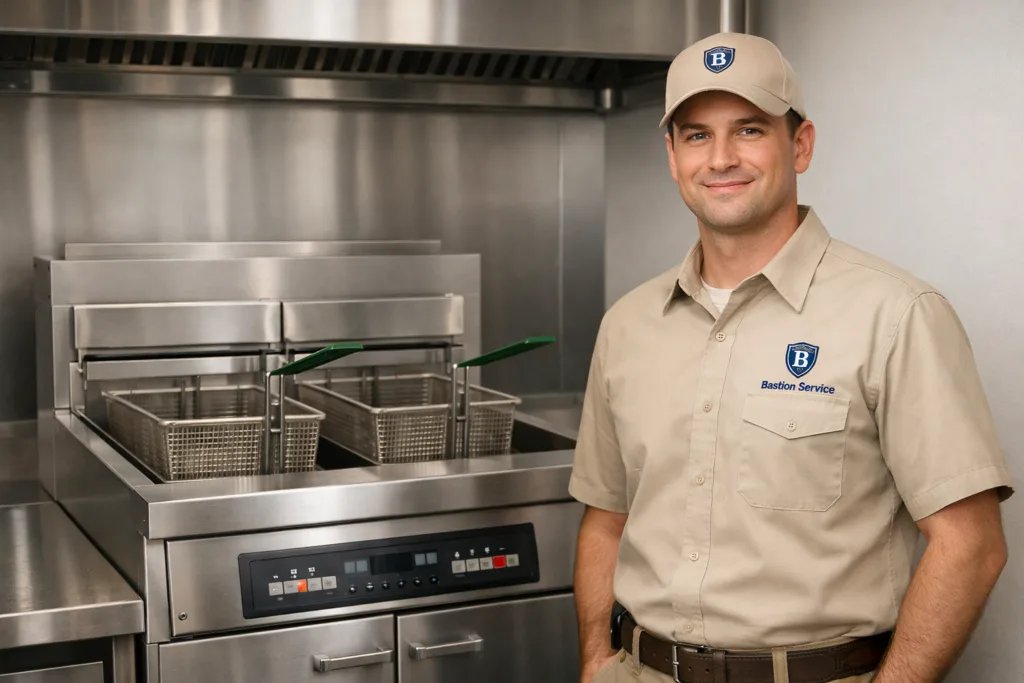




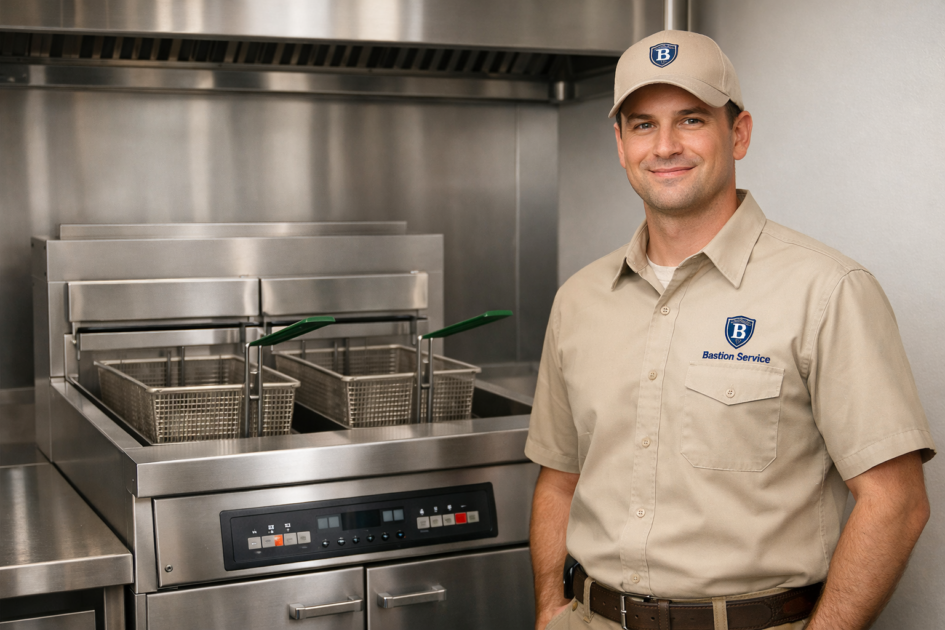
Frymaster cooking equipment problems can disrupt service fast when heat output becomes inconsistent, startup fails, or a unit drops offline in the middle of production. For restaurants and food-service operators in Cheviot Hills, the real issue is not just the symptom itself but how quickly it affects ticket flow, oil use, labor efficiency, and product consistency. Bastion Service provides repair support for Frymaster cooking equipment with troubleshooting, fault isolation, and repair scheduling based on the way the equipment is actually failing in day-to-day kitchen use.
For specific equipment paths in Cheviot Hills, review Frymaster Fryer Repair in Cheviot Hills and Commercial Appliance Repair in Cheviot Hills.
What Frymaster cooking equipment problems do technicians troubleshoot?
Frymaster equipment issues often show up first as performance changes rather than total failure. A fryer may still run, but recover too slowly, overshoot temperature, or require repeated resets before it becomes fully unreliable. Troubleshooting usually focuses on the symptom pattern, operating behavior, and whether the problem points to heat generation, ignition, sensing, controls, gas flow, or safety shutoff components.
- Units that do not heat properly or take too long to recover between batches
- Ignition failures, delayed lighting, or repeated flame loss
- Temperature swings that affect cook quality and oil life
- Burner problems such as weak flame, uneven heating, or unstable cycling
- Control faults, display errors, lockouts, and unexpected shutdowns
- Leaking, unusual noises, or operating conditions that suggest the unit should be inspected before continued use
Because several different failures can create similar symptoms, repair decisions are more reliable when the source of the problem is confirmed first instead of assuming a single part is to blame.
Heating problems and slow recovery
One of the most common service calls involves equipment that is not reaching target temperature or cannot recover fast enough during steady production. In a busy kitchen, this usually appears as delayed batch timing, inconsistent browning, and pressure on staff to adjust cook times to compensate. The root cause may involve burners, gas delivery components, temperature probes, controls, airflow issues, or related heating-system faults.
Slow recovery matters because it affects more than speed. It can change product consistency from one order to the next and make line timing unpredictable during peak periods. If a Frymaster unit is staying on but no longer keeping up with volume, service is usually worth scheduling before the problem turns into a full outage.
Ignition and startup faults
When a unit fails to light, lights only after multiple attempts, or starts and then drops flame, the interruption can be immediate. Staff may lose time trying to restart the equipment, and kitchens may have to shift production to other stations. These symptoms can point to ignition components, flame sensing, gas valve issues, safety circuits, or a control-related failure.
Intermittent startup problems are especially disruptive because they create uncertainty from shift to shift. A unit that works in the morning but not during lunch service can be harder to plan around than one that is fully out of service. In those cases, diagnosis helps determine whether the issue is localized or part of a larger control or fuel-delivery problem.
Temperature control problems and overheating concerns
If oil temperature runs too low, food may come out pale, greasy, or unevenly cooked. If temperature runs too high, product quality drops in a different way and oil can break down faster than expected. Temperature instability may come from probe issues, thermostat drift, calibration problems, high-limit concerns, or failing electronic controls.
Overheating symptoms should be taken seriously because they affect safety as well as output. A unit that overshoots set temperature, cycles unpredictably, or behaves differently from one batch to the next should be evaluated before it is returned to normal production volume. Waiting too long can increase stress on other components and make the final repair more involved.
Burner performance issues that affect kitchen output
Burner problems do not always begin as a no-heat condition. They may appear as weak flame, uneven heat response, delayed burner engagement, rumbling, or irregular cycling during operation. In a kitchen environment, those issues usually translate into inconsistent cook times and unreliable line performance.
Burner-related symptoms can be caused by wear, blockage, ignition trouble, combustion issues, or failing control components. What matters from a service standpoint is whether the problem is isolated and repairable or whether it is part of a broader decline in the heating system. A service visit helps clarify that before operators commit to ongoing workarounds that slow production.
Control errors, resets, and unexpected shutdowns
Modern cooking equipment depends on controls and safety systems to regulate temperature, startup, and operating status. When a Frymaster unit starts displaying error codes, resetting unexpectedly, locking out, or shutting down in use, the fault may be electrical, sensor-related, or tied to the control assembly itself.
Shutdown problems are often among the most costly because they interrupt production without much warning. They can also lead to repeated part replacement if the underlying cause is not identified correctly. If a unit becomes unreliable enough that managers cannot count on it through a full service window, it is usually time to schedule repair instead of continuing to test it under load.
Signs the equipment should not stay in normal rotation
Some issues can be scheduled around briefly, but others are warnings that continued use may create larger repair needs or broader kitchen disruption. Operators should pay attention when equipment is:
- Overheating or failing to regulate temperature consistently
- Losing ignition repeatedly during production
- Short-cycling or taking unusually long to recover
- Shutting down without a predictable pattern
- Showing leaks, strong irregular odors, or sudden changes in operating sound
- Forcing staff to change normal cooking procedures just to keep output moving
When workarounds become part of daily use, that is usually a sign the equipment needs repair attention rather than more adjustment by kitchen staff.
Repair or replace: how businesses usually make the call
Not every Frymaster problem points to replacement. In many cases, repair is the right move when the fault is limited, the rest of the unit is in solid condition, and the equipment still fits current production needs. On the other hand, replacement may deserve consideration when a unit has a long history of repeated downtime, multiple failing systems, or repair costs that keep returning without restoring reliability.
The most useful factors usually include the age of the equipment, the severity of the present failure, the condition of controls and heating components, the availability of needed parts, and how critical that unit is to the kitchen’s daily output. Good troubleshooting gives decision-makers a clearer basis for comparing short-term repair against longer-term equipment planning.
What a service appointment helps clarify
A repair visit is often as much about decision support as it is about the repair itself. For kitchens in Cheviot Hills, service can help confirm whether the equipment can remain in limited use, whether shutdown is the safer choice until repairs are completed, and what the likely path back to regular production looks like. That matters when menu availability, staffing, and service speed all depend on working cooking equipment.
If your Frymaster equipment is showing heating problems, ignition issues, temperature instability, burner trouble, leaks, or repeated shutdowns, the next practical step is to arrange diagnosis and repair scheduling before the disruption spreads across the kitchen. Early attention can reduce downtime, protect output quality, and make the repair-versus-replacement decision much easier to manage.


