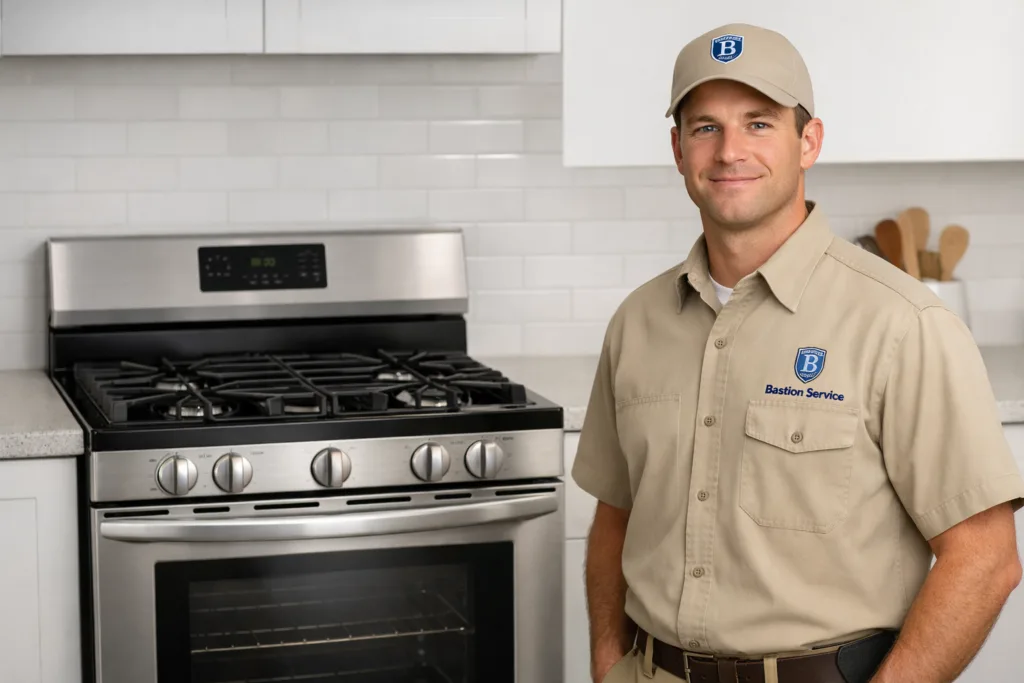
Range problems usually show up first in everyday cooking: a burner that clicks and clicks, an oven that takes too long to preheat, or food that suddenly comes out uneven when the recipe has not changed. With Frigidaire models, the symptom pattern matters because similar complaints can come from different components, and the right fix depends on what the appliance is actually doing under load.
How Frigidaire range problems are usually narrowed down
A useful service call starts by separating surface burner issues from oven heating issues, then checking whether the problem is isolated to one function or affecting the whole appliance. A single burner that will not light points in a different direction than an oven and control panel failing at the same time.
In many Hermosa Beach homes, homeowners notice one of these patterns first:
- One burner will not ignite or heat, but the others work normally
- The oven preheats slowly or does not reach the selected temperature
- The range clicks repeatedly even when a burner is not being used
- The display works, but heating functions are unreliable
- The appliance seems to have power, yet certain cooking modes fail
Those details help determine whether the likely issue involves ignition parts, heating elements, sensors, wiring, switches, or the electronic control.
Common Frigidaire range symptoms in Hermosa Beach homes
Burner clicks but does not light
On gas ranges, repeated clicking without ignition is often tied to moisture, burner cap alignment, debris in the burner head, or a worn ignition component. Sometimes the spark is present but gas is not flowing through the burner correctly. In other cases, the burner lights only after several tries, which can point to a developing ignition problem rather than a complete failure.
If the clicking continues after cleaning and drying the area, the issue usually needs more than basic adjustment. If there is a strong gas odor or ignition becomes unpredictable, the range should not be treated as normal to use.
Oven not heating or heating too slowly
When the oven stays cold, struggles to preheat, or reaches temperature much later than expected, the cause depends on whether the model is gas or electric. Gas models often depend heavily on a functioning igniter for proper bake operation. Electric models may have a weakened bake element, wiring issue, or control failure even if the display appears normal.
Slow preheat is easy to overlook at first, but it often shows up in daily use as longer cook times, pale baked goods, or meals that need extra time every night.
Uneven baking and inconsistent temperature
If casseroles brown on one side, cookies finish unevenly, or food seems overdone one day and underdone the next, the oven may not be regulating temperature correctly. A drifting sensor, intermittent relay, weak element, or airflow issue can all create noticeable swings.
This kind of problem is frustrating because the range still seems to work, just not consistently. For many households, that is the point where repair becomes worth considering, since routine cooking becomes hard to trust.
Surface element not heating properly
On electric Frigidaire ranges, a surface element that stays cold, heats only partway, or cycles strangely may involve the burner itself, its receptacle, the infinite switch, or related wiring. A glowing element is not always a healthy one; it can still be heating unevenly or failing to maintain output.
On gas models, a weak or uneven flame can indicate clogged burner ports, ignition trouble, or a burner assembly problem. If cookware heats unevenly or one side of the flame looks weak, performance is already compromised.
Control panel or display issues
Modern Frigidaire ranges rely on electronic controls for timing, temperature management, and cooking modes. If buttons stop responding, error codes appear, or the display behaves erratically, the problem may involve the user interface, main control, or incoming power to the appliance.
Control problems are not just an inconvenience. They can also affect whether the oven starts, how long it heats, and whether selected settings are being carried out correctly.
Why symptom overlap makes testing important
Many range complaints sound simple from the outside but are not tied to just one part. An oven that will not heat may look like a failed element, yet the underlying issue could be the sensor circuit or control board. A burner that seems to have a bad igniter may actually have buildup preventing proper ignition. A display problem can come from the board itself, a connection fault, or a broader electrical issue.
That is why parts should not be guessed at based only on one symptom. Testing helps confirm whether the problem is isolated, whether related components have been affected, and whether repair is likely to restore normal cooking without chasing multiple issues afterward.
Signs the range should be serviced soon
Some range problems can wait a day or two. Others should be addressed promptly because they affect safe, predictable operation. It is usually time to schedule service when you notice:
- Ignition that works only intermittently
- Preheat times that keep getting longer
- Burners that stop working or heat inconsistently
- Error codes that return after resetting power
- Controls that respond only sometimes
- Temperature swings that ruin normal cooking results
- Breaker trips or signs of electrical interruption during use
These issues rarely correct themselves. Continuing to use the appliance can turn a limited repair into a larger one, especially when overheating, misfiring, or unstable electrical operation is involved.
Repair or replace? What usually makes the difference
Repair is often the better choice when the problem is centered on one main failure and the rest of the range is in solid condition. That is especially true when the unit has otherwise been reliable and the symptom is clearly tied to a burner, igniter, element, sensor, or control-related fault that can be diagnosed cleanly.
Replacement becomes more likely when several major functions are failing together, the appliance has a history of repeat issues, or the condition of the controls and wiring suggests a broader decline. Age alone does not decide it. What matters more is whether the current problem is contained and whether the repair path makes sense for how you use the appliance.
What homeowners in Hermosa Beach usually want to know
Most people are not looking for a long technical breakdown. They want to know what is causing the problem, whether the range is still safe to use, and whether fixing it is the sensible next step. For a household appliance that gets daily use, the real goal is restoring consistent cooking, not just getting one function to work for a short time.
For Frigidaire range repair in Hermosa Beach, that means focusing on the exact complaint: whether the issue is isolated to a burner, tied to oven temperature control, or connected to an electronic fault affecting normal operation. Once that is established, the repair decision is usually much clearer.