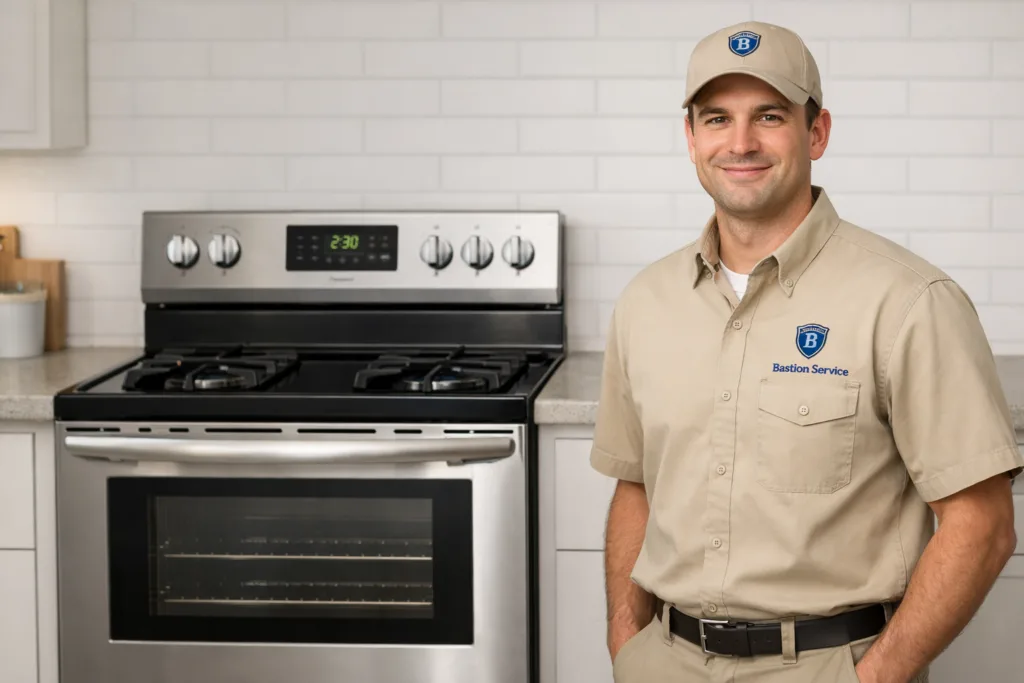
Common Frigidaire range problems in Brentwood homes

Range problems tend to follow recognizable patterns, and those patterns matter. A cooktop burner that will not ignite, an oven that takes too long to preheat, or temperature swings during baking can each come from more than one cause. On Frigidaire ranges, the most efficient repair path starts with matching the symptom to the part of the appliance that is actually failing.
In many Brentwood households, the first sign is not total failure. It may be a burner that clicks longer than usual, an oven that runs hotter than the setting, or a control panel that responds inconsistently. Catching those early changes can help limit further stress on elements, igniters, switches, and controls.
Burners that will not light or heat correctly
Gas surface burners that click repeatedly, ignite slowly, or fail to light at all may have issues related to the igniter, burner cap alignment, debris in the burner ports, moisture around the ignition area, or a fault in the spark system. If the clicking continues after ignition, that can point to a different problem than a burner that never lights in the first place.
On electric models, a burner that does not heat, overheats, or stays at one temperature regardless of the setting may be dealing with a failed surface element, a bad switch, or wiring trouble. When one burner acts differently from the others, that usually suggests a more isolated fault than a full power problem.
Oven temperature problems and uneven cooking
If food is browning too quickly on one side, taking longer than expected to finish, or coming out undercooked despite normal settings, the oven may not be heating evenly or holding temperature properly. Frigidaire ranges can show this through slow preheat, weak bake performance, broil problems, or temperature drift during longer cooking cycles.
Possible causes include a failing bake element, weak igniter, temperature sensor issue, relay problem, or electronic control fault. Similar cooking results can come from different failures, which is why symptom-based testing is more useful than replacing parts by guesswork.
Display, keypad, and power-related issues
An unresponsive display, beeping without input, settings that change unexpectedly, or a range that seems to lose power partway through cooking can indicate trouble with the control board, interface, wiring connections, or power supply path. If the oven works but the cooktop does not, or the display is active while heating functions fail, that split behavior can help narrow down the source of the problem.
A range that trips a breaker, shuts off during use, or shows intermittent electrical behavior should be checked promptly. Continued use under those conditions can lead to more component damage and more complicated repairs.
How symptom patterns help pinpoint the fault
Small details often make diagnosis much more accurate. For example, an oven that preheats normally but cannot hold temperature points in a different direction than one that never reaches the set temperature at all. A burner that sparks but does not light raises different concerns than a burner with no spark activity.
- Only one burner affected: more likely an isolated burner, switch, igniter, or element issue
- Cooktop works but oven does not: often points to an oven-specific heating or control failure
- Oven heats unevenly during longer baking: may involve sensor accuracy, relay performance, or cycling problems
- Ignition trouble after cleaning or spills: moisture, misalignment, or blocked burner ports may be involved
- Controls respond inconsistently: may indicate interface, board, or connection issues rather than a heating part failure
These distinctions are useful because they help determine whether the issue is likely limited to one component or tied to a broader control or power problem.
Signs the range should be serviced soon
It is usually best not to wait for a complete breakdown. Many range failures start with intermittent symptoms, and those are often the easiest stage to evaluate before secondary damage develops. A burner that only works sometimes, an oven that suddenly needs a higher setting, or ignition that becomes less reliable from week to week are all good reasons to schedule service.
You should stop regular use sooner if the oven overheats, a burner will not regulate temperature, the appliance loses power during cooking, or ignition behavior changes sharply. Those symptoms affect both cooking results and safe operation in the kitchen.
When repair makes sense
Many Frigidaire range issues are repairable when the problem is tied to a specific part such as an igniter, heating element, surface switch, sensor, or control-related component. Repair is often worthwhile when the appliance is otherwise in good condition and the fault is limited enough to restore normal daily use without chasing multiple unrelated problems.
Replacement may become a better discussion when the range has several major issues at once, repeated control failures, severe wear, or a history of repairs that have not resolved the problem for long. A proper diagnosis helps separate a manageable repair from a situation where investing further may not be the best choice.
What homeowners in Brentwood can note before service
A few observations can make troubleshooting faster and more precise. If you notice a problem, it helps to pay attention to when it happens and whether it affects every function or only one part of the range.
- Does the issue affect one burner or several?
- Is the problem only in bake mode, only in broil, or in both?
- Does the oven fail during preheat, after reaching temperature, or during longer cooking?
- Is clicking constant, delayed, or tied to a specific burner?
- Did the problem begin suddenly or worsen gradually?
Those details can help identify whether the repair path is straightforward or whether the appliance needs deeper electrical or ignition system testing.
Focused Frigidaire range repair for Brentwood households
For homeowners in Brentwood, the goal is not just getting the range to power on again. It is understanding why the burner, oven, or control system is failing and choosing the repair that addresses the real cause. That approach helps avoid unnecessary part replacement, reduces repeat problems, and gives you a better basis for deciding whether the appliance is worth repairing.