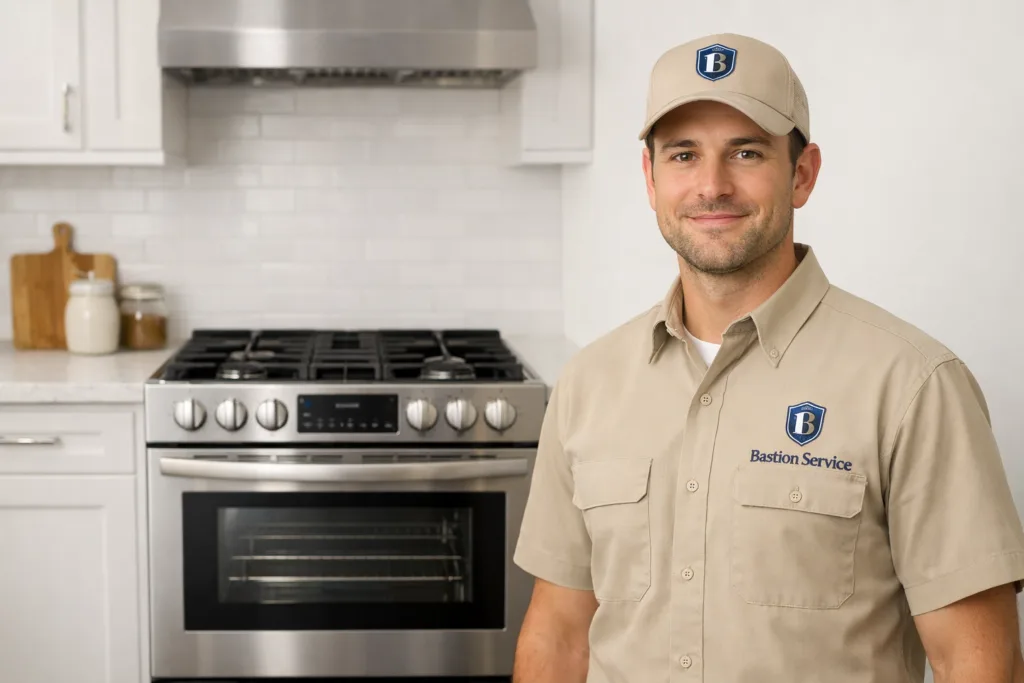
Range problems tend to interrupt the entire kitchen, whether the issue is a burner that will not ignite, an oven that runs cold, or controls that stop responding mid-cycle. With Samsung models, several different faults can create similar symptoms, so the most useful starting point is to match the behavior of the appliance to the components most likely involved.
Common Samsung range symptoms and what they may indicate
A range can fail in obvious ways, but many problems start intermittently. You may notice longer preheat times, temperature swings, clicking that does not stop, or a burner that only works on certain settings. Those patterns often reveal whether the problem is tied to ignition, heat regulation, electronic controls, or a power-related issue.
Burners that do not ignite or heat properly
On gas ranges, a burner that clicks repeatedly, lights slowly, or does not light at all may be dealing with burner cap misalignment, clogged burner ports, moisture around the igniter, or a failing spark component. If the clicking continues after ignition, the range may need further inspection rather than repeated use.
On electric models, a surface element that stays cold, overheats, or cycles unevenly can point to a bad element, a faulty infinite switch, damaged receptacle connections, or wiring trouble. If one burner behaves differently from the others, that usually helps narrow the fault to a specific component rather than the entire appliance.
Oven not reaching temperature
When the oven takes too long to preheat or never seems hot enough, the cause may involve a bake element, broil element, igniter, sensor, relay, or electronic control. In some cases, the oven technically heats but cannot maintain a stable temperature throughout the cycle, which leads to undercooked centers, uneven baking, or food that browns too quickly on one side.
Temperature complaints are especially worth checking when the performance changed gradually. A weak igniter or drifting sensor can make the range feel unpredictable before it fails completely.
Uneven baking or roasting
If one rack cooks faster than another, or dishes come out scorched on top and pale underneath, the issue may not be the cookware alone. Uneven heating can be related to partial element failure, sensor inaccuracy, convection fan problems on applicable models, or a control issue that does not cycle heat correctly. This is one of the most common situations where symptom-based testing matters, because several parts can produce nearly identical cooking results.
Display, keypad, or control problems
A blank screen, flashing error code, unresponsive keypad, or random beeping may indicate a control board problem, interface failure, wiring issue, or unstable incoming power. These faults can affect more than convenience. On many Samsung ranges, the controls manage oven temperature, timing, and safety functions, so electronic issues should not be ignored if they begin happening more often.
Signs the range should not keep being used
Some problems are annoying but limited. Others can create a safety concern or turn a smaller repair into a larger one. It is smart to stop using the affected function if you notice:
- a burner that overheats or will not cycle down
- sparking, arcing, or a burning electrical smell
- an oven that will not shut off normally
- a breaker that trips during use
- repeated clicking with poor ignition performance
- error codes paired with heating failure
For homeowners in Brentwood, acting early can help prevent added damage to wiring, controls, or adjacent heating components.
Why the exact symptom pattern matters
Two ranges can both appear to have “heating issues” while needing completely different repairs. For example, an oven that does not heat at all suggests a different path than one that heats once, then falls behind temperature later in the cycle. A burner that clicks constantly after lighting is also a different problem from a burner that never sparks in the first place.
That is why it helps to note details before service, such as whether the fault is constant or intermittent, whether it affects bake, broil, or surface cooking only, and whether the issue appeared after cleaning, a power interruption, or a spill. Small observations often make diagnosis faster and more accurate.
Repair versus replacement for a Samsung range
Many Samsung range issues are worth repairing when the failure is limited to one serviceable part or circuit and the appliance is otherwise in good condition. Burner switches, igniters, sensors, elements, and certain control-related components can often be addressed without replacing the appliance.
Replacement becomes more likely when there are multiple major failures, extensive wiring damage, repeated electronic problems, or repair cost that approaches the value of the range. Age matters, but overall condition matters more. A well-kept unit with an isolated fault can still make repair the better choice.
Questions that help with the decision
- Is the problem limited to one cooking function or affecting the whole range?
- Has the appliance been reliable up to this point?
- Are there visible signs of heat damage, corrosion, or repeated electrical trouble?
- Would repair likely restore normal cooking performance without chasing multiple failures?
What homeowners can check before scheduling service
Without disassembling the appliance, there are a few basic checks that can help clarify the issue:
- Make sure burner caps are seated correctly on gas models.
- Look for food debris or moisture around the igniter area.
- Confirm the range has steady power and that the breaker has not partially tripped.
- Test whether the problem affects one burner, multiple burners, or the oven only.
- Notice whether error codes appear at the start of use or after the range heats up.
If the problem involves sparking, gas ignition irregularities, tripping power, or overheating, it is better not to keep experimenting with the appliance.
What a focused service visit should accomplish
A useful appointment should identify what failed, whether the issue is isolated or part of a larger control or wiring problem, and whether repair is likely to restore dependable cooking performance. That gives you a practical repair plan based on the actual behavior of the range rather than trial-and-error parts replacement.
For Samsung range repair in Brentwood, the goal is to get from symptom to solution efficiently, so your household can return to normal meal prep with fewer surprises.