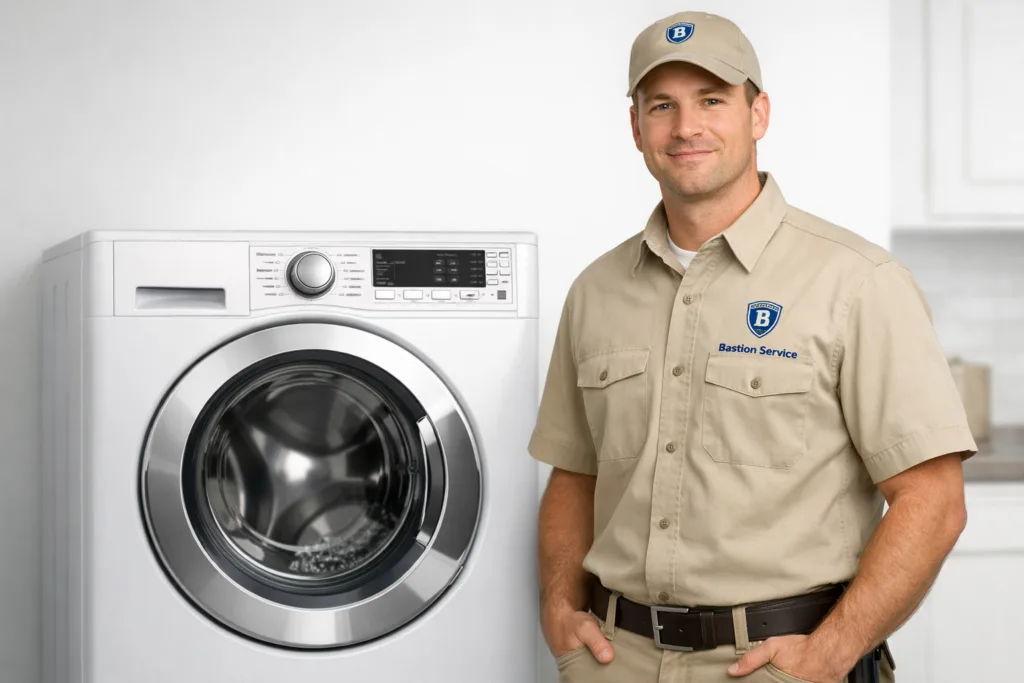
Electrolux washers often give warning signs before they fail completely. A cycle that suddenly runs long, a tub that stays partly full, or a machine that becomes unusually loud during spin can each point to a different system problem. The most useful first step is matching the symptom to when it happens in the cycle, because that usually narrows the repair path quickly.
Common Electrolux washer symptoms and what they may indicate
For homeowners in Hawthorne, washer problems usually show up as a routine disruption first and a full breakdown later. Paying attention to the pattern can help separate a drainage issue from a lock problem, a fill problem, or a control fault.
Washer will not drain
If water is still sitting in the tub at the end of the cycle, the problem may involve the drain pump, a clogged drain path, a hose restriction, or a condition that prevents the machine from advancing into the final drain and spin stages. In some cases, the washer is trying to drain but doing it too slowly to complete the cycle properly.
Signs that usually point to a drain-related issue include:
- Standing water after the cycle ends
- Clothes coming out unusually wet
- Humming sounds without full draining
- Repeated pauses before spin begins
Not spinning or leaving clothes soaked
A washer that drains but still leaves heavy, wet laundry may have trouble reaching full spin speed. That can happen because of balance issues, suspension wear, door lock faults, motor-related problems, or controls that stop the cycle early. On front-load models, even a small problem with locking or sensing can keep the washer from entering high-speed spin.
Leaking water onto the floor
Leak location and timing matter. Water appearing at the start of the cycle may point to an inlet or fill issue. Water during agitation or tumbling can suggest a door boot problem, while leaks during drain-out often trace back to the pump area or drain hose connections. If leaking only happens on larger loads, excess movement or an installation issue may also be part of the problem.
Not filling properly
When an Electrolux washer starts but does not bring in enough water, the cause may be restricted inlet screens, valve trouble, supply issues, or a control problem affecting fill timing. Low fill can also lead to poor wash results, detergent residue, and loads that never seem fully rinsed.
Cycle stops mid-wash
If the machine powers on and begins normally but quits partway through, the interruption may be tied to draining, locking, overheating, or an electronic control issue. This symptom is easy to misread because the washer may appear to restart later or fail only on certain settings.
Poor cleaning or residue on clothing
Not every wash-performance complaint means a major part has failed. Detergent buildup, drainage restrictions, low water flow, and heating-related problems can all reduce cleaning results. If clothing comes out musty, gritty, or still soapy, the issue may be more than simple maintenance and worth a closer look.
Symptoms that should not be ignored
Some washer problems can wait a day or two. Others should be addressed before the next load. Continued use makes less sense when the machine is leaking, slamming during spin, stopping with water inside, or showing repeated error behavior.
- Loud banging or cabinet impact during spin
- Burning smells or unusual electrical behavior
- Water leaking under or in front of the washer
- Failure to unlock or complete the cycle
- Repeated tripping of power or sudden shutdowns
These symptoms can lead to secondary damage, especially if flooring is exposed to water or the washer keeps trying to run with an unresolved mechanical problem.
How symptom timing helps identify the likely problem
One of the simplest ways to make sense of a washer issue is to note exactly when it occurs. That information is often more useful than a general description like “it stopped working.”
Problem happens at the beginning of the cycle
Look first at filling, locking, and startup functions. If the washer will not begin, does not latch, or hums without moving forward, the failure may be in the door lock system, water inlet system, or control sequence.
Problem happens during wash or tumble
If the washer fills normally but then stops, becomes noisy, or leaks, the issue may involve internal movement, load sensing, circulation, or a component affected only after the tub is in motion.
Problem happens near the end of the cycle
Late-cycle trouble often points to draining, spinning, or final control transitions. This is where many homeowners first notice the problem because the clothes are still wet or the door stays locked with water inside.
Repair versus replacement: what usually matters most
For many households in Hawthorne, the real question is not whether an Electrolux washer can be fixed, but whether the repair makes sense for the condition of the machine. A single functional failure such as a pump, latch, valve, or suspension issue is often more straightforward than a washer with several unrelated problems at once.
Replacement becomes more worth considering when there is major structural damage, repeated breakdown history, severe vibration damage, or multiple costly faults affecting overall reliability. A washer in otherwise solid condition is often a better repair candidate than one already showing signs of broad wear.
What to check before scheduling service
There are a few simple observations that can make the next step easier and help describe the problem accurately:
- Note whether the tub is full, empty, or partly drained after the cycle
- Check if the issue happens on every load or only bulky loads
- Listen for humming, grinding, clicking, or banging sounds
- Observe whether the washer fills, tumbles, drains, and spins in order
- Look for water at the front, rear, or underneath the machine
You do not need to disassemble anything. Even basic details about timing and behavior can help determine whether the likely issue is drainage, fill, balance, locking, or controls.
What a service visit should help clarify
A useful washer service appointment should identify which system is actually failing, explain why the visible symptom is happening, and outline whether the machine is a sensible repair candidate. That matters because similar complaints can come from very different causes. “Not spinning,” for example, may really start with poor draining, a door lock fault, or a repeated off-balance shutdown.
If your Electrolux washer is leaking, leaving loads unfinished, or struggling to complete normal cycles in Hawthorne, symptom-based diagnosis is the fastest way to move from guesswork to a repair decision that makes sense.