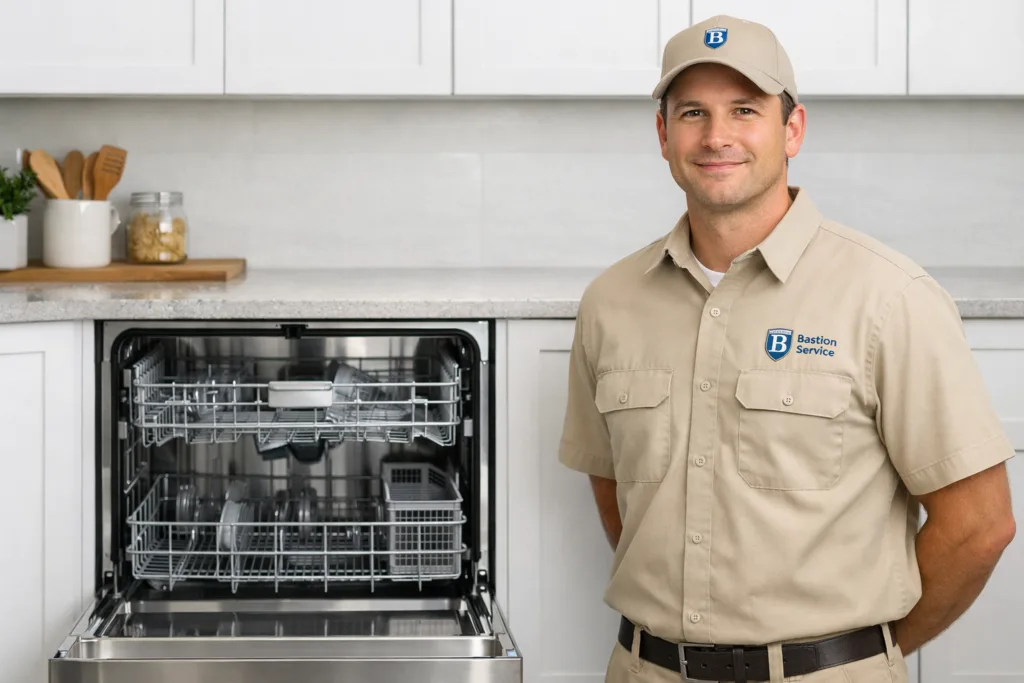
Dishwasher problems rarely stay limited to one inconvenience. A drain issue can turn into odor and standing water, a leak can damage nearby cabinetry, and weak wash performance often leads to rewashing by hand. With Electrolux models, the most useful starting point is to match the symptom to the system most likely at fault instead of assuming one part is always to blame.
How Electrolux dishwasher problems usually show up
Most homeowners notice one of a few patterns first: dishes are not coming out clean, water is left in the tub, the machine leaks, the cycle does not finish correctly, or the dishwasher becomes noticeably louder. These symptoms can overlap, but they do not always come from the same source. A unit that leaves residue, for example, may have a wash circulation problem, a water-fill issue, blocked spray arms, or poor draining that leaves dirty water behind.
That is why symptom-based troubleshooting matters. Looking at what the dishwasher does during fill, wash, heat, and drain helps narrow down whether the problem is mechanical, electrical, or related to water movement inside the appliance.
Common Electrolux dishwasher symptoms and what they may mean
Standing water after the cycle
If the tub still has water at the end of a cycle, the problem may be as simple as a restriction in the filter or drain path, or as involved as a failing drain pump or control issue. In some cases, the machine partially drains but cannot complete the final pump-out stage. If the water is dirty or has a strong odor, continued use usually makes the problem worse.
- Blocked filter or sump area
- Kinked or obstructed drain hose
- Drain pump failure or weak pump output
- Control not sending the correct drain command
Dishes look dirty, gritty, or cloudy
Poor wash results do not always mean the dishwasher is “running.” An Electrolux dishwasher may fill and sound normal while still washing poorly because water is not circulating at full pressure. Spray arms can clog, the wash pump can weaken, or low fill volume can reduce cleaning performance across the whole rack.
Cloudiness and film can also point to rinse or heating issues, especially if glassware no longer dries well or comes out feeling cooler than usual. When poor cleaning appears suddenly, it often suggests a component failure rather than routine maintenance alone.
Water leaking onto the floor
Leaks should be taken seriously even when they seem minor. Some come from the door gasket or a misdirected spray arm, while others involve internal hoses, pump seals, overfilling, or cracks in lower components. Water escaping during only one stage of the cycle can also help identify the source. A leak during fill may point in one direction, while a leak during wash or drain may point in another.
For homes in Manhattan Beach, addressing leaks early can help prevent damage to flooring, toe-kick areas, and surrounding finishes.
Unit will not start or stops mid-cycle
A dishwasher that does nothing when you press start may have a latch issue, power problem, interface failure, or control fault. If it begins a cycle and then stops, the machine may be losing proper door feedback, failing to heat within expected timing, or detecting a condition that interrupts operation. Intermittent no-start complaints often become full no-start failures over time, so it is best not to ignore them.
Buzzing, grinding, or louder-than-normal operation
Electrolux dishwashers are typically relatively quiet, so a new sound matters. Grinding can mean debris has entered the pump area. Buzzing may point to a pump trying to run under strain. Rattling can come from spray arm interference or loose internal items, but if the sound is consistent from cycle to cycle, a worn component is more likely. Noise changes are often an early warning before a larger failure develops.
Low rinse temperature and drying complaints
If dishes come out wet, cool, or not fully sanitized, the problem may involve the heating circuit, temperature sensing, or cycle control. Low rinse temperature can affect both cleanliness and drying performance, especially on plastic items and heavily soiled loads. Homeowners sometimes assume detergent is the issue when the dishwasher is actually not reaching or maintaining proper wash or rinse heat.
Signs that heating-related service may be needed include:
- Poor drying across most loads
- Glasses and plates that feel cool at the end of the cycle
- Long cycles that still do not produce good results
- Recurring residue despite correct loading and detergent use
Pump and circulation issues can affect more than one symptom
Pump problems are one reason dishwasher complaints can seem inconsistent. A failing circulation pump may leave dishes dirty, cause odd noises, and make the cycle seem weaker than usual. A drain pump issue may leave standing water or trigger cycle interruptions. Because both systems involve moving water, the symptoms can be easy to confuse without testing the actual function of each stage.
When the dishwasher fills but does not wash effectively, or drains slowly and sounds strained, pump-related repair becomes a strong possibility.
When to stop using the dishwasher
Some issues can wait a short time for a scheduled appointment, but others justify stopping use right away. It is usually best to stop running the dishwasher if you notice active leaking, repeated standing water, a burning smell, tripped breakers, or a cycle that repeatedly shuts down in an abnormal way. Continuing to run the machine in those conditions can increase wear and sometimes expand the repair.
You should also pause use if:
- Water backs up into the tub after draining
- The dishwasher hums without completing its normal functions
- New mechanical noises are getting worse
- The door does not seem to latch or seal consistently
Repair or replace: what usually makes sense
Many Electrolux dishwasher problems are worth repairing when the unit has otherwise been reliable and the issue is limited to one system, such as draining, circulation, filling, or latching. Repair is often the better choice when the racks, tub, and cabinet are still in good shape and the machine has not had a pattern of repeat breakdowns.
Replacement becomes more likely when several major systems are failing at once, there is heavy overall wear, or the projected repair path does not make sense for the appliance’s age and condition. A proper diagnosis helps separate a straightforward fix from a machine that is becoming expensive to keep going.
What homeowners should expect from a service visit
A useful appointment should identify the main failure rather than just react to the loudest symptom. For example, “not cleaning well” may actually begin with low fill, while “not draining” may trace back to a pump or control issue. The goal is to determine what is failing, whether there is any risk in continued operation, and whether repair is likely to restore normal daily use.
For Manhattan Beach homeowners, that kind of focused assessment makes it easier to decide whether to move forward with repair now, plan around household needs, or consider replacement if the machine is no longer a good candidate for continued investment.
Helpful checks before scheduling dishwasher repair
Before service, it can help to note exactly what the dishwasher is doing. A few details can make the problem easier to identify:
- Does it fill with water normally?
- Does it wash, or only make a humming sound?
- Does the problem happen every cycle or only sometimes?
- Is water left clean or dirty at the bottom?
- Does the leak happen near the door or underneath the unit?
- Are dishes wet only, or also dirty and cool?
Even simple observations like these can help narrow down whether the issue points to a wash system fault, drain restriction, heating problem, sensor issue, or electronic control failure.
Residential Electrolux dishwasher repair in Manhattan Beach
In a busy household, a dishwasher that cannot clean, drain, or finish a cycle properly quickly disrupts the whole kitchen routine. Bastion Service helps homeowners in Manhattan Beach evaluate Electrolux dishwasher problems based on the actual symptom pattern, appliance condition, and repair path so the next step is easier to judge. Whether the issue involves poor wash results, leaks, pump trouble, low rinse temperature, or cycle failures, the key is finding the source before the problem spreads into something more costly.