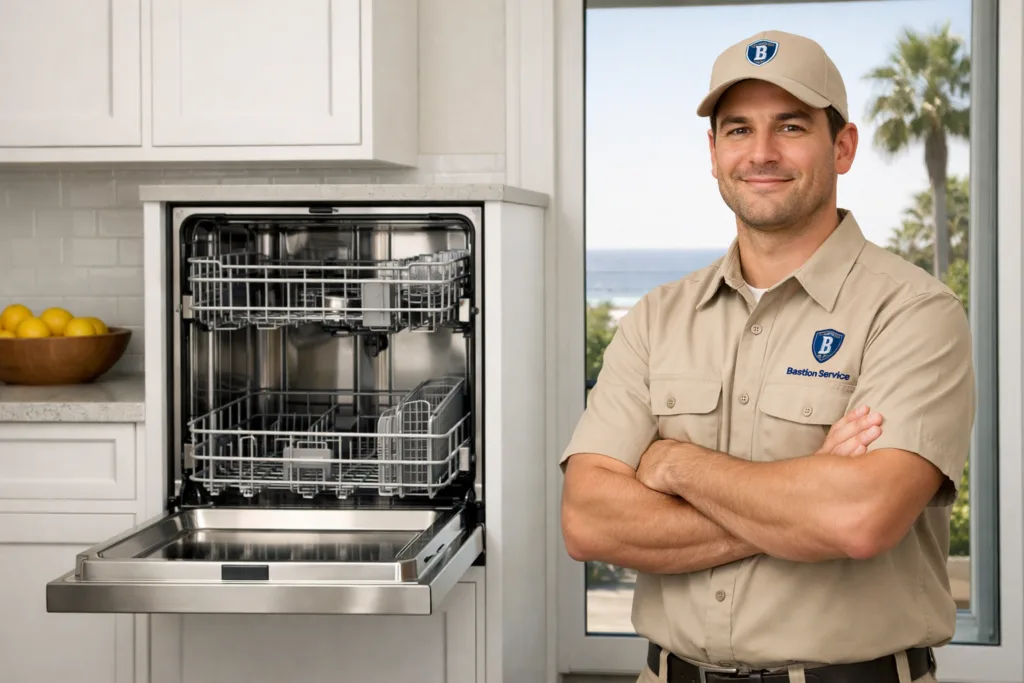
A malfunctioning dishwasher can upset the whole kitchen routine, especially when dinner cleanup starts piling up. The most effective repair starts with identifying the real cause of the symptom, since poor cleaning, standing water, and leaks can each come from several different components.
In Manhattan Beach homes, dishwashers often see steady daily use, which means filters, pumps, valves, seals, and controls all have to work together consistently. When one part begins to fail, the machine may still run, but performance usually drops before the unit stops completely.
Common dishwasher problems and what they often indicate
Dishwasher not draining
If water is left in the tub after the cycle ends, the problem may be as simple as a blocked filter or as involved as a failing drain pump. Other possible causes include a kinked or clogged drain hose, debris in the pump area, or a control issue that prevents the drain sequence from finishing properly.
When this happens repeatedly, it can lead to odors, murky water, and poor wash results. Even if the dishwasher seems to complete its cycle, trapped water usually means something in the drain system is no longer working as it should.
Dishes coming out dirty, cloudy, or gritty
Dirty dishes after a full wash cycle do not always mean the dishwasher has stopped washing. Weak spray arm movement, restricted water flow, low water temperature, detergent buildup, or worn internal wash components can all reduce cleaning performance.
Cloudy glassware may point to rinse issues or mineral residue rather than a major mechanical failure. Grit or food particles left behind can suggest filter blockage, poor circulation, or a wash pump that is losing strength.
Dishwasher leaking onto the floor
Leaks deserve prompt attention because small amounts of water can damage nearby flooring, trim, or cabinetry over time. Common leak sources include worn door gaskets, loose hose connections, cracked inlet or drain lines, overfilling, or a pump seal problem.
The location of the water matters. Moisture at the front of the machine may suggest a door-related issue, while water showing up underneath the center or toward the back can point to hoses, pump components, or internal seals.
Dishwasher not starting
When the dishwasher will not respond at all, the fault may involve incoming power, the door latch, the control panel, or the main control board. In some cases, the appliance has power but will not begin because it is not detecting that the door is fully secured.
A machine that lights up but does not run can be especially misleading. It may look functional while a key safety or control component is preventing the cycle from starting.
Dishwasher stops mid-cycle
A dishwasher that starts normally and then shuts down partway through may be dealing with a drain problem, heating problem, sensor fault, or intermittent electrical issue. Some machines pause because they cannot complete a required part of the cycle, such as draining or reaching the correct temperature.
If this symptom happens only occasionally at first, it can be easy to ignore. But intermittent failures often become more frequent as the affected part continues to wear.
Unusual sounds during operation
Not every dishwasher is quiet, but harsh grinding, loud buzzing, rattling, or repeated humming usually signals a specific problem. Items caught in the pump, spray arm interference, worn motor parts, or loose mounting can all change the sound of normal operation.
Noises that appear suddenly are often more important than sounds the unit has always made. A new grinding or buzzing noise can be an early warning that a component is close to failure.
Why symptom-based diagnosis matters
Dishwashers rely on several systems working in sequence: filling, washing, heating, draining, and drying. A failure in one stage can make another stage look like the real problem. For example, a dishwasher that seems to have a cleaning problem may actually have poor water heating, and a unit that appears to leak may really be overfilling because of a fill-control issue.
That is why the full pattern matters. Whether the problem happens on every cycle, whether performance changes with heavier loads, and whether there are multiple symptoms at once can all help narrow down the actual fault.
Signs the problem may be getting worse
Some dishwasher issues stay minor for a while, but others escalate quickly. Watch for these signs that the condition is worsening:
- Water remains in the tub after nearly every cycle
- Cleaning results are getting worse from week to week
- Leaking becomes more frequent or spreads beyond the front edge
- The machine takes longer than usual to finish cycles
- It starts, pauses, or shuts off unpredictably
- New noises appear during draining or washing
When more than one of these symptoms appears at the same time, the dishwasher may have more than a single isolated issue.
When to stop using the dishwasher
It is usually best to stop running the appliance and arrange service if you notice any of the following:
- Water leaking onto the floor or under cabinets
- A burning smell or signs of overheating
- Repeated power loss, tripped breakers, or electrical irregularities
- Loud grinding from the motor or pump area
- Standing water that does not clear after basic filter cleaning
- The dishwasher repeatedly stops before completing the cycle
Continuing to use the unit in these conditions can increase repair costs and create avoidable water damage in the kitchen.
Repair or replacement considerations
Many dishwasher issues are repairable, especially when the problem is limited to a pump, valve, latch, seal, drain component, or sensor-related part. Replacement becomes a more serious consideration when the dishwasher has multiple failing systems, recurring breakdowns, or a repair cost that no longer makes sense for the machine’s age and condition.
For homeowners in Manhattan Beach, the practical decision usually comes down to whether the fault is isolated and whether the repair is likely to restore reliable day-to-day performance. A single failed part in an otherwise solid dishwasher is very different from a machine showing broad wear across mechanical and electronic systems.
What to expect from a useful dishwasher service visit
A worthwhile service appointment should focus on the actual symptom pattern, not just the most obvious complaint. If the dishwasher is leaking, that should include checking likely seal and connection points. If it is not draining, the drain path and pump operation should be evaluated rather than assuming a blockage is the only cause.
Good repair guidance should also help clarify urgency. Some problems mainly affect convenience, while others can threaten flooring, cabinetry, or the appliance itself if use continues. The goal is to restore dependable cleanup after meals without recurring standing water, poor washing results, or surprise leaks under the machine.
Helpful steps before scheduling repair
There are a few simple observations that can make the problem easier to describe:
- Check whether water is left at the bottom after the cycle
- Note if the detergent dispenser is opening properly
- Look for visible debris in the filter area
- Pay attention to where any leak appears
- Listen for unusual sounds during wash or drain portions of the cycle
- Notice whether the issue happens every time or only on certain loads
These details can help separate a drainage issue from a wash issue, or a door-seal leak from a pump-area leak. Even small differences in behavior can point to very different repairs.
Dishwasher problems rarely improve on their own. Whether the issue is poor cleaning, standing water, leaks, or cycle interruption, getting the cause identified early can help prevent a minor repair from turning into a larger kitchen disruption.