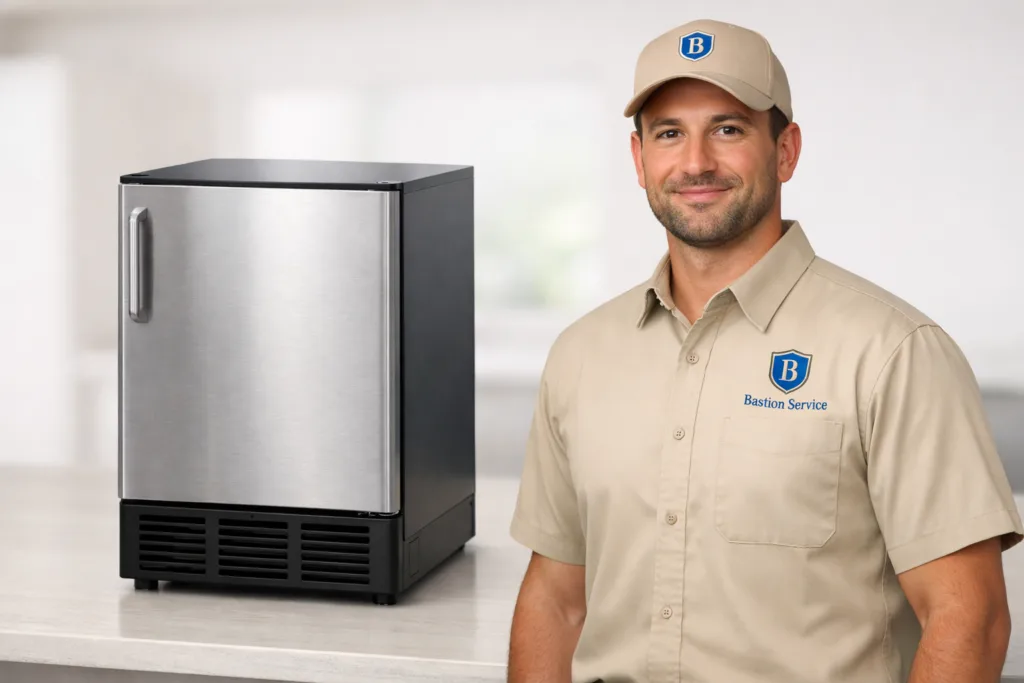
EdgeStar ice makers tend to fail in patterns, and those patterns usually point to a smaller set of likely causes. A machine that makes no ice at all is diagnosed differently from one that makes wet cubes, leaks during the fill cycle, or drops clumped ice into the bin. For homeowners in Rancho Park, identifying the symptom sequence early can help prevent extra wear on pumps, valves, fans, and control components.
Start with what the machine is doing right now
Before any repair decision is made, it helps to narrow the problem to the stage where the cycle breaks down. An ice maker has to fill, freeze, release, and repeat. If one step fails, the symptom often shows up somewhere else, which is why guessing based on appearance alone can be misleading.
- No ice at all: often tied to water supply, inlet valve, sensor, control, or cooling problems.
- Slow ice production: commonly related to poor airflow, temperature issues, scale buildup, or weak water fill.
- Small or hollow cubes: usually points to restricted water flow or low incoming pressure.
- Leaking or overflowing: may come from drain issues, loose connections, internal line damage, or fill faults.
- Clumped ice in the bin: can happen when cubes partially melt and refreeze due to temperature inconsistency or poor harvest timing.
No ice production: what it usually means
If the unit powers on but never produces a usable batch, the problem may be happening before the freeze cycle even begins. A blocked or kinked water line, a failed inlet valve, or a sensor that is not reading correctly can stop normal operation. In other cases, the machine fills but cannot cool properly, which points to a refrigeration-side issue rather than a water problem.
A helpful clue is whether you hear the machine attempt to cycle. If it seems active but never forms ice, temperature performance and timing become important. If it stays quiet and inactive, control or supply issues move higher on the list.
Slow production and long wait times between batches
When an EdgeStar ice maker still works but cannot keep up, the cause is often gradual rather than sudden. Mineral buildup, partially restricted water flow, reduced condenser performance, fan issues, or an internal temperature fault can all stretch out the cycle. The result is a machine that technically makes ice, but far too slowly for normal household use.
In Rancho Park homes, this symptom often shows up first during weekends, gatherings, or warmer indoor conditions when demand increases. If the bin is no longer refilling on schedule, the machine is usually operating outside its normal timing range.
Signs the issue is getting worse
- The first batch takes much longer than it used to
- The bin never fills even after hours of operation
- Cubes are wet when dropped
- The unit runs for long periods with little output
Small, thin, or misshapen cubes
Cube quality says a lot about water delivery. If cubes are coming out tiny, hollow, cloudy, or uneven, the machine may not be receiving the correct amount of water during fill. A partially blocked line, low pressure, scale buildup, or a valve that no longer opens fully can all lead to incomplete cube formation.
Temperature can also affect shape. If the freeze cycle is interrupted or shortened, the batch may release before the cubes fully form. That is why poor cube appearance should not automatically be blamed on water alone.
Leaks, puddles, and hidden moisture
Water around the appliance should be addressed quickly. What looks like a minor drip can come from a fill problem, drain blockage, cracked tubing, overflow condition, or an installation issue that leaves the unit out of level. Built-in ice makers deserve extra caution because moisture can spread into surrounding cabinetry before it becomes visible.
If you notice repeated puddling, stop treating it as a one-time spill. Ongoing leaks can damage flooring, cabinet panels, trim, and nearby materials, especially when the appliance is tucked into a finished space.
Leak symptoms that deserve prompt service
- Water appears after each batch cycle
- The bin contains slushy ice and standing water
- Moisture collects under the front edge of the unit
- The machine overfills before freezing starts
Clumped ice and melting in the bin
Ice that freezes into one solid mass usually means the cubes are softening before the next cycle completes. That can happen when the cabinet temperature rises too much, when the harvest cycle is off, or when the door or bin area is not holding cold air properly. It can also point to broader cooling trouble if the machine struggles to maintain a stable operating temperature.
Clumping is easy to dismiss at first, but it is often an early warning sign. Once ice quality drops, production and component strain frequently follow.
Buzzing, clicking, grinding, or repeated cycling
Unusual sounds are useful because they narrow the problem stage. A buzzing noise may be related to water fill or valve operation. Clicking can come from control attempts, relays, or start-stop behavior. Grinding or rough mechanical noise may point to moving parts involved in circulation or harvest. If the machine repeatedly tries to start a cycle and fails, continued use can add stress to already weak components.
Noise matters most when it is new, louder than normal, or paired with loss of ice output. A machine that sounds different and performs worse is rarely dealing with a harmless issue.
When homeowners should stop waiting
Scheduling service makes sense when the ice maker has power but no output, when leaks return, when ice quality changes noticeably, or when the appliance runs constantly without filling the bin. Waiting can turn a manageable repair into a more expensive one if a pump runs dry, a valve sticks, or a cooling issue forces the machine to overwork.
That is especially true in residential kitchens, bars, and entertaining areas where the appliance may keep attempting full operation even while the problem is getting worse.
When continued use can make the repair more expensive
It is smarter to pause normal use if the unit is leaking, producing slush, dropping partially formed cubes, or failing to complete a cycle. These symptoms can lead to secondary damage inside the machine and around it. Even when the ice maker still produces some ice, partial operation does not always mean safe operation.
Repair or replace?
Many EdgeStar ice maker problems are still worth repairing when the issue is isolated to a water valve, pump, fan, sensor, drain component, or control-related failure. Replacement becomes a more serious consideration when the unit has repeated breakdowns, significant internal corrosion, or a major cooling-system problem that pushes repair cost too close to the value of a newer machine.
The best choice depends on the exact failure, the overall condition of the appliance, and whether the rest of the system is in good shape. A service visit should help separate a targeted repair from a machine that is already nearing the end of a practical service life.
What a proper diagnostic visit should cover
For EdgeStar Ice Maker Repair in Rancho Park, the most useful inspection checks water delivery, drain behavior, temperature performance, freeze and harvest timing, visible component condition, and control response. That process helps determine whether the problem is straightforward, whether maintenance-related correction is enough, or whether the repair path no longer makes sense for the unit.
When the symptom pattern is understood first, homeowners can make a better decision about next steps without replacing parts blindly or continuing to run a machine that is already showing clear signs of strain.