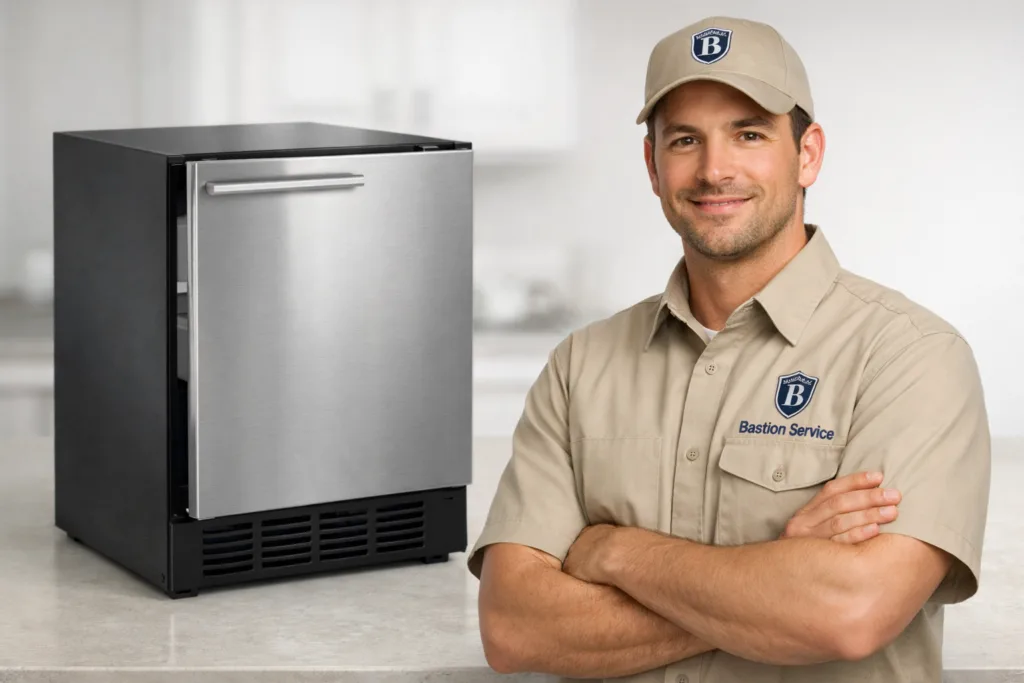
Ice maker problems are often easiest to identify by following the cycle step by step. An EdgeStar unit has to bring in water, freeze it at the right temperature, release the ice cleanly, and manage drainage without interruption. If any part of that sequence starts failing, homeowners usually notice it right away through lower output, poor ice quality, leaks, or unusual sounds.
In Fairfax homes, the same symptom can come from very different causes. A machine that makes no ice at all may have a water supply problem, while one that produces wet or clumped ice may be dealing with temperature inconsistency, scale buildup, or a harvest issue. Looking at the full pattern usually tells you more than focusing on one symptom by itself.
Common EdgeStar Ice Maker Symptoms
Most residential ice maker failures show up in one of a few ways. The machine may stop producing ice completely, make ice much more slowly than before, leak water around the base, or create cubes that are cloudy, misshapen, or stuck together. Some units continue running but never finish a full cycle, which can make the problem seem intermittent even when a component is consistently failing.
If your ice maker is still powered on but the results have changed, that usually points to an operational issue rather than a simple on-off problem. That difference matters because it helps narrow the likely cause and the repair path.
No Ice Production
When an EdgeStar ice maker is running but not producing any ice, the first suspects are usually water entry and freezing performance. A shutoff issue, restricted supply line, weak inlet valve, or blocked fill path can prevent the machine from getting enough water to start the cycle properly. If water is entering but the evaporator is not cooling as expected, the unit may never reach the stage where ice forms correctly.
Homeowners sometimes try repeated resets when this happens, but if the machine keeps failing to complete a cycle, repeated restarting usually does not solve the underlying issue. It can also make the pattern harder to identify if the problem is tied to a sensor, control response, or a component that works only part of the time.
Slow Ice Production
Slow production usually means the machine is still operating, but something is reducing efficiency. Common reasons include low water fill, restricted airflow, dirty condenser surfaces, mineral scale, or a cooling problem that lengthens the freeze cycle. In everyday use, this often shows up as a unit that used to keep the bin full but now struggles to make enough ice for normal household use.
Production loss tends to get worse before it gets better. A unit that is merely “behind” today may stop producing entirely if the root issue is not corrected.
Leaking or Water Pooling
Water around the unit should always be taken seriously. Leaks can come from loose fittings, cracked tubing, drain restrictions, an overfilling reservoir, or internal parts that are no longer directing water where they should. Some leaks appear only during the fill or drain portion of the cycle, which can make them seem random at first.
Even a small amount of water can damage flooring, surrounding trim, or nearby cabinetry over time. If the leak is recurring, it is usually best to stop regular use until the source is identified.
Cloudy, Clumped, or Misshapen Ice
Changes in ice appearance do not always mean a major component has failed, but they are still useful warning signs. Cloudy ice can be related to water quality or internal buildup. Clumped ice may point to partial melting, poor harvest timing, or storage conditions inside the bin. Misshapen cubes often suggest uneven filling, inconsistent freezing, or circulation problems during the freeze cycle.
If the appearance change happens along with reduced output, noise, or leaking, the problem is more likely to involve the appliance itself rather than maintenance alone.
Buzzing, Clicking, or Grinding Sounds
Different sounds often line up with different stages of operation. Buzzing during a fill attempt can suggest a valve issue or lack of water flow. Repeated clicking may indicate a control or relay problem. Grinding, scraping, or harsh mechanical noises can point to trouble in the fan, pump, motor, or harvest mechanism.
A brief operational sound can be normal, but a new sound pattern usually means something in the cycle is no longer moving or responding as intended.
What These Problems Can Mean Inside the Machine
EdgeStar ice makers depend on several systems working together:
- Water supply and inlet control
- Freezing and temperature regulation
- Circulation or pump operation
- Sensors and control response
- Harvest and release functions
- Drainage management
A failure in one area can easily look like a different issue from the outside. For example, ice that will not release may seem like a freezing problem when the actual cause is scale on key surfaces or a control step that is not advancing. A puddle under the unit may look like a drain failure, but the real source might be overfilling or a split hose inside the cabinet.
That is why symptom-based diagnosis matters. Checking only the final result, such as “no ice,” does not always reveal whether the machine failed during fill, freeze, harvest, or drain.
Signs the Problem Is Getting Worse
Some faults stay relatively stable for a short time, but many become more damaging if the machine keeps trying to operate. Watch for signs that the issue is progressing:
- The ice maker starts producing less each day
- Water appears more often around the unit
- Ice melts and refreezes into large clumps
- The machine cycles repeatedly without making a full batch
- Unusual noises become louder or more frequent
- The unit shuts off unexpectedly or behaves inconsistently
When these patterns show up, continued use can put extra strain on pumps, valves, fans, and electronic controls. Small problems often stay smaller when addressed early.
When to Stop Using the Ice Maker
It makes sense to stop using the unit and arrange service if you notice active leaking, repeated failed starts, strong mechanical noise, or obvious melting and refreezing inside the bin. Those conditions can lead to secondary damage beyond the original fault.
In a Fairfax household, this is especially important when the ice maker is installed near finished flooring or built into cabinetry. Water damage can become a bigger and more expensive problem than the appliance repair itself.
Repair or Replace: What Usually Decides It
Whether repair is worthwhile depends on the machine’s age, the failed part, the overall condition of the unit, and whether the issue appears isolated or part of a longer pattern. If the problem is tied to a valve, pump, drain component, sensor, control issue, or buildup affecting normal operation, repair is often a reasonable next step. If the machine has major cooling problems, recurring leaks, or several worn components at once, replacement may be the better long-term choice.
What matters most is not just the symptom, but the condition behind it. A unit with one identifiable fault is very different from one that has been losing performance across multiple parts of the cycle.
What Helps Homeowners Before Service
Before scheduling a visit, it helps to note what the machine is doing and when it happens. Useful details include:
- Whether the unit makes any ice at all
- If production is slow or inconsistent
- Whether leaking happens constantly or only during certain cycles
- Any change in sound, smell, or visible frost
- Whether cleaning or resetting changed anything
These observations can make the repair path clearer and help separate a maintenance issue from a failing component.
Focused Ice Maker Repair for Fairfax Homes
Residential ice makers tend to be small appliances with little room for error. A minor problem with water flow, temperature, drainage, or harvest timing can quickly turn into no ice at all. For homeowners in Fairfax, the most useful approach is to match the repair plan to the exact symptom pattern, the condition of the unit, and whether the fault appears limited or system-wide.
That kind of inspection helps you make an informed decision, avoid unnecessary part replacement, and get a clearer sense of whether your EdgeStar ice maker is a good candidate for repair.