
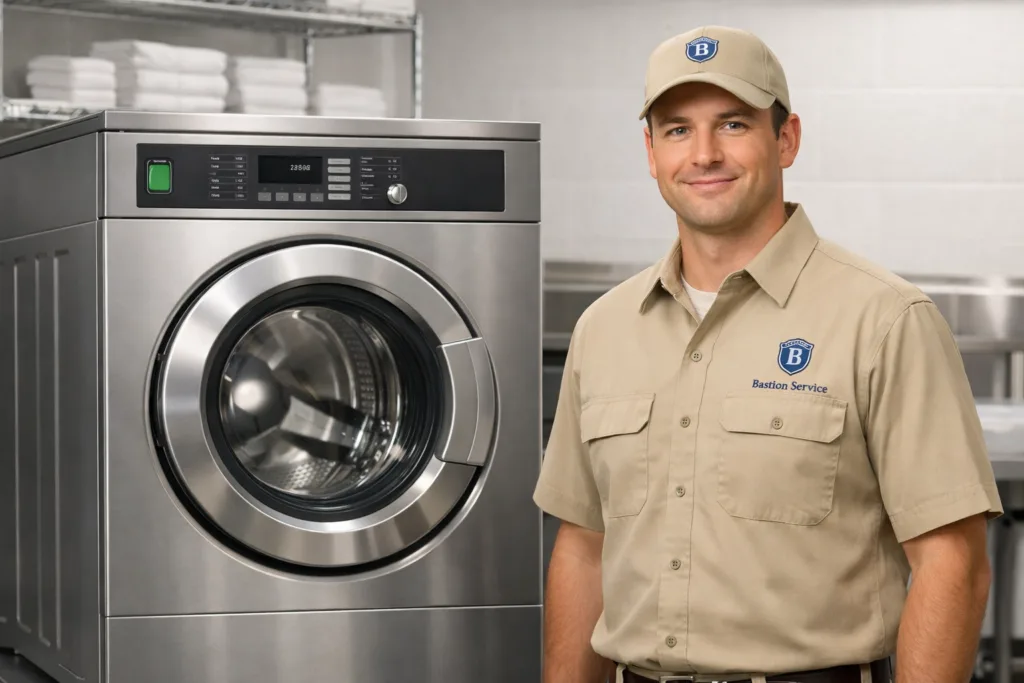




Commercial washers tend to show trouble in ways that affect operations before they stop completely. Loads may come out too wet, fill times may stretch longer than usual, cycles may pause unexpectedly, or standing water may remain in the drum after the program ends. In a business setting, those issues can slow staff, reduce throughput, and create backup across the day’s workflow.
Related commercial equipment paths in Culver City include Speed Queen Washer Repair in Culver City and Wascomat Washer Repair in Culver City.
Common commercial washer symptoms and what they can mean
Slow filling can point to restricted inlet screens, water supply problems, failing inlet valves, or control-related issues. A machine that will not drain may have a blocked drain path, pump trouble, or a water-level sensing problem. If the washer will not spin correctly, the cause may involve load imbalance, worn drive components, door or lid lock faults, or motor-related failures.
Leaks also deserve quick attention. Water around the machine can come from hoses, door boots or seals, drain components, pumps, tubs, or connection points. Even a small leak can become a larger facility problem when water reaches flooring, nearby equipment, or wall surfaces. In commercial spaces, catching the source early often prevents a much bigger interruption.
Noise, vibration, and poor extraction
Grinding, banging, squealing, or scraping noises often indicate mechanical wear rather than a minor adjustment. Bearings, supports, suspension parts, pulleys, and other moving components can all contribute to abnormal sound. Excess vibration may come from leveling problems, suspension wear, internal damage, or repeated off-balance loads. When a washer finishes with overly wet textiles, the issue may not be washing performance at all but weak extraction caused by a spin-system fault.
Cycle failures and control problems
If a machine starts inconsistently, stops mid-cycle, displays error codes, or fails to advance through programmed steps, the fault may involve controls, wiring, sensors, latch assemblies, or power supply issues. These problems are especially disruptive in commercial use because they create uncertainty. Staff may assume a load is progressing normally, only to find the cycle stalled or incomplete when the machine is needed again.
Why early service usually saves time and cost
Continuing to run a washer with a known problem can increase wear on other systems. A unit struggling to drain may overwork the pump. A machine spinning while unstable can put extra stress on suspension and drive parts. Repeated use with a leak can spread damage beyond the washer itself. When symptoms include breaker trips, loud mechanical noise, soaked loads, or intermittent shutdowns, earlier service is usually the safer business decision.
It helps to note whether the problem happens on every load or only under certain conditions. Consistent failures often suggest a primary component fault, while intermittent issues may involve wiring, controls, installation conditions, or a developing mechanical problem. Details such as when the issue starts, how often it happens, and whether it changes with load size can make diagnosis more efficient.
Signs the problem may involve the full laundry line
Some washer complaints begin as a workflow issue rather than a single-machine failure. If loads are washing normally but remain damp enough to bottleneck the drying side, Commercial Dryer Repair in Culver City may be the better place to start. Looking at the handoff between washer extraction and dryer performance can prevent time spent chasing the wrong machine.
That paired-equipment view matters in commercial laundry setups where one weak point affects everything downstream. Wet loads can come from a washer spin problem, but they can also expose limited dryer airflow, poor heat performance, or long drying times that were already developing. A symptom-based assessment helps separate true washer faults from issues that only appear to start there.
Repair versus replacement considerations
Repair is often the practical choice when the failure is isolated and the machine still meets production needs. Replacement becomes more likely when breakdowns are recurring, multiple major systems show wear, parts availability is limited, or the unit no longer supports the workload expected of it. For many businesses in Culver City, the decision is based less on age alone and more on repeat downtime, service history, and whether repair will restore reliable daily use.
A good service recommendation should weigh the condition of the machine as a whole, not just the failed part. If the washer has one clear fault and the rest of the system remains solid, repair may make sense. If the equipment has ongoing drain, spin, seal, and control problems together, replacement may offer a better long-term result.
What to expect from a useful commercial washer diagnosis
A productive service visit should identify the failing system, confirm whether continued operation risks additional damage, and explain the likely path back to stable operation. That includes checking the symptoms in context rather than replacing parts by guesswork. In commercial environments, that approach matters because downtime affects schedules, staffing, and output.
Whether the issue involves filling, draining, leaks, vibration, noise, cycle interruption, or poor extraction, the most effective next step is a diagnosis tied to the actual symptom pattern. That keeps attention on restoring dependable washer performance with as little disruption to daily operations as possible.


