
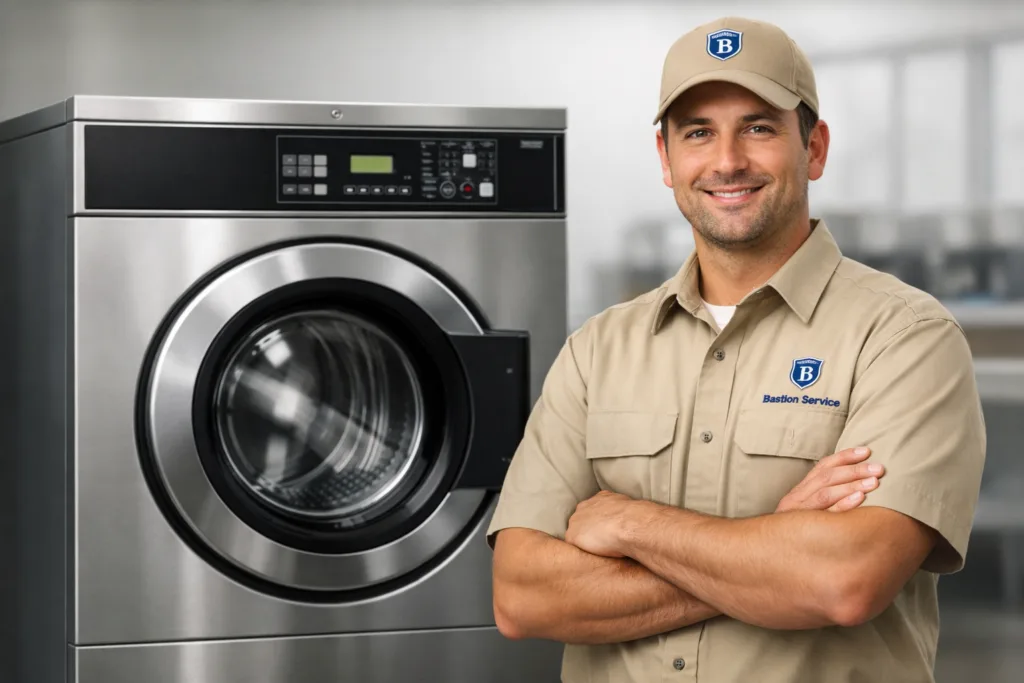




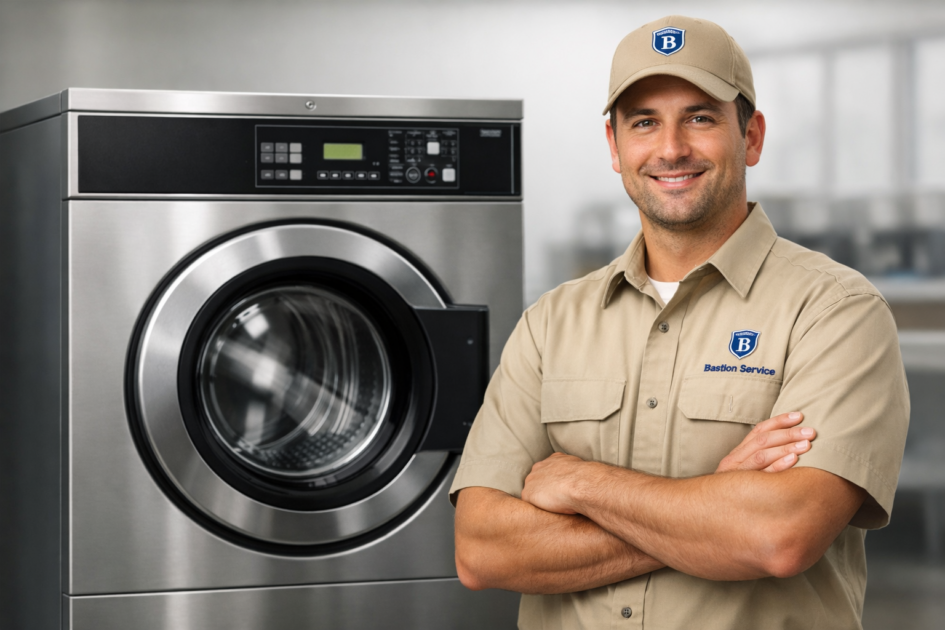
When a Speed Queen washer stops performing the way it should, the impact is usually immediate: backed-up loads, delayed turnover, wet items waiting for extraction, and staff spending time working around a machine that should be reliable. For businesses in Culver City, washer repair should start with symptom-based testing so the fault is identified before parts are ordered or downtime stretches further. Bastion Service provides Speed Queen washer repair with attention to the operating issue, the likely failed components, and the best next step for getting the unit back into service.
Related commercial service paths in Culver City include Speed Queen Commercial Repair in Culver City, Commercial Washer Repair in Culver City, and Speed Queen Dryer Repair in Culver City.
Speed Queen washers are built for frequent use, but repeated loads can still expose problems in draining, spinning, filling, heating, controls, and drive operation. The same complaint can have more than one cause, which is why the repair decision should be based on how the machine behaves during the cycle, what stage is failing, and whether the problem is getting worse under normal daily use.
Common Speed Queen washer problems affecting daily operations
Washer will not start or stops before the cycle finishes
If the washer powers on but does not begin, locks and unlocks without running, or stops partway through the cycle, the issue may involve the door or lid lock system, control board faults, wiring problems, power supply interruptions, or a failed component that prevents the machine from advancing. A washer that quits at the same point every time often gives a useful clue about whether the problem is tied to fill, drain, spin, or heating functions.
This symptom matters because an intermittent no-start problem can quickly become a full outage. If staff have to retry loads, move laundry between machines, or monitor every cycle manually, productivity drops even before the unit stops working completely.
Slow fill, no fill, or incorrect water level
When a Speed Queen washer takes too long to fill, barely fills, or overfills, the root cause may be a restricted water supply, inlet valve trouble, pressure-sensing issues, or control problems. These failures can lead to extended cycle times, poor wash quality, and repeated interruptions if the machine cannot recognize the correct water level.
In a busy laundry room, fill problems often show up first as workflow delays rather than a dramatic breakdown. Loads take longer to process, staff notice inconsistent results, and the machine may appear to be running even though output is falling behind.
Drainage problems and standing water
A washer that will not drain fully or leaves water in the tub may have a blocked drain path, pump failure, hose restriction, control issue, or a problem in the part of the cycle that should trigger draining. Standing water is more than a nuisance. It can interrupt the next load, leave items too wet for proper transfer, and contribute to odor complaints if the machine sits between uses.
If the washer repeatedly pauses before draining, hums without moving water, or completes with water still visible, service should be scheduled before continued use leads to more cycle failures.
Spin failure, weak extraction, or severe vibration
If loads come out unusually wet, the basket struggles to reach speed, or the machine bangs and shakes during spin, several issues may be in play. Common possibilities include suspension wear, bearing problems, drive system faults, imbalance conditions, leveling issues, or damage caused by repeated operation under stress.
Excess vibration should not be ignored. What starts as a rough spin can progress into cabinet damage, premature wear on connected parts, and a machine that becomes unreliable during the busiest part of the day.
Leaks, unusual noise, and poor wash results
Leaks can come from hoses, pumps, seals, valves, or internal tub-related failures. Unusual noise may point to bearings, drive components, loose hardware, or pump obstructions. If the washer is not cleaning well, the problem may not be the wash process alone. Improper filling, incomplete draining, weak agitation or tumbling, and control errors can all affect results.
These symptoms are often connected. A washer that leaks and also struggles to complete cycles, for example, may have more than one failing component or one core problem affecting multiple stages of operation.
Why symptom-based diagnosis matters
Speed Queen washer issues are not always obvious from the first complaint. A machine reported as “not draining” may actually be failing to advance into the drain stage. A unit that seems to have a motor problem may be reacting to a lock fault or control interruption. Replacing a likely part without confirming the failure can increase cost and leave the original problem unresolved.
A useful service visit focuses on what the washer is doing, what it is not doing, when the failure occurs, and whether the symptom is constant or intermittent. That helps determine whether the repair involves a pump, motor, control, valve, sensor, lock assembly, wiring issue, or a wear-related mechanical problem.
Signs the washer needs prompt repair
- The unit will not start consistently
- The cycle stops mid-way or will not complete
- Water remains in the tub after operation
- Loads come out much wetter than usual
- The machine leaks during fill, wash, or drain
- Spin is loud, unstable, or excessively violent
- Error behavior repeats across multiple loads
- Cycle times are getting longer without explanation
Even gradual performance changes deserve attention. A washer rarely moves from normal operation to complete failure without warning. Slower fills, more frequent imbalance, intermittent stopping, and increasing noise often indicate a developing issue that is easier to address before the machine goes fully down.
When continued use can create bigger repair needs
Some washer problems allow partial operation, which can make it tempting to keep the unit in rotation. That decision can backfire if the machine is leaking, grinding, struggling to spin, tripping power, or repeatedly failing to drain. Continued use under those conditions can add stress to pumps, motors, suspension parts, bearings, and electrical components.
If the washer is causing staff to rerun loads, transfer items manually, watch each cycle, or clean up water after use, the machine is already affecting operations beyond the initial fault. In that situation, limiting use until the problem is inspected is often the better business decision.
Repair considerations for Speed Queen washers
Many washer failures are repairable when the problem is isolated and the rest of the machine remains in solid condition. That is often the case with drainage issues, fill-related faults, some control failures, lock problems, pump replacement needs, and certain drive-system repairs. The key question is not simply whether the machine can be repaired, but whether the repair is likely to restore stable operation for the demands of the site.
Replacement becomes a more serious consideration when the washer has a history of repeated downtime, multiple active issues, major structural wear, or signs that one repair will be followed by another in short order. For businesses in Culver City, the right choice usually comes down to uptime, predictability, and whether the machine can return to dependable service without creating ongoing disruption.
How to prepare for a washer service visit
Before service is scheduled, it helps to note the exact symptom pattern. Useful details include whether the unit fails at the same point in every cycle, whether the issue is present on all loads or only certain ones, whether there is standing water or leaking, and what noises or error behavior staff have noticed. If the machine still runs intermittently, knowing which functions work and which do not can speed up troubleshooting.
It also helps to stop using the washer if there is active leaking, severe vibration, burning smell, repeated shutdown, or any condition that appears to be worsening quickly. That can prevent added damage and make the repair path more straightforward once the machine is inspected.
Service-focused washer repair for Culver City businesses
Businesses in Culver City need more than a guess when a Speed Queen washer begins failing. They need service that connects the symptom to the probable cause, explains whether immediate repair is the right move, and helps reduce avoidable downtime. Whether the problem involves draining, spin performance, cycle completion, controls, leaks, or water fill behavior, the practical next step is to schedule washer service based on the actual failure pattern so repair decisions support reliable operation again.


