
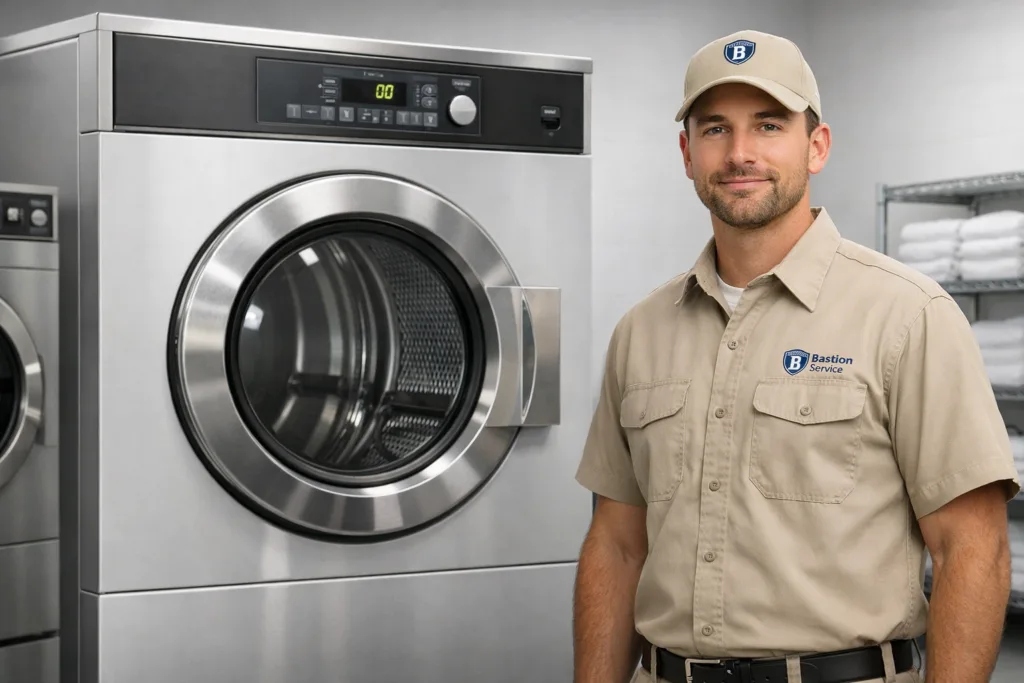




Common commercial dryer symptoms and what they can indicate
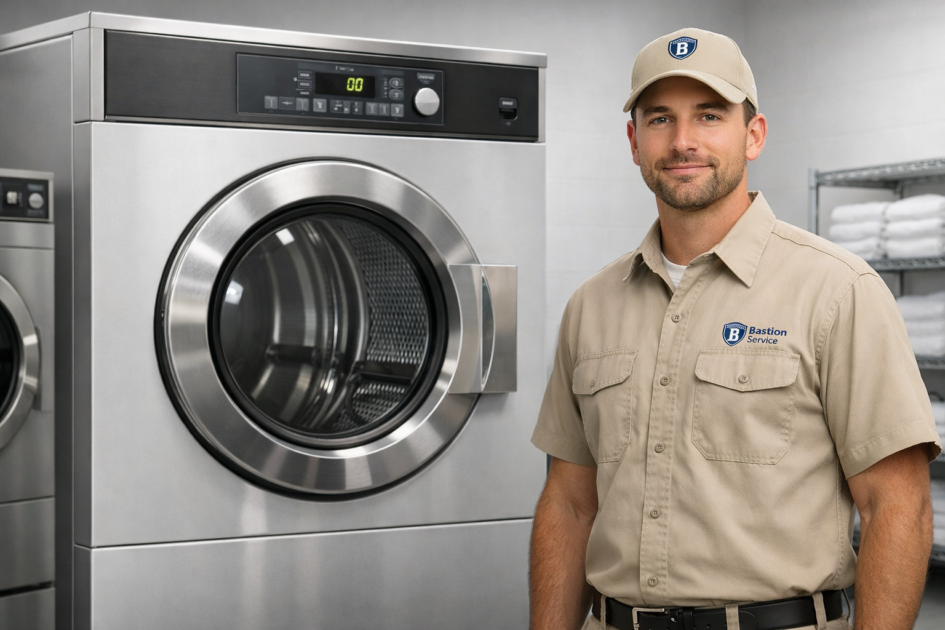
When a commercial dryer starts disrupting production, the symptom alone does not always identify the failed part. A unit that tumbles without heating may have a failed heating element, ignition problem, high-limit cutoff issue, control fault, or an airflow restriction that is forcing the machine to protect itself. Long dry times can point to reduced heat output, a blocked exhaust path, moisture-sensing problems, overloaded cycles, or a drum that is turning without proper airflow through the load.
Related commercial equipment paths in Culver City include Speed Queen Dryer Repair in Culver City and Wascomat Dryer Repair in Culver City.
No-start complaints often involve more than a simple power issue. In commercial equipment, the cause may be tied to a door switch, start circuit, drive motor, blown fuse, control board, or a safety device that has opened because of overheating. If the dryer starts and stops during the cycle, that usually suggests an unstable heat condition, a motor that is failing under load, or a shutdown triggered by rising internal temperatures.
Noise is another symptom that should be evaluated early. Thumping, scraping, squealing, or heavy vibration can indicate worn rollers, idler problems, belt wear, drum support damage, or loose internal components. In a business setting, new noise rarely stays minor for long, especially when the machine is running through repeated cycles each day.
Why airflow and exhaust conditions matter
Airflow problems are one of the most common reasons a commercial dryer seems weak, inconsistent, or prone to shutdowns. Even when heat is present, restricted exhaust flow can trap hot air inside the cabinet, lengthen dry times, and place extra strain on thermostats, heating components, igniters, and motors. Operators may first notice that loads come out warm but still damp, cycles need to be rerun, or exterior panels feel unusually hot during normal use.
In Culver City facilities that depend on steady laundry turnover, poor vent performance can quickly affect staffing and workflow. Repeated high heat inside the machine can trigger safety cutoffs, cause intermittent stopping, and accelerate wear on parts that would otherwise last longer under normal ventilation conditions. That is why diagnosis should separate a true internal dryer failure from a venting issue, installation condition, or maintenance problem affecting the whole laundry area.
Airflow evaluation is also important because dryer complaints sometimes overlap with broader laundry bottlenecks. If wet loads are arriving late, spin performance is poor, or water is not being removed well before drying begins, Commercial Washer Repair in Culver City may be the better place to start for the first part of the problem.
Operational signs that service should not wait
Some dryer issues are disruptive but still allow limited operation, while others justify taking the machine out of service until it is checked. A burning odor, repeated breaker trips, severe vibration, visible overheating, or a drum that binds or scrapes should be treated as higher-priority warning signs. Continuing to run the unit under those conditions can increase damage to the drive system, heat circuit, controls, or drum supports.
Businesses should also act quickly when staff are compensating for the machine by splitting loads, rerunning cycles, rotating work to other units, or extending turnaround times. Those workarounds usually mean the cost of delay has already started. What looks like a nuisance problem at the dryer often becomes a scheduling problem, a labor problem, and eventually an equipment replacement decision if left unresolved.
Repair versus replacement considerations
Not every commercial dryer problem points toward replacement. Many repairs make sense when the fault is isolated, the cabinet and drum are still in solid condition, and the machine can return to reliable daily use after the failed parts are addressed. Heating failures, drive component wear, sensor problems, and some control issues are often evaluated in that context.
Replacement becomes more likely when the unit has repeated breakdowns, significant structural wear, multiple failing systems, or an older platform that no longer supports predictable uptime. In commercial use, the right decision is usually based on more than the immediate repair itself. Age, workload, condition of surrounding components, and the risk of recurring downtime all matter.
What a productive service visit should clarify
A useful commercial dryer service visit should identify whether the core issue is heat generation, airflow, controls, motor load, drum support, or utility supply. It should also show whether operating conditions are contributing to the failure, such as lint accumulation, vent restrictions, uneven loading patterns, or shutdowns caused by overheating rather than a single defective part.
For Culver City businesses, the value of diagnosis is not limited to getting one machine back on. It helps determine whether the dryer can return to dependable operation, whether another part is likely to fail soon, and whether the current setup is creating avoidable strain on the equipment. That kind of assessment supports better scheduling, fewer repeat interruptions, and more informed maintenance decisions for the laundry side of the operation.


