
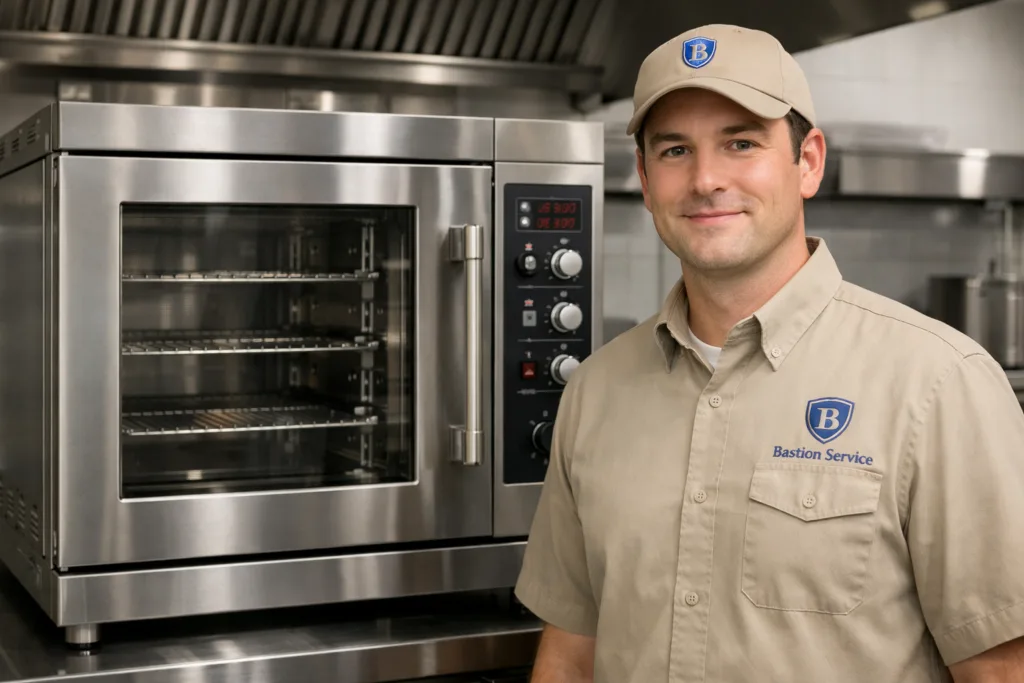




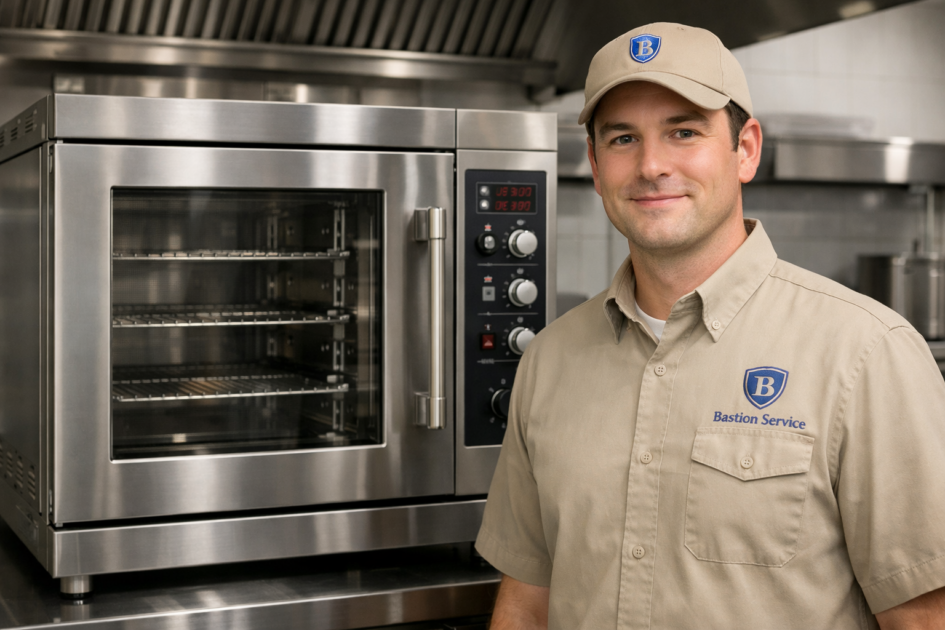
Temperature inconsistency in a commercial oven usually shows up first in production, not in the control panel. One rack may finish early while another lags behind, proteins may need longer hold time than normal, and baked items can come out with uneven color from front to back. In a busy Rancho Park kitchen, those patterns often point to issues with heating elements, igniters, sensors, relays, fan components, or door sealing rather than a simple adjustment.
Related commercial equipment paths in Rancho Park include Blodgett Oven Repair in Rancho Park and Southbend Oven Repair in Rancho Park.
Common commercial oven problems and what they may mean
Slow preheat, uneven baking, failure to reach set temperature, unexpected shutdowns, and controls that do not respond properly are among the most common complaints with commercial ovens. While those symptoms can seem similar during service, the underlying causes are often very different. A unit that heats weakly may have a failing element or igniter, while an oven that overheats may be dealing with sensor drift, calibration problems, or a control fault.
If the oven runs but struggles to hold temperature, technicians typically look at the temperature probe, thermostat logic, relay operation, and airflow inside the cavity. If the unit does not heat at all, diagnosis may include incoming power, safety circuits, ignition sequence, gas valve function where applicable, and high-limit protection. When performance gets worse only during rush periods, heat stress on electrical components or marginal internal parts may be part of the failure pattern.
Signs the issue is affecting more than cooking quality
An oven that needs constant adjustment can create broader operating problems. Staff may start rotating pans more often, extending cook times, changing batch size, or moving product between equipment to make up for unreliable heat. Those workarounds reduce consistency and can slow the entire line, especially when several menu items depend on one oven staying on schedule.
Door gasket wear, loose hinges, and poor door alignment are also easy to underestimate. Heat loss can force longer recovery times and increase energy use while making the oven work harder than intended. If the same kitchen is also seeing trouble with oil recovery, burner output, or temperature hold on dedicated frying equipment, Commercial Fryer Repair in Rancho Park may be the better service path for that part of the cooking line.
When service should be scheduled promptly
Some oven issues allow limited operation for a short time, but they should not be ignored. Intermittent heating, wide temperature swings, delayed ignition, or controls that reset without warning usually indicate a problem that can expand into a full outage. Scheduling service before the oven fails completely often helps avoid a more disruptive interruption during peak demand.
Visible wiring damage, repeated breaker trips, strong burning odors, or signs of overheating deserve faster attention. For gas units, delayed ignition or any persistent gas smell should be treated as a safety concern first. The equipment should be taken out of use until the immediate risk is addressed and the cause is properly evaluated.
How oven faults affect workflow in commercial kitchens
Commercial ovens do not fail in isolation. A temperature problem can throw off prep timing, holding strategy, finishing order, and staffing decisions across the shift. In operations that rely on batch cooking or timed production, even a modest drop in performance can create delays that reach the pass, pickup times, and customer experience.
That is why diagnosis should account for the way the oven is actually used. A problem that seems minor during idle testing may become much more serious under a full cooking load. Recovery time between batches, consistency across racks, and stability during long cook cycles all matter when deciding whether the repair is likely to restore dependable operation.
Repair versus replacement
Repair is often the practical choice when the failure is isolated and the rest of the oven remains structurally sound. Replacing a sensor, igniter, control component, fan motor, gasket, or heating element can make sense when it returns the unit to stable service without creating repeated downtime. Replacement becomes more likely when the oven has recurring faults, poor parts availability, or no longer supports the kitchen’s production volume and control needs.
The best decision usually comes down to service history, severity of the current fault, and whether the next repair is expected to restore reliable daily use rather than extend a declining unit for only a short period. For many Rancho Park businesses, the cost of unreliable cooking performance is just as important as the cost of the part itself.
What businesses should expect from commercial oven repair in Rancho Park
A useful service visit should determine whether the problem is limited to one failed part or tied to a wider wear pattern inside the oven. That includes verifying heat generation, temperature sensing, control response, airflow, and any safety-related shutdown conditions. The goal is not only to identify what failed, but also to clarify whether the equipment can return to normal production with confidence.
For businesses in Rancho Park, commercial oven repair is most valuable when it helps management make a clear operating decision: continue limited use, repair now, or plan for replacement based on actual condition. That kind of evaluation supports better uptime planning, steadier food quality, and fewer repeat interruptions on the cooking line.


