
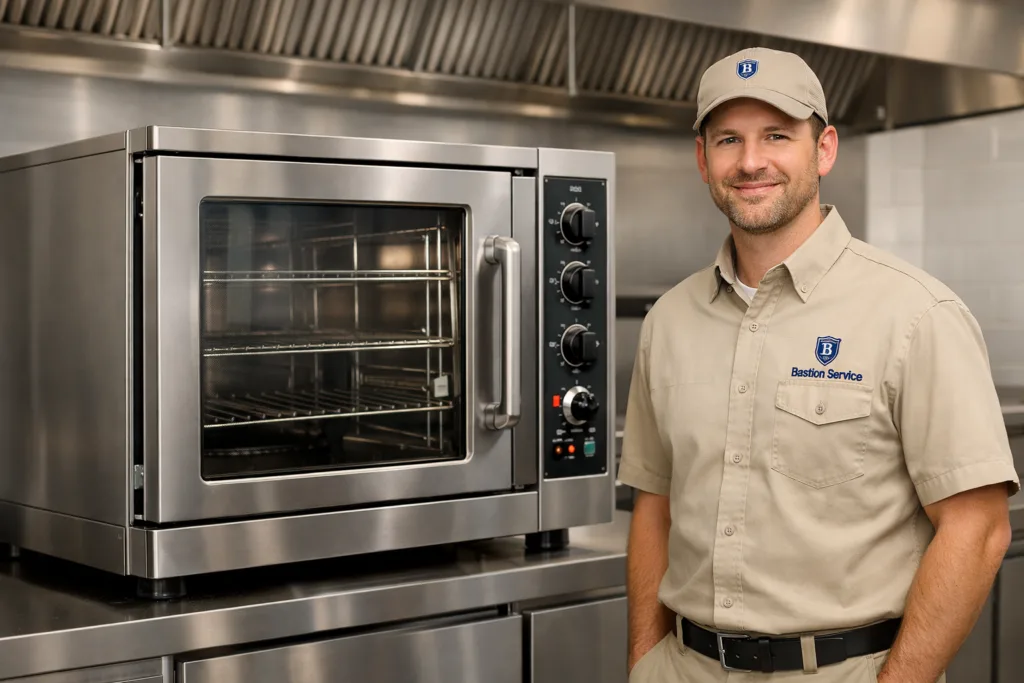




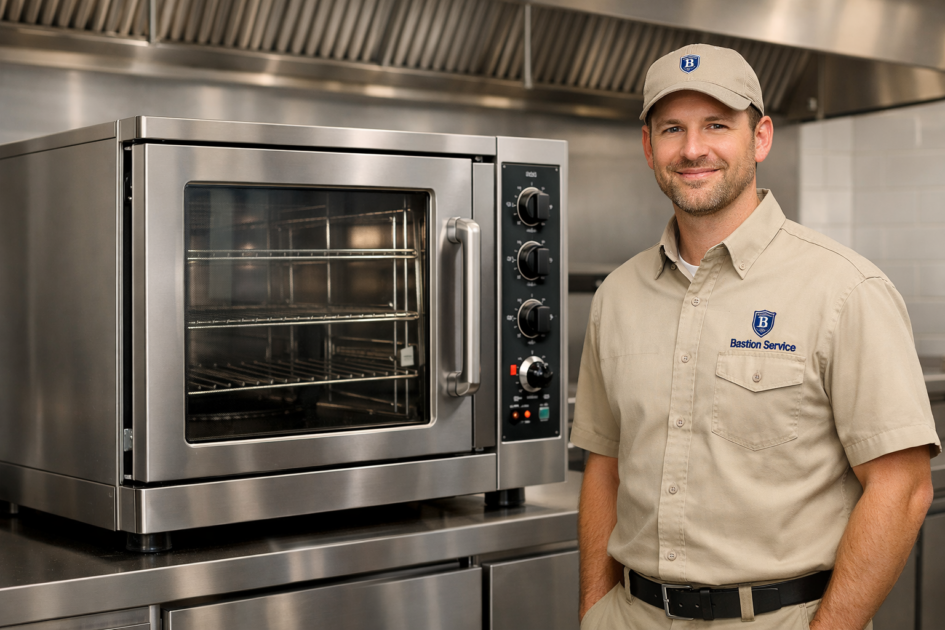
Uneven heat, slow recovery, and unexpected shutdowns can disrupt timing across an entire commercial kitchen. In Mid-City, oven problems often show up first as product inconsistency, missed ticket times, or staff having to compensate manually with longer cook times, rack rotation, or repeated setting changes. Those workarounds may keep production moving temporarily, but they usually point to a fault that needs proper testing.
Related commercial equipment paths in Mid-City include Blodgett Oven Repair in Mid-City and Southbend Oven Repair in Mid-City.
Common commercial oven problems that affect output
Temperature complaints are among the most common reasons businesses schedule service. A unit that runs too hot, too cool, or unevenly may have a failing sensor, thermostat issue, weak igniter, heating element problem, burner fault, damaged door gasket, or airflow problem inside the cavity. Similar cooking results can come from very different causes, which is why symptom-based diagnosis matters before parts are replaced.
Control and startup issues are another frequent category. If the oven will not power on, resets during operation, drops its display, ignores programmed settings, or trips electrical protection, the problem may involve wiring, relays, switches, control boards, contactors, or incoming power conditions. On gas equipment, delayed ignition and inconsistent burner operation should be addressed promptly because unstable heating can lead to wider performance and safety concerns.
Signs the issue may be worsening
Extended preheat times, hot spots, burning smells, low heat, repeated error codes, and temperature drift during long cooking cycles often indicate a problem that is no longer isolated. When staff members have to monitor one oven more closely than the rest of the line, that usually signals reduced reliability rather than a minor one-time fluctuation.
If the symptom involves burner heat and cooking performance in other oil-based equipment at the same time, Commercial Fryer Repair in Mid-City may be the better service path for that part of the kitchen while the oven issue is diagnosed separately.
Why the same symptom can have different causes
A complaint like “not heating properly” can describe several very different failures. In one oven, the cavity may eventually reach temperature but overshoot and cycle poorly. In another, the unit may never fully preheat because an igniter is too weak to open the gas valve consistently. Electric models may show similar symptoms when an element is partially failed or a control is not sending proper power under load.
Uneven baking also needs closer evaluation. Poor airflow, a failing convection fan, door leakage, rack-position heat imbalance, sensor error, and burner or element cycling problems can all create uneven results. The right repair approach depends on whether the issue is heat generation, heat measurement, air circulation, or heat retention.
What a service visit typically helps determine
Commercial oven repair in Mid-City is most useful when it identifies where the fault actually starts. That may include checking temperature accuracy, confirming ignition or element operation, testing controls, reviewing door seal condition, inspecting wiring, and evaluating whether the unit is failing only at startup or after it has been running under production load.
This kind of diagnosis helps answer practical questions businesses care about: whether the problem is likely to keep getting worse, whether a targeted repair is realistic, whether additional components should be tested before approval, and whether the unit can return to dependable operation without repeated interruptions.
When to stop using the oven and schedule service
Service should be scheduled when the oven cannot maintain set temperature, takes too long to preheat, shuts off unexpectedly, fails to ignite properly, displays recurring errors, or causes measurable delays in production. If food quality is inconsistent enough that staff members are changing cook times from batch to batch, the equipment is already affecting throughput and consistency.
Use should stop immediately if there is a strong gas smell, visible electrical arcing, repeated breaker tripping, smoke from controls or wiring, or overheating that suggests the unit may not cycle off correctly. In a gas-related emergency, businesses should follow site safety procedures and contact the gas utility or emergency responders before arranging appliance service.
Repair versus replacement considerations
Repair is often the sensible choice when the problem is isolated, the oven still fits the operation’s production needs, and the expected fix can restore stable performance. That is especially true when the main issue involves a sensor, igniter, heating element, fan motor, relay, switch, or other replaceable component rather than severe structural deterioration.
Replacement becomes more likely when there are recurring control failures, major cavity wear, repeated downtime from multiple unrelated problems, or repair costs that no longer make operational sense. For many Mid-City businesses, the key question is not simply whether the oven can be turned back on, but whether it can return to consistent service without creating ongoing disruption for the line.
Operational impact beyond the oven itself
When one commercial oven falls behind, the effect often spreads to prep timing, holding capacity, staffing, and coordination with the rest of the cooking line. Delays can push volume onto other equipment, increase ticket pressure, and create uneven workflow during peak periods. Addressing the fault early can reduce secondary strain on nearby stations and help stabilize production before a single equipment problem turns into a broader service interruption.


