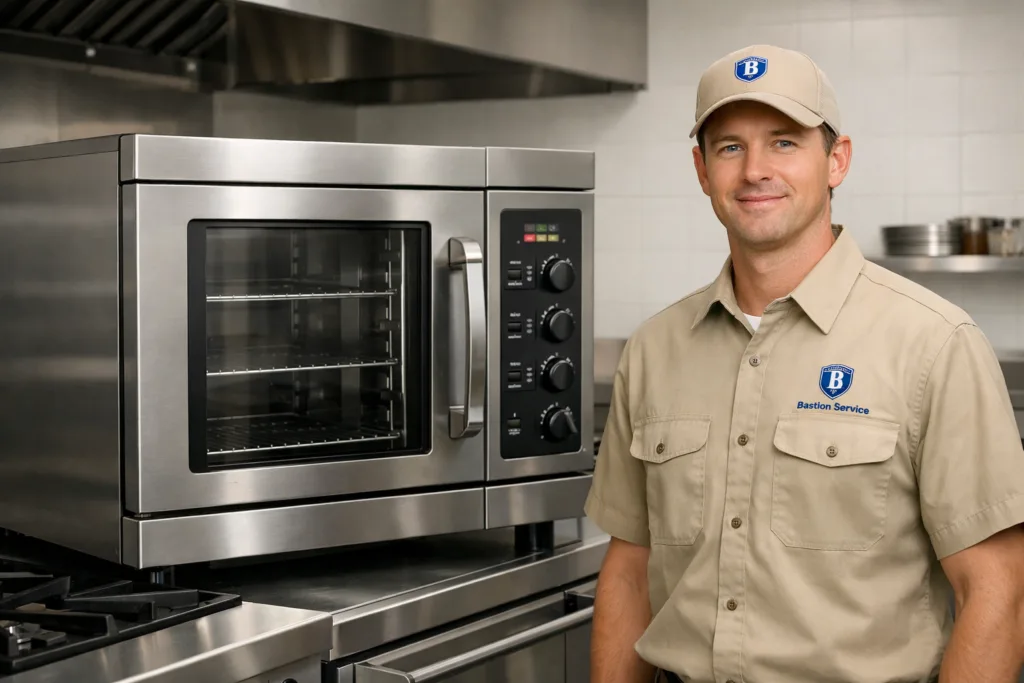




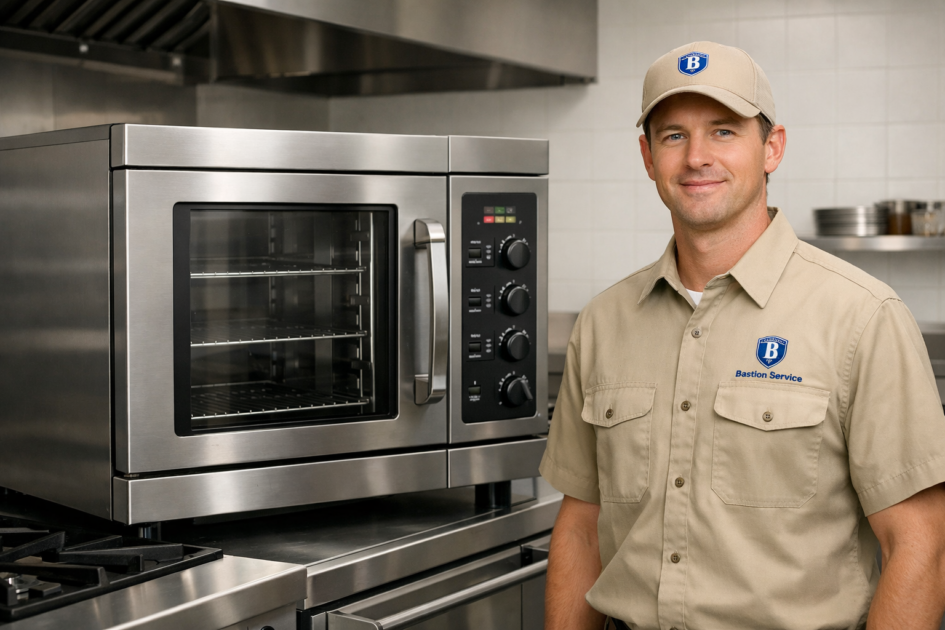
In a busy kitchen, oven trouble quickly affects ticket times, batch consistency, labor flow, and food safety. Similar symptoms can come from very different faults, including sensors, controls, ignition components, heating elements, airflow restrictions, door sealing problems, or incoming power issues. The value of service is in identifying the actual failure before downtime stretches longer or parts are replaced without solving the root cause.
Related commercial equipment paths in Culver City include Blodgett Oven Repair in Culver City and Southbend Oven Repair in Culver City.
Common commercial oven problems and what they may indicate
Temperature drift or poor heat accuracy
If products are coming out underdone, overbrowned, or inconsistent from one load to the next, the issue may involve a temperature sensor, thermostat calibration, control response, weak heating components, or airflow disruption. In high-volume operations, even modest temperature error can affect quality across an entire shift and force staff to compensate in ways that slow production.
Uneven cooking or hot and cold zones
Uneven results often point to circulation problems, weakened elements, burner performance issues, damaged door gaskets, or doors that no longer seal correctly. In convection equipment, fan-related faults can be just as disruptive as a direct heating failure. Continued use may seem manageable for a while, but it often increases waste and makes it harder to maintain consistent output.
Slow preheat or failure to reach set temperature
An oven that preheats slowly or struggles to recover between cycles may have an ignition problem, a partially failed element, a sensor error, a voltage issue, or a control fault. In commercial settings, that slowdown affects more than one menu item. It can bottleneck prep, reduce throughput, and create pressure on surrounding stations during peak service.
Oven not heating at all
A complete loss of heat can result from failed relays, safety devices, igniters, valves, elements, wiring damage, or control failure, as well as supply issues feeding the unit. If the oven is not heating, tripping protection, or showing error codes, it is usually best to stop using it until the cause is confirmed. Repeated restart attempts can worsen electrical damage and make intermittent faults harder to trace.
Door, hinge, and seal problems
Not every repair call starts with a no-heat complaint. Doors that do not close properly, worn gaskets, loose handles, and hinge wear can all reduce temperature stability and lengthen cook times. These are easy problems to work around during a rush, but they often raise energy use and make underlying heating complaints appear worse.
When service should move up the priority list
Schedule service when you notice recurring temperature inconsistency, unusual shutdowns, visible wiring or component wear, unreliable ignition, or a pattern that is forcing staff to rotate pans, extend cook times, or avoid certain racks. Once the kitchen starts building workarounds around a piece of equipment, the oven is no longer performing normally.
Continued use can increase damage when the unit overheats, fails to cycle correctly, runs with compromised door seals, shows signs of electrical burning, or drops in and out under load. Smaller control and sensor issues often become larger failures when the oven is pushed through full production demand day after day.
If there is a persistent or strong gas smell, stop using the appliance and follow emergency safety procedures before arranging repair. If the symptom is repeated clicking without a gas odor, the problem may be ignition-related and should still be diagnosed before the unit returns to normal kitchen use. If similar ignition and heat-output issues are affecting open-oil cooking equipment too, Commercial Fryer Repair in Culver City may be the better service path for that unit.
Repair versus replacement considerations
Replacement becomes more relevant when the oven has repeated major failures, poor parts availability, chronic temperature instability, or repair costs that no longer make sense relative to the unit’s age and operating condition. Repair is often the practical choice when the fault is isolated, the equipment still fits the kitchen workflow, and restoring stable heat control will return the unit to productive service.
For many Culver City businesses, the right decision depends on whether the current issue is a one-time failure or part of a larger pattern. It also depends on how much downtime the operation can absorb and whether the oven will still support production needs once the underlying problem is corrected.
How oven problems affect the rest of the line
Commercial oven failures rarely stay confined to one station for long. When baking, roasting, holding, or finishing capacity drops, the pressure shifts to prep timing, plating flow, and nearby cooking equipment. Looking at the full line helps determine whether the problem is isolated to the oven or part of a broader heat, control, or electrical issue affecting kitchen reliability.
What a useful service visit should clarify
A productive assessment should identify the failed system, explain whether continued operation risks more damage, and outline the most sensible next step for uptime. For commercial ovens, that usually means checking heat generation, temperature accuracy, cycling behavior, controls, airflow, safety components, and the physical condition of doors, seals, and wiring. The goal is not a temporary return of heat, but stable performance that matches real kitchen demand in Culver City.