
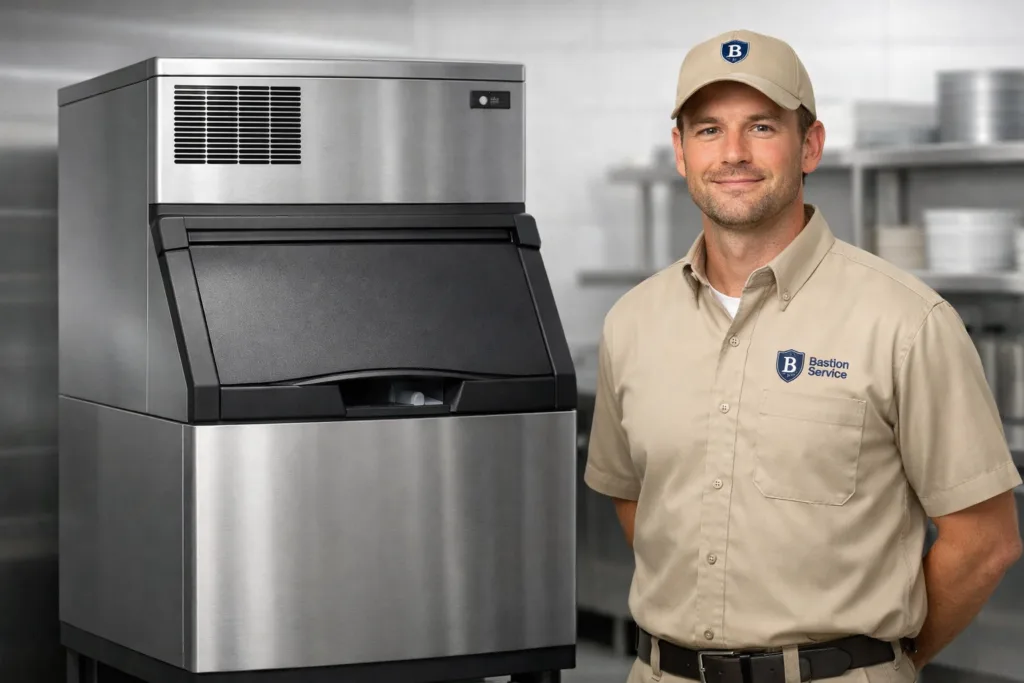




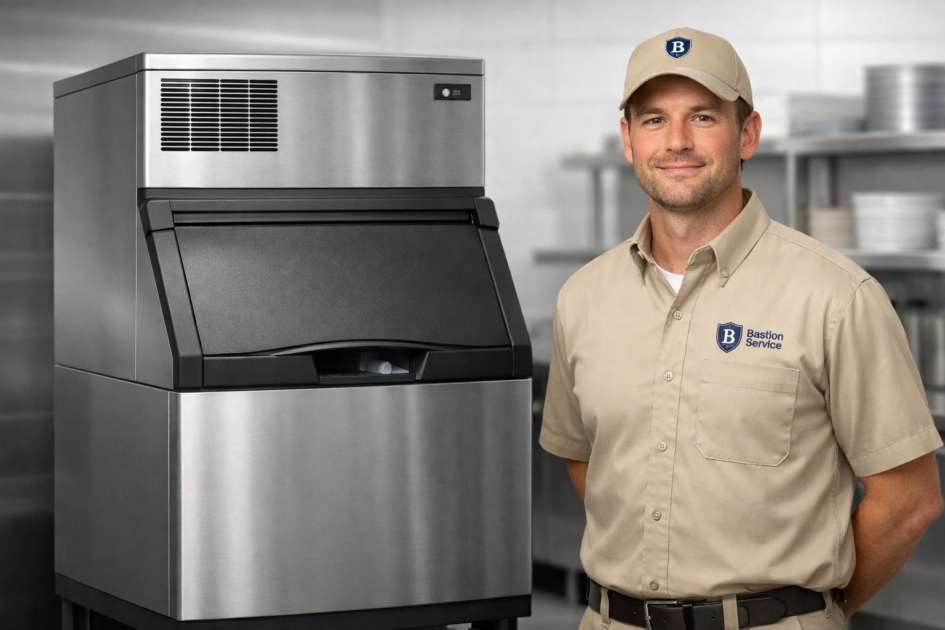
Ice machine problems tend to show up first as workflow problems. A restaurant may run short during service, a bar may notice slower recovery between rushes, or a healthcare or office setting may find the bin no longer keeping up with normal daily demand. In Fairfax, those symptoms often need more than a quick parts assumption because water flow, freeze timing, drainage, scale buildup, airflow, and refrigeration performance can all affect how the machine produces and harvests ice.
Related commercial equipment paths in Fairfax include Hoshizaki Ice Machine Repair in Fairfax.
Common commercial ice machine issues that disrupt operations
Many units do not fail all at once. Instead, production drops gradually, ice forms smaller than normal, cubes come out soft or hollow, or the machine runs through cycles without filling the bin as expected. Those patterns can point to restricted water supply, clogged filtration, mineral accumulation on internal surfaces, sensor issues, or trouble in the refrigeration section that prevents consistent freezing.
Leaks and overflow are another common reason businesses call for service. Water around the machine may come from a blocked drain, loose line, float-related problem, damaged inlet component, or an internal freeze pattern that is no longer releasing ice correctly. If the machine is producing cloudy, misshapen, or clumped ice, the root cause may involve water quality, circulation, or inconsistent harvest rather than a simple cosmetic issue.
Shutdowns, noise, and slow recovery
Buzzing, grinding, rattling, or repeated clicking can indicate a worn pump, fan issue, loose internal hardware, compressor strain, or obstruction from ice buildup. Intermittent shutdowns are especially important in commercial settings because they may only appear during peak demand, after longer run times, or when condenser airflow is restricted. A machine that restarts on its own is not necessarily healthy; it may be operating on the edge of a more serious failure.
When the problem may not be isolated to the ice machine
Commercial ice machines depend on stable operating conditions around them. If nearby equipment is running hot, ventilation is poor, or the surrounding cold-side line is already struggling, the ice machine may show symptoms that overlap with other refrigeration equipment. If cooling problems are centered in the freezer compartment or there is heavy frost affecting nearby stored product, Commercial Freezer Repair in Fairfax may be the better service path.
In other cases, staff may assume the ice machine is at fault when the broader issue involves temperature instability elsewhere in the kitchen or prep area. If product cooling, door sweating, or erratic cabinet temperatures are showing up in reach-ins at the same time, Commercial Refrigerator Repair in Fairfax may be more relevant while the ice machine symptoms are being evaluated alongside the rest of the refrigeration load.
Why a proper diagnosis matters before approving repair
Commercial ice machines combine water delivery, drainage, electrical controls, and sealed-system refrigeration. Because those systems overlap, one symptom can have several possible causes. Low production might come from scale, a valve issue, poor airflow, a control fault, or a refrigeration problem. Replacing the wrong component can add cost while leaving the machine unreliable.
A useful service call should separate maintenance-related issues from actual component failure and identify whether the machine is safe to keep operating in the meantime. That is especially important when businesses are compensating with bagged ice, changing prep routines, or assigning staff to watch the machine during the day. Once labor and downtime are part of the equation, the problem is no longer minor.
Signs service should be scheduled promptly
- Ice production no longer keeps up with normal business demand
- The machine runs constantly but output stays low
- Water is pooling near the unit or the drain is backing up
- Ice is clumping, melting together, or coming out irregularly
- The machine freezes up, then stops harvesting properly
- The unit starts and stops without a clear reason
- Staff notice unusual heat, vibration, or persistent noise
Delaying service can turn a manageable repair into a larger interruption. Scale can worsen, water overflow can create sanitation concerns, and repeated strain on pumps, motors, and refrigeration components can shorten the life of the unit. For businesses that rely on steady beverage service or food-safe holding routines, even a partial production problem can become expensive faster than expected.
Repair versus replacement for commercial ice equipment
Not every failing machine needs to be replaced. Many units can return to stable service when the issue is limited to a pump, valve, sensor, drain problem, motor, control component, or isolated refrigeration fault. Repair is often the practical option when the cabinet and major structure are still sound and the machine has otherwise been meeting demand.
Replacement becomes a more serious discussion when corrosion is advanced, breakdowns are recurring, repair costs keep stacking up, or the machine no longer matches the business’s output needs even when operating correctly. Age alone does not decide the issue. What matters more is whether the equipment can return to dependable daily use without continued disruption.
What businesses should expect from commercial service
Good service guidance should explain what failed, what secondary wear is present, and whether continued operation risks more damage. It should also clarify whether cleaning, water quality, airflow, or surrounding equipment conditions are contributing to the problem. That gives managers a realistic basis for deciding between immediate repair, additional corrective work, or replacement planning.
For Fairfax businesses, the goal is not just to get the machine running for a few hours. The goal is to restore consistent ice production that supports daily operations, sanitation expectations, and staff efficiency without ongoing uncertainty.


