
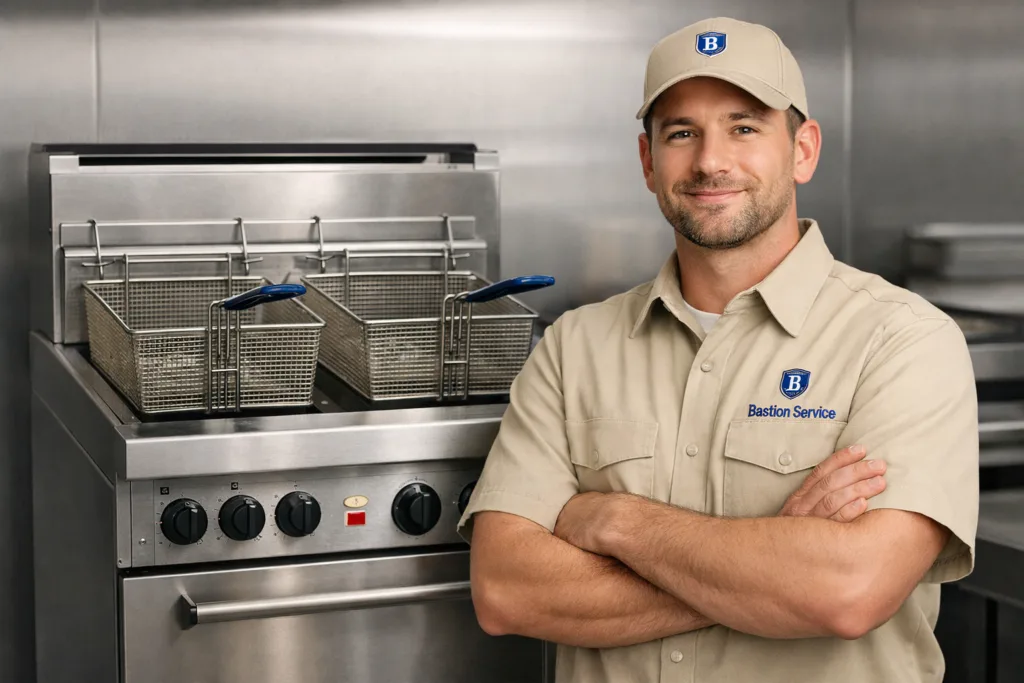




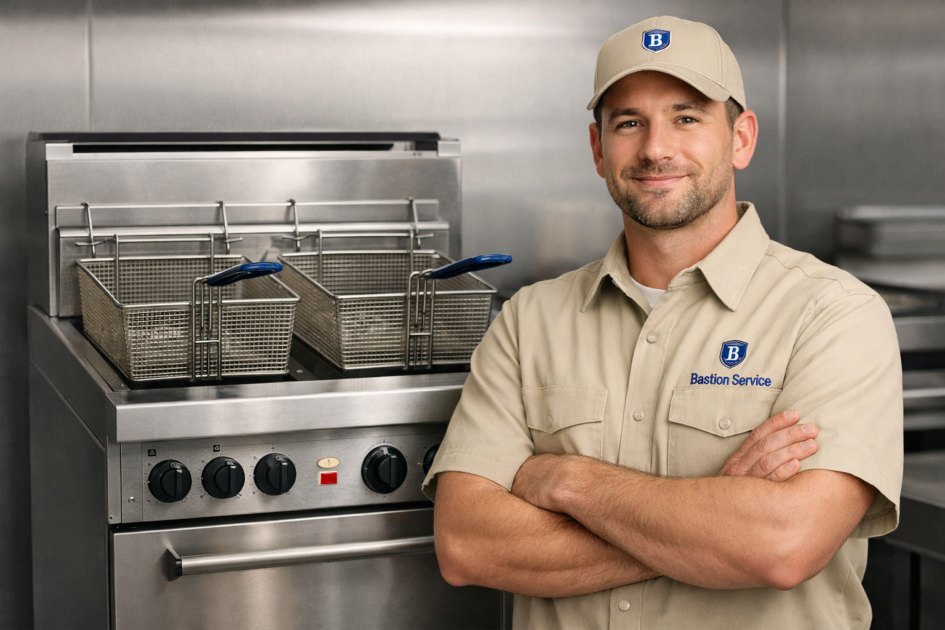
Fryer problems tend to escalate fast in busy kitchens. When a Wolf unit starts missing temperature, recovering slowly, or shutting down during production, the priority is figuring out whether the fault is tied to ignition, heat control, safety protection, oil temperature sensing, or a broader electrical or gas-related issue. Bastion Service works with businesses in Sawtelle to inspect the symptom pattern, narrow down the failure, and schedule repair around the operational impact of the equipment being down.
Related commercial service paths in Sawtelle include Wolf Commercial Repair in Sawtelle, Commercial Fryer Repair in Sawtelle, and Wolf Oven Repair in Sawtelle.
Service is most effective when the complaint is specific. A fryer that will not heat at all requires a different approach than one that heats but drifts, overheats, or fails only after extended use. That is why symptom-based testing matters before parts are ordered or replacement is considered. Good repair planning helps reduce repeat visits, avoids unnecessary component swaps, and gives staff a clearer idea of whether the unit can stay in limited use or should be taken out of operation until repairs are completed.
Common Wolf fryer symptoms that usually need service
No heat or failure to ignite
If the fryer does not start heating, the problem may involve ignition components, gas flow, electrical supply, safety cutoffs, or the control system. In day-to-day operation, this often shows up as a cold vat at opening, repeated start attempts, or a unit that appears to power on but never begins normal heat production. Because several different failures can create the same complaint, direct testing is more useful than guessing based on one visible symptom.
Slow recovery during rush periods
A fryer that eventually heats but cannot recover between batches can disrupt output even when it never fully shuts down. Slow recovery may point to a weakened heating process, a sensor reading issue, a burner problem, control response faults, or buildup affecting performance. Kitchens usually notice this as longer cook times, inconsistent product color, or staff needing to wait between loads when the fryer should be keeping pace.
Oil temperature swings
When oil temperature overshoots, drops too far, or fails to hold near the set point, food quality becomes less predictable. This type of issue can come from sensor drift, thermostat or control faults, intermittent heating behavior, or safety-related interruptions that stop the fryer from cycling normally. Even if the unit still runs, unstable temperature control is a repair issue because it affects consistency and can put extra strain on components.
Unexpected shutdowns or safety trips
If the fryer cuts out mid-cycle, locks out, or requires repeated resets, the cause may involve the high-limit circuit, ventilation-related operating conditions, flame sensing, control faults, or intermittent power problems. A shutdown pattern should not be treated as a minor nuisance. Repeat trips usually indicate that the fryer is detecting an unsafe or abnormal condition, and continued use without diagnosis can lead to longer outages later.
Burner irregularities or uneven heating behavior
Burner-related problems do not always present as total failure. Some units show delayed ignition, short cycling, weak flame behavior, inconsistent heat output, or symptoms that appear only after the fryer has been running for a while. In service calls, these details matter because they help separate a simple single-component fault from a condition affecting multiple parts of the heating system.
Control and display faults
Unresponsive controls, error indications, inconsistent setpoint behavior, or a fryer that does not follow programmed settings can all point to an interface or control-board issue. Sometimes the display is only part of the story, and the real fault is tied to communication, sensing, or power instability. When operators start making repeated manual adjustments to compensate, it is usually time to schedule inspection rather than keep working around the problem.
Why a symptom-based diagnosis matters
Two fryers can show the same complaint for completely different reasons. “Not heating properly” could mean an ignition failure, a control issue, a high-limit interruption, a sensor problem, or a condition that only appears under load. “Temperature swings” might come from an inaccurate reading, a cycling problem, or a component that behaves normally during startup but fails later in the shift.
That overlap is why proper diagnosis should focus on the exact sequence of events. Useful details include whether the fryer fails from a cold start, after several batches, only at higher temperature settings, or only intermittently. A repair decision becomes much more accurate when the service process matches the actual behavior of the unit instead of assuming every heating complaint has the same cause.
Signs the fryer should be serviced sooner rather than later
- The fryer takes noticeably longer to reach cooking temperature.
- Recovery time keeps getting worse during normal production.
- Oil temperature is inconsistent enough to affect food quality.
- The unit shuts off, locks out, or trips safety protection more than once.
- Ignition is delayed, inconsistent, or unreliable.
- Controls do not respond normally or settings do not hold.
- Staff are adjusting procedures just to keep output moving.
These problems rarely improve on their own. A fryer may continue to operate for a period, but once performance becomes unpredictable, the risk is not just downtime. It also affects timing, product consistency, staffing flow, and the ability to plan around a service window before the unit becomes fully unavailable.
How businesses in Sawtelle can prepare for a fryer repair visit
A little preparation can make the appointment more productive. If possible, note whether the problem happens at startup, during heavy use, after filtration, after cleaning, or at random points in the day. Record any display messages, reset behavior, temperature differences, or shutdown timing. If the fryer works sometimes and fails other times, that pattern is often one of the most helpful clues.
It also helps to let service know whether the issue affects one fryer or multiple units, whether the problem appeared suddenly or developed gradually, and whether any recent changes were made to operation or cleaning routines. For kitchens in Sawtelle trying to minimize disruption, this kind of information can improve troubleshooting efficiency and help set expectations for urgency, parts needs, and return-to-service timing.
When continued use can create bigger problems
Some fryer issues are inconvenient but manageable for a short period. Others should be addressed immediately. If the unit overheats, repeatedly trips a safety limit, leaks, shuts down without warning, or shows unstable control behavior, continued use can increase the chance of additional damage. Intermittent problems are especially risky because they often become more severe during the busiest part of the day.
There is also a business cost to delay. A fryer that is still technically operating may already be affecting output enough to justify scheduled repair now rather than waiting for a complete failure. Early service is often the more efficient choice when the pattern suggests a developing fault rather than a one-time anomaly.
Repair or replacement: how to think about the decision
Many Wolf fryer problems are repairable when the issue is isolated and the rest of the unit remains in solid condition. A targeted repair often makes sense when the fryer otherwise fits the kitchen’s production needs and has not developed a pattern of recurring breakdowns across multiple systems.
Replacement becomes a more serious consideration when the fryer has ongoing reliability issues, repeated shutdowns after recent repairs, significant wear in multiple areas, or downtime costs that outweigh the value of another major repair. The right decision depends less on age alone and more on overall condition, failure history, and how critical the fryer is to daily service.
What effective Wolf fryer service should accomplish
A good repair visit should do more than identify a failed part. It should connect the reported symptoms to the actual fault, confirm whether there are related issues contributing to the failure, and help the business decide what comes next. That may mean immediate repair, ordering parts, planning a return visit, or taking the fryer offline until the cause of unsafe or unstable operation is resolved.
For kitchens in Sawtelle, the goal is not just to get the fryer running for the moment. It is to restore stable heating, consistent recovery, and predictable operation so staff can work without constant adjustments, surprise shutdowns, or uncertainty about whether the unit will hold through the next service period.
If your Wolf fryer is showing no-heat symptoms, ignition trouble, slow recovery, temperature swings, control faults, or repeated shutdowns, scheduling service based on those exact symptoms is usually the fastest path to a workable repair plan. A focused inspection helps determine the cause, the urgency, and the most practical next step before downtime spreads further into the kitchen.


