
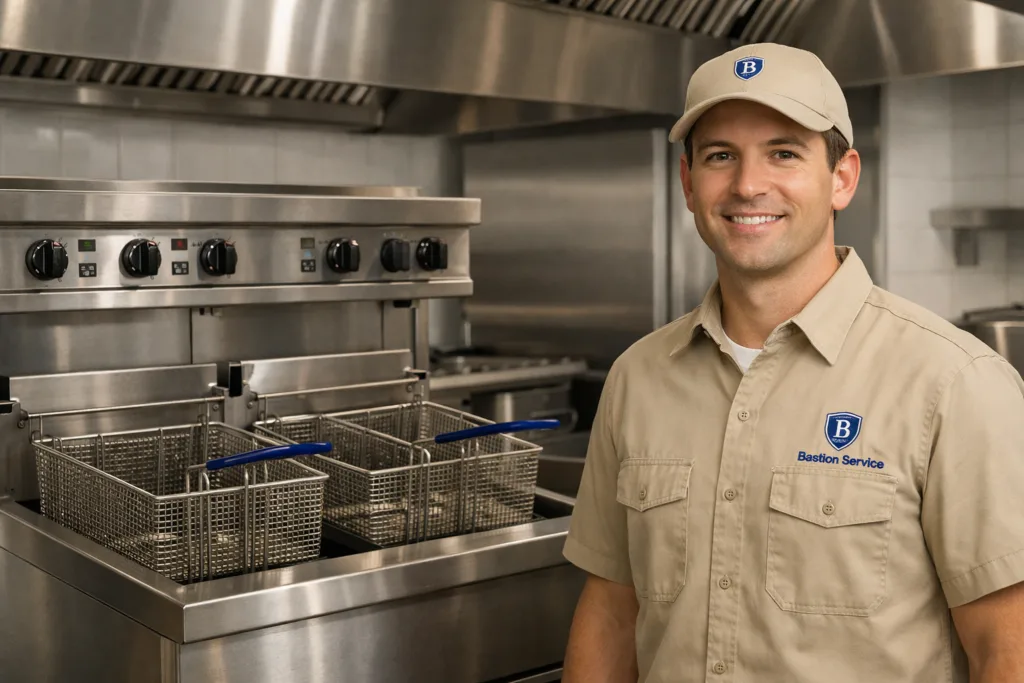




Fryer problems tend to show up first in production metrics: longer ticket times, uneven color, slower batch recovery, and extra labor spent adjusting around a unit that is no longer performing as expected. What matters most at that stage is separating a heating fault from a control issue, ignition problem, airflow restriction, or oil-related performance issue, because similar kitchen symptoms can come from very different equipment failures.
Related commercial equipment paths in Palms include Frymaster Fryer Repair in Palms and Pitco Fryer Repair in Palms.
Common fryer symptoms and what they can mean
A fryer that will not heat, heats too slowly, or struggles to recover after baskets are dropped may have failing heating elements, burner ignition trouble, sensor drift, control board problems, or a tripped safety limit. In some cases, the fryer is technically running but no longer producing enough usable heat to keep up with service, which is why recovery time is just as important as whether the unit powers on.
Temperature swings are another major warning sign. If oil runs hotter than the set point, drops too far during normal cooking, or produces inconsistent results from one cycle to the next, the issue may involve the thermostat, probe, control calibration, contactors, gas valve behavior, or restricted heat transfer caused by buildup. These problems affect food quality quickly and can also shorten oil life.
Leaks, unusual odors, repeated shutdowns, delayed ignition, and recurring error codes should be treated as operational concerns rather than minor nuisances. Oil leaks can create safety hazards, while intermittent shutdowns often point to an unresolved fault that may worsen during peak demand. If the symptom involves burner heat and oven temperature performance elsewhere on the line at the same time, Commercial Oven Repair in Palms may be the better service path for that equipment.
Signs the fryer should be serviced sooner rather than later
Businesses often wait until the fryer is fully down, but the more useful point to schedule service is when the pattern becomes repeatable. Slow preheat, inconsistent cook times, product finishing too dark or too pale, high-limit trips, ignition retries, and controls that stop responding predictably are all early indicators that the unit is moving toward a larger failure.
That matters in a commercial setting because partial operation can be misleading. A fryer that still turns on may still be unsafe or unreliable to use through a rush if temperature control is unstable or the heating cycle is interrupted under load. Continuing to operate the unit can increase wear on other components and turn a shorter repair into a longer interruption.
How fryer issues affect kitchen workflow
In Palms, fryer performance is closely tied to output, timing, and consistency across the hot line. When one fryer lags, staff may crowd another unit, adjust cook times manually, or hold product longer than intended. Those workarounds can lower consistency and put pressure on adjacent equipment, especially in kitchens that depend on synchronized cooking capacity during busy periods.
Even when the fault seems isolated, the business impact usually extends beyond one appliance. Slower recovery affects batch planning, labor pacing, and the ability to keep menu items moving without compromise. That is why symptom-based troubleshooting is more useful than simply confirming that the fryer has power or flame.
What a commercial fryer diagnosis should include
A thorough assessment should look at the full operating sequence: startup behavior, ignition or element response, heat-up time, temperature accuracy, recovery under load, safety cutoffs, visible wear, and any signs that oil contamination or residue buildup is interfering with normal performance. For multi-vat equipment, each section should be evaluated on its own because one side may fail differently from the other.
Good service notes also depend on what the kitchen has observed. It helps to document whether the unit fails cold or after extended use, whether the problem appears every cycle or only during rush periods, whether the display shows fault codes, and whether food quality changed before the equipment issue became obvious. Those details can help narrow down whether the root cause is in sensing, heating, controls, or fuel delivery.
Repair versus replacement
Repair is often the practical choice when the fault is isolated and the fryer still fits current production needs. Replacement becomes more likely when failures are stacking up, previous repairs have not restored stable temperature control, or the unit no longer supports the volume the kitchen needs to maintain. Age matters, but repeat disruption and unreliable performance usually matter more.
The real decision is whether the fryer can return to steady, predictable operation without causing ongoing downtime, wasted oil, or repeated service interruptions. For most commercial kitchens, restoring consistent heat, recovery, and control behavior is the benchmark that matters most.


