





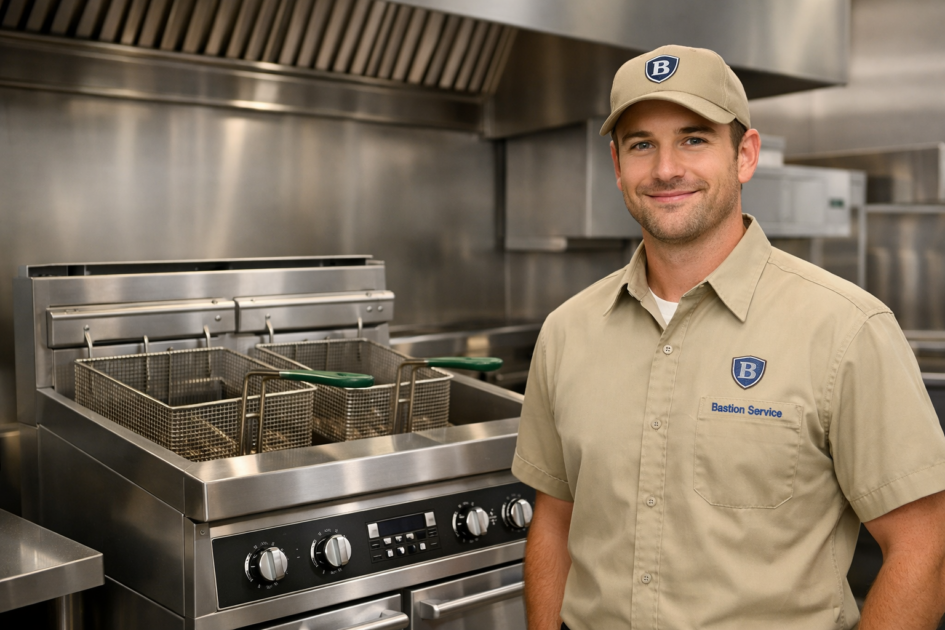
In a busy Mar Vista kitchen, fryer trouble can disrupt prep timing, product consistency, and order flow within a single service window. The fastest way to reduce downtime is to identify whether the problem is tied to heat production, temperature sensing, controls, gas ignition, electrical supply, or oil-management issues rather than guessing from the symptom alone.
Related commercial equipment paths in Mar Vista include Frymaster Fryer Repair in Mar Vista and Pitco Fryer Repair in Mar Vista.
Common fryer symptoms and what they often point to
Commercial fryers usually show warning signs before a complete breakdown. Slow heat-up, weak recovery between batches, failure to hold set temperature, sudden shutdowns, error codes, unusual cycling, ignition failure, and oil leaks can all indicate different underlying faults. Depending on the unit type, the cause may involve heating elements, contactors, thermostats, high-limit devices, probes, ignition assemblies, gas valves, wiring, control boards, or restricted filtration components.
Uneven cooking results are also worth taking seriously. If one batch comes out pale and the next comes out too dark under the same settings, the issue may be poor temperature regulation rather than food handling. That matters for both food quality and oil life, especially in operations that depend on predictable output through rush periods.
Heating and temperature-control problems
Slow preheat and weak recovery
When a fryer takes too long to reach operating temperature or struggles to recover after baskets are dropped, production can slow down fast. Common causes include weakened heating components, failing relays, sensor drift, burner performance issues, scale or debris affecting heat transfer, or controls that are no longer responding accurately under load.
If the symptom involves burner heat and oven temperature issues elsewhere on the hot line at the same time, Commercial Oven Repair in Mar Vista may be the better service path for that separate cooking equipment problem.
Overshooting or unstable oil temperature
Oil temperature that rises above the set point or swings up and down can create inconsistent product and accelerate oil breakdown. In many cases, this points to thermostat failure, probe inaccuracy, control-board problems, or a high-limit issue that is no longer operating normally. Temperature instability should be addressed promptly because continued use can affect safety controls and product quality at the same time.
Ignition, burner, and power-related issues
Gas fryers may fail to ignite, light inconsistently, or show delayed burner ignition. Electric fryers may appear powered on but fail to produce enough heat. Those symptoms often involve igniters, flame sensing components, gas valves, safety switches, contactors, terminal connections, wiring faults, or incoming power problems. A fryer that starts and stops unpredictably can be especially disruptive because it may appear usable until demand increases.
If there is a strong gas odor or any sign of unsafe gas release, stop using the appliance immediately and follow building safety procedures before scheduling equipment repair. For electrical units, repeated breaker trips or visible heat damage around wiring should also be treated as urgent conditions.
Leaks, shutdowns, and signs of escalating wear
Oil where it should not be, intermittent lockouts, damaged controls, and repeated manual resets are all signs that a fryer may be moving from a manageable repair into a larger operational problem. Leaks can create cleanup and safety concerns, while recurring shutdowns often indicate that a protective device is responding to a deeper fault rather than failing on its own.
Busy kitchens sometimes keep using a fryer that still works part of the time, but that can make the eventual repair more involved. A unit that overheats, trips a high-limit repeatedly, or cannot hold steady operation through a shift should be checked before it affects surrounding equipment, staff workflow, and service speed.
Why diagnosis matters before approving repair
Many fryer complaints sound similar on the surface but do not have the same fix. “Not heating right” might mean a failed element, a gas-flow problem, a bad probe, an inaccurate controller, poor electrical supply, or a combination of wear-related issues. Replacing one visible part without confirming the full cause can lead to repeat downtime and unnecessary expense.
A proper evaluation helps businesses understand whether the failure is isolated, whether additional components show wear, and whether the unit is likely to return to stable service after repair. That information is especially important for restaurants, cafeterias, and foodservice operations trying to plan staffing, menu capacity, and equipment backup during a disruption.
Repair or replacement considerations
Whether repair makes sense usually depends on the age of the fryer, the condition of the cabinet and tank, the extent of corrosion or leakage, the severity of the current fault, and how often the unit has needed service recently. A targeted repair is often worthwhile when the problem is limited to controls, ignition parts, heating components, or other replaceable systems and the rest of the machine remains in solid working condition.
Replacement becomes more likely when structural wear is advanced, oil leakage is significant, multiple major components are failing together, or downtime has become too costly for the operation. For commercial kitchens in Mar Vista, the best decision is usually the one that balances immediate repair cost against reliability during daily service.
What businesses should note before service
- Whether the fryer fails consistently or only during peak demand
- If the problem affects one vat or multiple sections
- Any recent error codes, resets, or breaker trips
- Whether the oil temperature runs low, high, or fluctuates
- Any ignition delays, burner irregularities, or unusual smells
- Visible leaks, overheating marks, or damaged controls
Those details can help narrow down the source of the issue and make service planning more efficient, especially when uptime matters to the day’s production schedule.
Commercial fryer service needs in Mar Vista
For local foodservice operations, fryer problems are rarely just equipment problems; they affect ticket pace, holding times, food consistency, and labor flow. A focused repair approach should determine what failed, what risk remains if the fryer stays in use, and whether the unit can reasonably be returned to dependable operation without creating repeat interruptions.


