
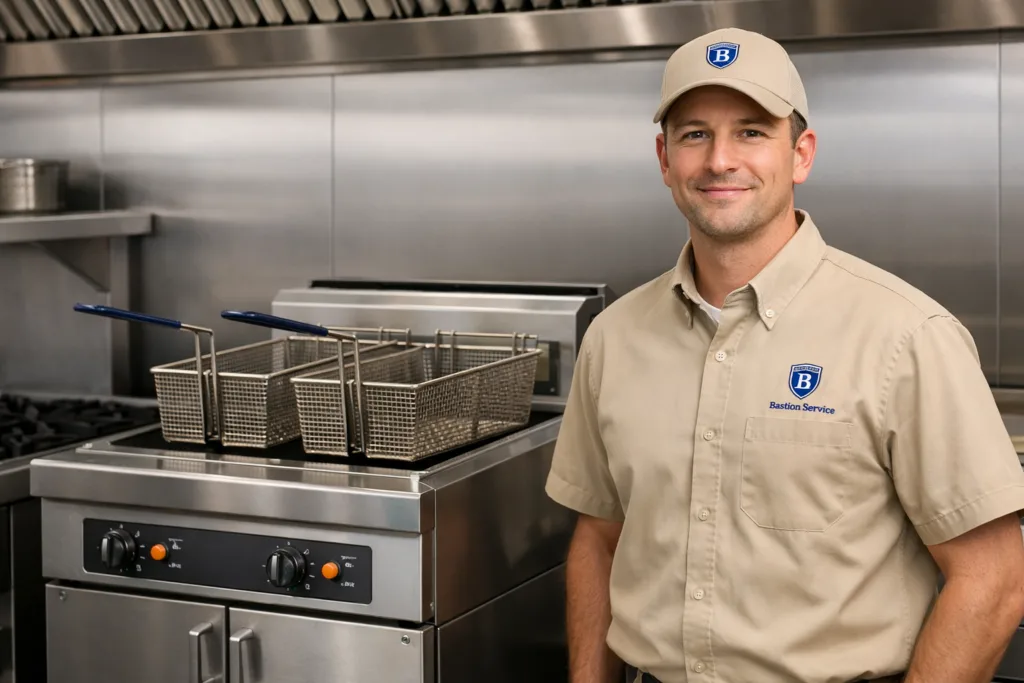




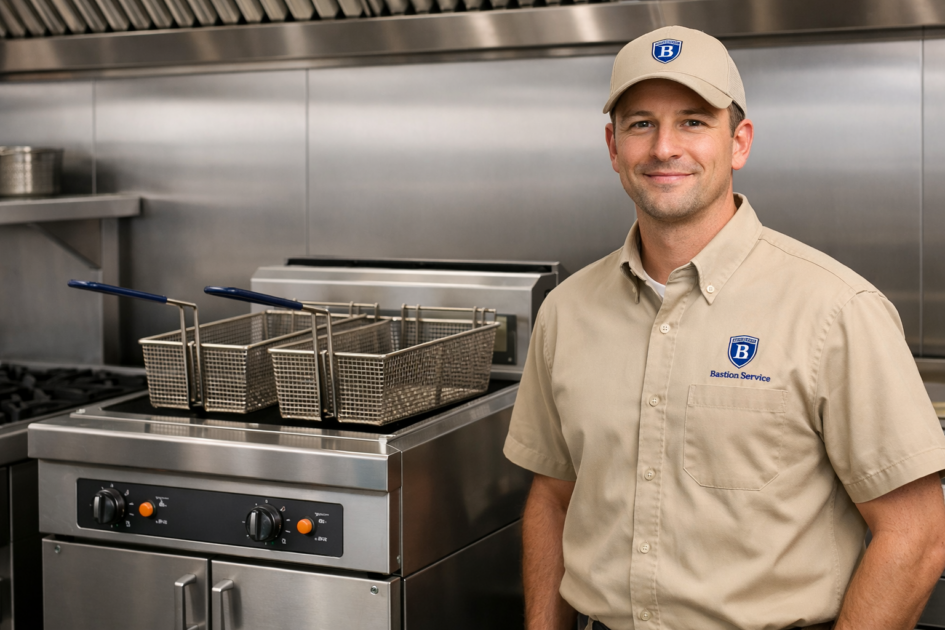
Fryer problems can disrupt output quickly in a busy Hawthorne kitchen, especially when oil temperature becomes unreliable or the unit drops out during service. Similar symptoms can come from very different causes, including thermostat drift, probe failure, ignition faults, high-limit trips, control issues, wiring problems, or fuel-delivery interruptions, so the most useful next step is usually a diagnosis based on how the unit behaves under normal operating load.
Related commercial equipment paths in Hawthorne include Frymaster Fryer Repair in Hawthorne and Pitco Fryer Repair in Hawthorne.
Common fryer problems and what they can indicate
Heating complaints are among the most common service calls. When a fryer will not reach set temperature, overshoots, cycles unpredictably, or recovers too slowly between baskets, the fault may involve the temperature sensor, thermostat, heating elements, gas valve, contactor, or airflow conditions depending on the equipment type. In commercial use, inconsistent heat affects cook times, food quality, and oil life at the same time.
Startup and ignition issues are another major category. A fryer that will not light, shuts down after ignition, or trips a safety control during operation may have a problem with flame sensing, ignition components, control boards, switches, or gas supply regulation. Repeated resets by staff may keep production moving for a short period, but they rarely solve the underlying issue and can make intermittent faults harder to track.
Oil leaks, smoke, unusual odors, and fault codes also deserve prompt attention. Leaks can point to drain-valve wear, loose fittings, or more serious tank-related concerns. Smoke and odor changes may reflect overheating, residue buildup, or combustion issues. Error codes can help narrow the fault path, but they still need to be matched to actual testing rather than assumed as a final diagnosis.
Symptoms that should not be ignored
Some fryer issues stay relatively stable for a short time, but others become more expensive when the unit remains in use. Overheating can damage controls and degrade oil faster. Slow recovery can reduce throughput during peak hours. Intermittent shutdowns can create workflow bottlenecks that affect the entire hot line, especially when one fryer is carrying more volume than usual.
Priority service is often warranted when recovery time gets noticeably longer, batches stop cooking evenly, staff need to change settings frequently, or the fryer behaves differently from one shift to the next. It also helps to note whether the failure happens at startup, after the unit has been hot for a while, or only during heavy production, because timing can reveal whether the issue is sensor-related, load-related, or tied to a safety circuit.
When nearby cooking equipment may be part of the issue review
In some kitchens, a fryer complaint comes up during a broader evaluation of the cooking line rather than as an isolated failure. If the symptom involves burner heat and oven temperature at the same time, Commercial Oven Repair in Hawthorne may be the better service path for that portion of the problem while the fryer receives its own separate diagnosis.
Repair versus replacement considerations
Many commercial fryer problems are repairable. Common fixes may involve controls, sensors, thermostats, ignition parts, switches, wiring, or heating components rather than full equipment replacement. Replacement becomes a more serious discussion when the unit has recurring failures, limited parts availability, severe structural wear, or tank damage that changes the cost equation.
For most operators, the decision comes down to reliability, downtime risk, and whether the repaired fryer can support expected volume without repeated interruptions. A unit that is repairable on paper may still be a poor long-term option if it has become unpredictable during busy service or if prior repairs have only restored short-term function.
What helps before service is scheduled
Useful details from staff can speed up troubleshooting. It helps to document the exact symptom, the set temperature, whether the fryer was cold or already at operating temperature when the issue appeared, any displayed error code, and whether the problem is constant or intermittent. Notes about recent cleaning, oil changes, or unusual shutdowns can also help narrow the cause.
For Hawthorne businesses, the goal is not just to get the fryer heating again for the next shift. It is to make a sound repair decision based on the actual fault, the condition of the equipment, and the level of uptime the kitchen needs day to day. That approach reduces repeat failures, unnecessary parts replacement, and disruptions that spread beyond a single piece of equipment.


