





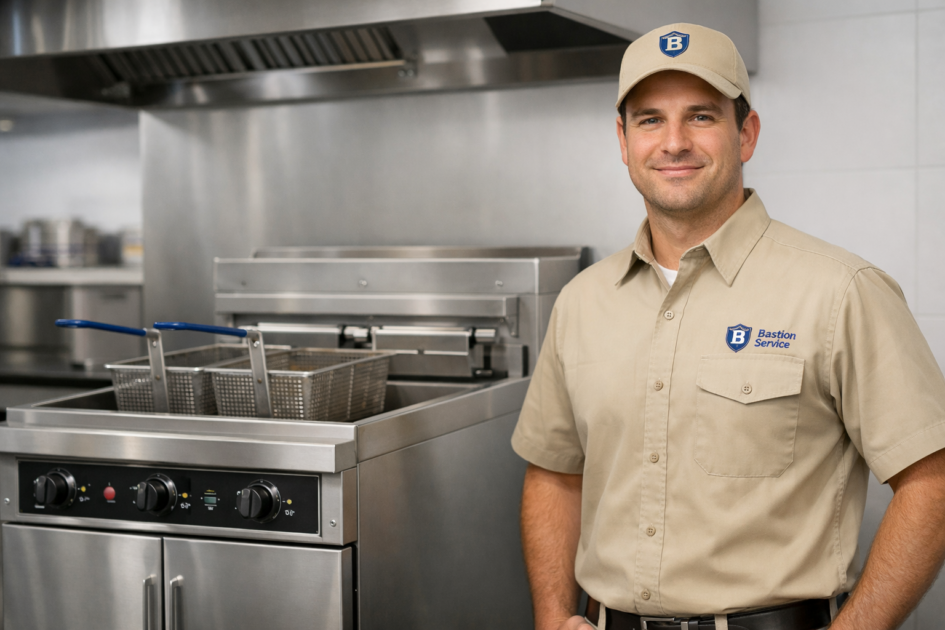
When a Pitco fryer starts missing temperature, cycling erratically, or dropping out during a rush, the priority is getting the unit properly evaluated so the next repair decision is based on what the fryer is actually doing under load. For businesses in Fairfax, that means looking at heat performance, ignition behavior, control response, safety shutoffs, and any recent changes in recovery time before parts are replaced or the unit is put back into full production.
Related commercial service paths in Fairfax include Pitco Commercial Repair in Fairfax, Commercial Fryer Repair in Fairfax, and Frymaster Fryer Repair in Fairfax.
Bastion Service works with Fairfax businesses that need Pitco fryer repair scheduled around real operating problems, whether the complaint is no heat, poor recovery, repeated shutdowns, or oil handling issues that are disrupting kitchen workflow.
Common Pitco Fryer Problems That Disrupt Service
Not heating or failing to reach set temperature
If the fryer powers on but the oil never reaches the programmed temperature, the fault may involve the temperature probe, thermostat function, high-limit circuit, ignition sequence, heating components, or the control system that manages heat calls. In day-to-day operation, this often shows up as delayed prep, undercooked product, or staff increasing cook time to compensate for oil that is running cooler than expected.
Slow recovery between batches
Slow recovery usually becomes obvious during busy periods. The fryer may preheat normally but struggle to return to temperature after each basket, causing longer ticket times and inconsistent output. This can point to burner performance issues, sensor drift, buildup affecting heat transfer, weak heating response, or controls that are not regulating properly once demand increases.
Oil temperature swings and uneven results
When the fryer overshoots, drops too far, or cannot maintain stable oil temperature, food quality tends to suffer first. Operators may notice darker product in one cycle, pale product in the next, or frequent setting changes by staff trying to keep production consistent. These symptoms often indicate a control or sensing issue rather than an operating error.
Ignition failure, burner problems, or intermittent flame
Gas Pitco fryers can develop ignition-related problems that cause delayed startup, burner dropout, repeated retries, or lockout conditions. Possible causes include flame sensing faults, ignition assembly wear, gas valve issues, airflow problems, or a safety circuit interrupting normal operation. Because these symptoms directly affect heating reliability, they should be tested instead of worked around.
Unexpected shutdowns or fault behavior
A fryer that runs for a while and then shuts down, resets, or enters a fault state without a clear pattern may have a heat-related electrical problem, unstable sensor reading, wiring issue, board fault, or safety component that is opening at the wrong time. Intermittent failures are especially important to address because they often become harder on production before they become easier to identify.
Leaks, drain valve issues, and filtration concerns
Oil around the drain area, trouble with the valve, poor filtration flow, or residue buildup can create both safety and maintenance problems. Some cases come down to worn seals or valve parts, while others involve debris, restriction, or damage that affects how the fryer operates during filtering and oil handling. Left alone, these issues can increase mess, waste oil, and add stress to nearby components.
Why a Symptom-Based Diagnosis Matters
Two Pitco fryers can show the same visible symptom for completely different reasons. A fryer that appears to have a bad controller may actually be reacting to an inaccurate temperature reading. A unit with weak heating may seem like it has a burner problem when the real cause is a safety component opening too soon. That is why symptom pattern matters: when the issue happens, whether it happens only under load, whether the fryer reaches temperature from cold start, and whether the fault repeats after restart all help narrow the repair path.
Testing should confirm how the fryer behaves rather than relying on guesswork. That helps businesses avoid spending money on parts that do not solve the root issue and reduces the chance of repeat downtime shortly after service.
Signs the Fryer Needs Service Soon
Scheduling service becomes more urgent when the fryer shows any of the following:
- Long preheat times or no heat
- Slow temperature recovery during busy periods
- Repeated ignition failure or burner dropout
- Oil temperature that runs too hot or too cool
- Controller irregularities, resets, or fault messages
- Leaks near the drain or problems during filtration
- Staff changing cook times to make up for poor performance
These are more than minor inconveniences. They usually mean the fryer is already affecting consistency, labor flow, and service speed.
What Staff Can Observe Before a Repair Visit
Good service preparation starts with a clear description of the symptom. If possible, note whether the fryer fails from a cold start or only after it has been running, whether the problem affects every batch or only heavier loads, and whether the unit shows any repeat shutdown pattern. It also helps to know if staff have noticed unusual odors, delayed ignition, unstable burner sound, inaccurate temperature display, or oil leaking during filtering or draining.
That information can make the visit more efficient because it helps focus testing on the system most likely to be causing the interruption.
When Continued Use Can Lead to Bigger Problems
Running a fryer that has unstable temperatures, lockouts, ignition trouble, or oil leaks can increase wear and create secondary failures. A unit that cycles improperly may place more strain on controls and safety devices. Inaccurate temperature control can shorten oil life and reduce product consistency. Leaks and valve problems can turn into cleanup hazards and add preventable downtime if they worsen during service hours.
If the fryer has become unpredictable, it is usually better to have it checked before the problem turns from a repairable interruption into a full outage.
Repair or Replace?
Repair is often the better option when the fryer cabinet and main structure are still in solid condition and the problem is limited to serviceable parts such as sensors, ignition components, valves, wiring, or controls. Replacement becomes a more serious consideration when there is broad wear across multiple systems, severe corrosion, chronic repeat breakdowns, or repair costs that no longer support reliable operation.
The right decision depends on equipment age, service history, parts condition, and how often the fryer is already disrupting production. A proper evaluation helps separate an isolated failure from a larger reliability problem.
What Businesses in Fairfax Should Expect From Service
A productive Pitco fryer repair visit should focus on verifying the complaint, isolating the fault, checking safety-related functions, and identifying whether the issue is confined to one component or connected to a wider operating problem. For kitchens that depend on consistent frying capacity, the goal is not simply getting the fryer to turn back on. The goal is restoring stable heat, normal recovery, and predictable performance so daily output is not tied to restarts, workarounds, or constant monitoring.
If your Pitco fryer in Fairfax is not heating, recovering slowly, shutting down, or showing signs of control or burner trouble, scheduling service early is usually the best way to limit downtime and move quickly toward a repair plan that fits the actual condition of the equipment.


