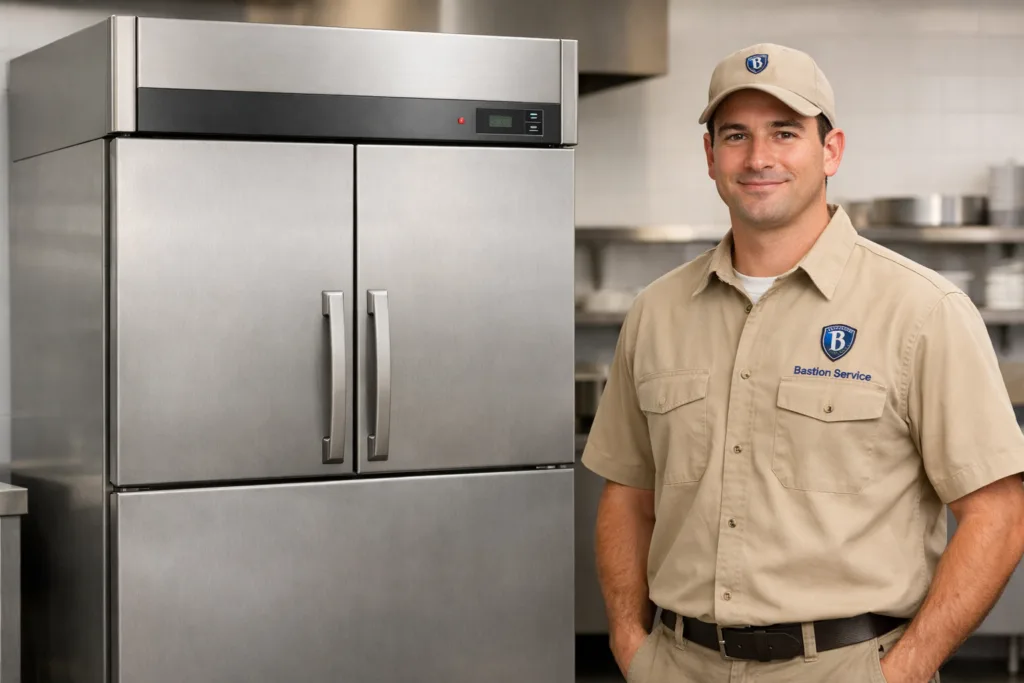




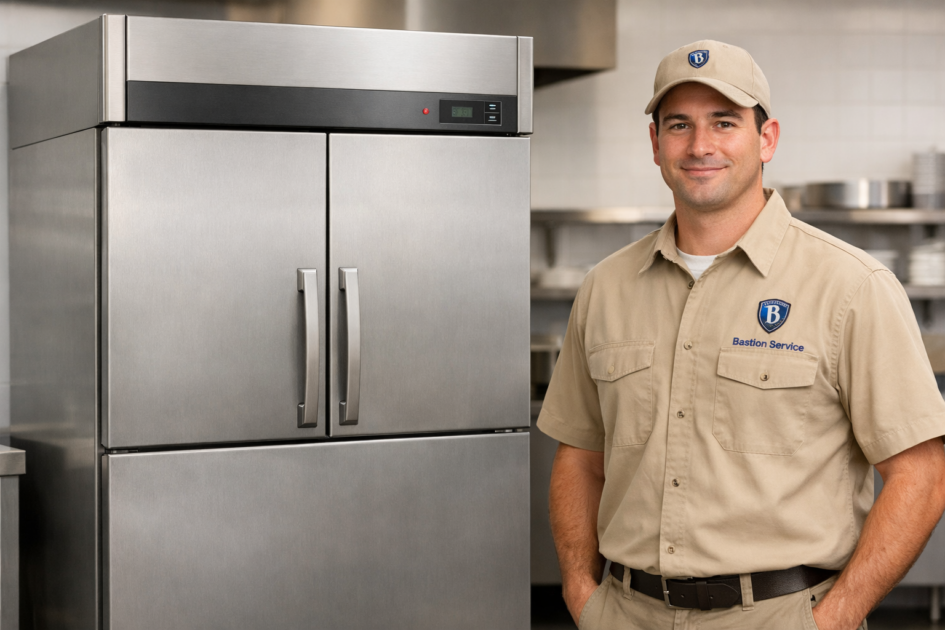
Commercial freezers tend to show trouble in patterns before they fail completely. A cabinet that drifts a few degrees during peak hours, develops frost on one wall, or needs extra time to recover after the door closes is already signaling that something in the cooling cycle, airflow path, or defrost system is under strain. For restaurants, markets, cafés, and other food-service operations in Playa Vista, catching those patterns early helps reduce product loss and avoid longer interruptions.
Related commercial equipment paths in Playa Vista include Beverage-Air Freezer Repair in Playa Vista.
Common commercial freezer problems and what they usually mean
Temperature instability is one of the most important warning signs. If the freezer cannot hold set temperature, the cause may be restricted airflow, dirty condenser coils, a weak evaporator fan, sensor error, door gasket leakage, or a defrost issue that is slowly choking off circulation. When temperatures swing between acceptable and unsafe, the problem is often more complex than a simple thermostat adjustment.
Frost buildup is another high-value diagnostic clue. Light frost after repeated door openings can happen in busy environments, but thick ice on interior panels, around the evaporator cover, or near the door frame usually points to excess moisture intrusion or a failed defrost component. As frost builds, airflow drops, run times get longer, and the freezer may appear to be running constantly without properly protecting inventory.
Noise should also be taken seriously when it appears alongside cooling complaints. Buzzing can suggest electrical or compressor-start issues, rattling may come from fan blades or loose panels, and grinding can indicate a failing motor. If water is collecting around the unit, the source may be a blocked drain, excess condensation, or melting ice caused by an uneven defrost cycle rather than a simple spill.
Symptoms that call for prompt service
A freezer that runs without reaching target temperature should be checked quickly, especially if product texture is changing, packaging is softening, or temperature alarms return after being cleared. The longer the unit operates under stress, the more likely it is that minor component failure will spread into compressor strain, icing, or control problems that are more expensive to resolve.
Repeated frost return after manual clearing is another sign not to wait. If ice reforms in the same area within a short period, the issue may involve the heater circuit, defrost timer or board, sensor readings, airflow blockage, or a door that is no longer sealing consistently. In commercial settings, that kind of repeat symptom usually means the underlying fault is active every day, even if performance seems temporarily better between service calls.
Breaker trips, hard starting, warm product near the door, and a fan that stops intermittently all justify service sooner rather than later. Documenting when the problem occurs, where frost appears, how long recovery takes, and whether the compressor sounds different during startup can make diagnosis more efficient and reduce unnecessary downtime.
Freezer airflow, frost, and recovery problems
Many business owners focus first on the temperature display, but airflow is often the bigger issue. A commercial freezer may show a reasonable number on the control while product in certain sections softens because cold air is not circulating correctly. Blocked evaporator passages, overloaded shelves, fan problems, and ice accumulation behind panels can all produce uneven storage conditions.
Slow recovery after door openings is especially important in busy kitchens and retail environments. If the cabinet takes too long to pull back down after loading, unloading, or normal service traffic, the freezer may be losing efficiency through poor sealing, inadequate airflow, or a refrigeration system that is no longer performing at full capacity. If cooling problems are affecting both chilled and frozen storage, Commercial Refrigerator Repair in Playa Vista may be more relevant for the broader refrigeration issue.
Freezers that hold overnight but struggle during active hours often have a performance problem that only shows up under real operating load. That can include dirty coils, weak fan motors, defrost faults, or heat exposure from surrounding equipment. Looking at the timing of the symptom is often just as useful as looking at the temperature itself.
Ice production and water-line symptoms can point elsewhere
Not every complaint around a freezer starts with the freezer section itself. If the main issue is low ice output, irregular cube formation, dispenser problems, or repeated water-fill concerns, the fault may be centered in dedicated ice-making equipment rather than frozen storage. When the symptom is primarily about harvest, fill, or ice supply, Commercial Ice Machine Repair in Playa Vista may be the better service path.
That distinction matters because businesses sometimes describe all cold-equipment issues as freezer problems when the real failure involves a separate appliance, a water valve, or an ice-system control component. Separating storage-temperature issues from ice-production issues can prevent misdirected repairs and help restore normal workflow faster.
Repair versus replacement in a commercial setting
Many commercial freezer problems are repairable when addressed before repeated stress damages major components. Fan motors, sensors, heaters, gaskets, drain issues, relays, and control faults are often practical repairs if the cabinet is otherwise in solid condition. The key question is whether the repair returns the unit to stable operation under normal business demand, not just whether it runs again for the moment.
Replacement becomes a more serious consideration when the freezer has chronic temperature inconsistency, repeated major failures, poor cabinet condition, or a larger refrigeration-system problem combined with age. In Playa Vista, the decision is usually tied to downtime exposure, inventory risk, and whether the unit can be trusted during peak use after the repair is completed.
What a useful commercial service visit should clarify
A productive service call should narrow the problem to an actual cause, not just confirm the visible symptom. That includes identifying whether the issue is tied to defrost, airflow, controls, sealing, fans, drainage, or refrigeration performance, and whether continued operation risks further damage or product loss.
For businesses managing staffing, prep schedules, and inventory windows, the most useful outcome is a repair plan that explains what failed, what should be corrected first, and whether the unit is a good candidate for continued use. That kind of assessment helps operations in Playa Vista make better decisions about urgency, cost, and equipment reliability without wasting time on guesswork.